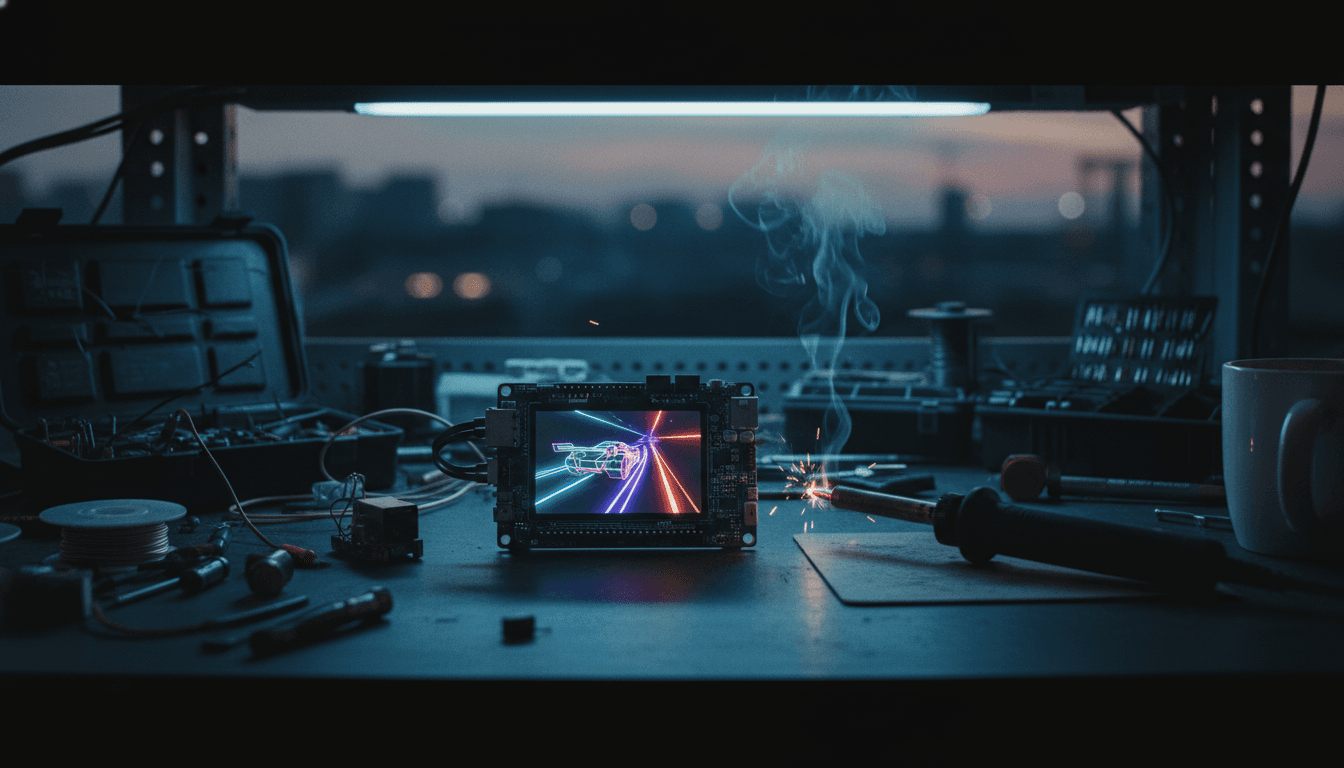
ESP32-S3 runs Wipeout clone natively, delivering a nostalgic leap for embedded systems and retro gaming enthusiasts. Psygnosis’s 1995 masterpiece, Wipeout, remains etched in gaming history not only for its groundbreaking gameplay but also for its innovative use of the original PlayStation’s then-new capacity for 3D graphics. Fast forward to today, and the powerful yet compact ESP32-S3 microcontroller is proving its mettle by hosting a remarkable native clone of this iconic title, showcasing the rapid advancements in low-cost, high-performance computing.
The development marks a significant milestone for the ESP32-S3 platform, which is typically associated with IoT applications and simpler embedded projects. Running a graphically intensive 3D game like Wipeout natively on such a small form factor demonstrates the chip’s robust processing capabilities and its potential to expand into more demanding multimedia and gaming applications. This project effectively bridges the gap between vintage gaming experiences and modern, accessible hardware.
The Technical Leap: ESP32-S3 Runs Wipeout Clone Natively
The technical achievement behind getting a Wipeout clone to run smoothly on the ESP32-S3 is considerable. Developers have meticulously optimized the game’s assets and rendering pipeline to fit within the constraints of the microcontroller’s memory and processing power. This involves clever use of techniques such as low-polygon models, efficient texture mapping, and streamlined physics engines. The result is a surprisingly faithful recreation of the original game’s fast-paced, anti-gravity racing action, all without relying on external GPUs or complex operating systems.
“This native Wipeout clone on the ESP32-S3 redefines expectations for embedded gaming, proving that high-fidelity retro experiences are now within reach of compact, affordable hardware.”
The implications extend beyond mere nostalgia. For developers, it opens up new avenues for creating portable, self-contained gaming devices or even integrating gaming elements into existing IoT projects. Imagine a smart home device that doubles as a retro gaming console, all powered by a single, cost-effective chip. The project highlights the versatility and raw power packed into the ESP32-S3, making it an increasingly attractive option for a wider range of applications.
Impact on Embedded Systems and Retro Gaming
This development is particularly exciting for the retro gaming community and those interested in related Industries news surrounding embedded systems. The ability to run complex 3D games natively on a microcontroller fosters innovation in custom hardware and DIY console projects. Enthusiasts can now envision building their own portable gaming handhelds that offer experiences previously confined to dedicated consoles, all with open-source flexibility and the low cost of ESP32-S3 boards. This democratizes access to advanced game development on embedded platforms.
Furthermore, the project serves as a powerful demonstration of what’s possible with modern microcontroller technology. It pushes the boundaries of performance expectations for chips like the ESP32-S3, encouraging further exploration into optimized graphics rendering and game engine development for resource-constrained environments. As these chips continue to evolve, we can expect to see even more sophisticated applications emerging, blurring the lines between traditional computing and specialized embedded devices.
Future Prospects for Microcontroller Gaming
The success of this Wipeout clone could very well spark a new wave of interest in microcontroller-based gaming. As hardware becomes more powerful and development tools become more accessible, the potential for creating unique and engaging gaming experiences on these platforms will only grow. This is not just about replicating old games; it’s about inspiring new ones that are specifically designed to leverage the strengths of embedded systems, such as low power consumption, small footprint, and direct hardware control. The ESP32-S3 runs Wipeout clone natively, setting a compelling precedent for the future of compact, high-performance gaming.
In conclusion, the achievement of running a Wipeout clone natively on the ESP32-S3 is a testament to both the enduring appeal of classic games and the incredible progress in microcontroller technology. It signifies a significant boost for embedded systems, demonstrating their capacity for sophisticated multimedia applications and opening new horizons for retro gaming enthusiasts and developers alike. This convergence of past and present technology underscores a vibrant future for compact, powerful computing.