Distilling stale gasoline emerges as a fascinating, albeit dangerous, DIY endeavour for those seeking to reclaim unusable fuel. Joel, from the ‘Lowered Expectations’ YouTube channel, recently showcased a method to separate usable gasoline from its oxidised, sludgy counterpart, a common problem for long-stored fuel. His experiment, detailed on Hackaday on Thursday, June 4, 2026, aimed to replicate refinery processes on a smaller scale, providing a unique insight into fuel recovery.
Gasoline’s inherent tendency to oxidise over time renders it ‘stale,’ leading to poor combustion and the formation of detrimental sludge. This oxidation process is why old fuel is typically discarded. Joel’s premise was simple yet intriguing: if the contaminants are a result of oxidation, could the still-good gasoline be distilled out? Leveraging his access to various grades of stale gasoline from his work maintaining pressure washers, he embarked on this ambitious project.
The Distillation Process Unveiled
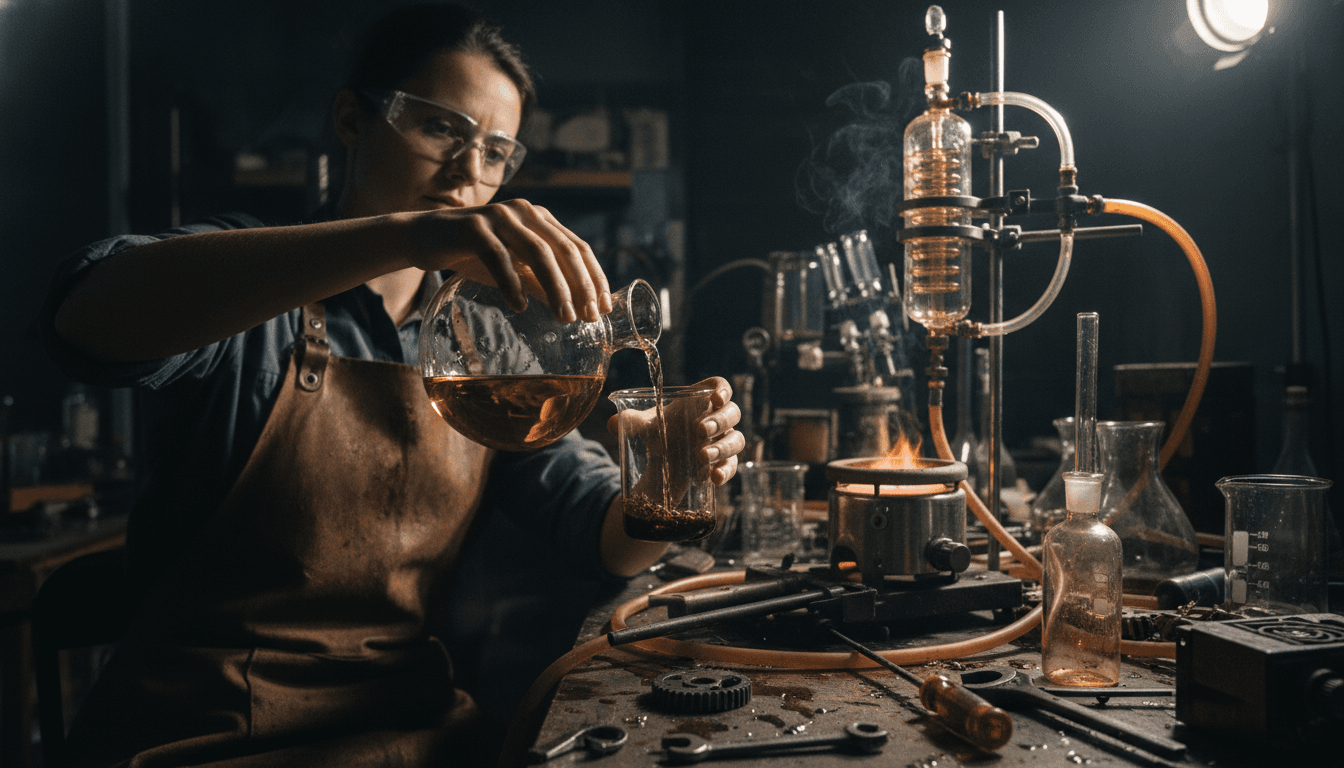
The core of Joel’s method involved a careful distillation setup. To the stale gasoline, he added aluminium oxide, serving a dual purpose as both a catalyst and to create nucleation sites. These sites are crucial for preventing ‘bumping’ – sudden, uncontrolled surges of heated liquid – ensuring a smoother, safer distillation. While the process itself is captivating, the lack of personal protective equipment (PPE) in the video raises significant safety concerns, underscoring the extreme hazards associated with heating highly flammable substances.
Joel demonstrated a cautious approach to ramping up the temperature, aiming to identify the optimal point for sufficient distillate production. He discovered that at around 70°C in the flask, the condenser began to receive its first output of what appeared to be clean, reconditioned gasoline. This controlled heating is vital in replicating the function of a fractionating column, or ‘distillation tower,’ found in large-scale refineries.
Reclaiming Fuel: A Risky Endeavour
Unlike standard refinery processes that start with crude oil, Joel’s experiment began with gasoline already contaminated by oxidation. He meticulously explored different temperature ranges, observing the types of distillate produced, eventually reaching nearly 200°C before concluding the run. From an initial 1 litre of stale gasoline, he successfully collected 880 mL of combined distillates. While the video doesn’t detail the testing, it’s mentioned that a second batch powered his car, suggesting efficacy. However, this success comes with a stark warning.
“While the distillation ‘works’ in reclaiming fuel, the inherent dangers of heating stale gasoline and the production of highly flammable and toxic substances cannot be overstated.”
The process of distilling stale gasoline generates numerous highly flammable and combustible substances. Furthermore, it exposes individuals to chemicals that are profoundly detrimental to health, with potential effects ranging from short-term acute reactions to severe long-term illnesses. Such DIY fuel reclamation, while demonstrating ingenuity, carries significant and unacceptable health and safety risks, making it unsuitable for general application or recommendation. For reliable and safe fuel solutions, always refer to related Industries news and professional guidelines.
The Perilous Path of DIY Fuel Recovery
Joel’s experiment highlights the potential to recover usable components from degraded fuel, a concept with implications for waste reduction and resourcefulness. However, the critical takeaway is the extreme danger involved. The volatile compounds released during the heating process, combined with the lack of professional safety equipment and protocols, transform a scientific curiosity into a perilous undertaking. While the idea of transforming waste into a valuable resource is appealing, the risks associated with distilling stale gasoline far outweigh any potential benefits for the average individual. Adherence to established safety standards and reliance on professionally processed fuels remain paramount for both environmental integrity and personal well-being.