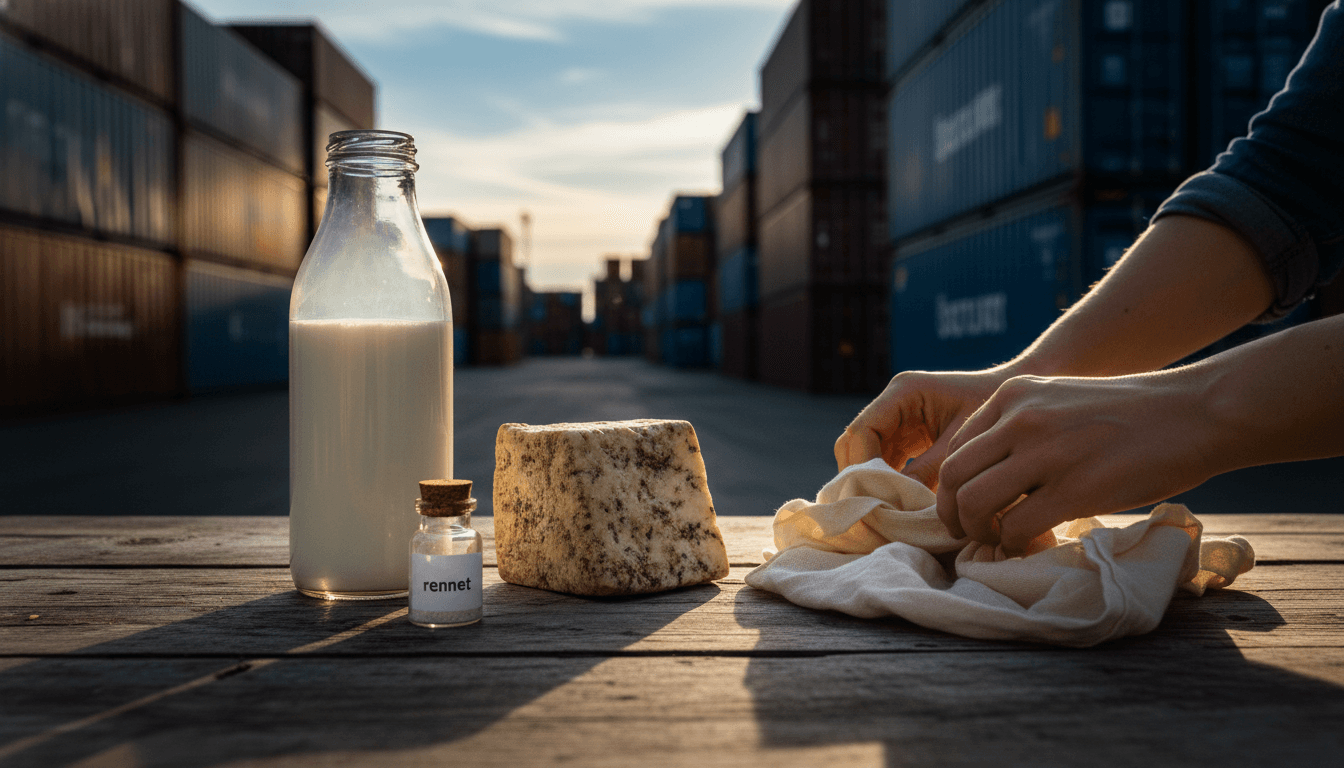
Cheesemaking process, a journey from lactating farm animals to a matured, fermented delicacy, is far more intricate than often perceived. For those of us who grew up with a direct connection to food production, there’s an inherent understanding of how things are made – a practical general knowledge that extends beyond the romanticized narratives of celebrity chefs. This foundational insight into the origins and transformations of our food, particularly something as ubiquitous as cheese, is essential for every consumer.
While The Financial Standard typically delves into market dynamics and industry trends, understanding the fundamental processes behind key agricultural products offers invaluable context. The ‘how’ of production, whether on a small farm or an industrial scale, reveals the complexities and innovations that shape our food supply chains and, ultimately, consumer choices and market values.
The Humble Beginnings: Milk and Its Origins
The journey of cheese begins with milk, predominantly from cows, but also from sheep and goats, reflecting diverse regional preferences and markets. A dairy herd serves a dual purpose: milk production and breeding. After calves are weaned, cows continue to be milked until the next breeding cycle. While commercial practices often involve early separation of calves, smaller, traditional operations may allow calves to remain with their mothers longer, a practice that highlights varying ethical considerations within the industry.
Once collected, milk is typically refrigerated and often pasteurised. This heat treatment, crucial for food safety and extended shelf life, eliminates harmful bacteria. While some artisanal cheeses rely on unpasteurised milk for specific flavour profiles, the pasteurisation debate often overlooks its primary benefit: preventing milk-borne infections. In the context of cheesemaking, as we’ll explore, the fermentation process itself offers a powerful defence against undesirable pathogens, even in unpasteurised varieties.
“To truly understand a foodstuff like cheese is to appreciate the delicate balance between tradition, science, and the relentless pursuit of consistency that defines modern food production.”
The Art of Fermentation: Culturing the Curd
At its heart, cheesemaking is a controlled fermentation process. Unlike beer or wine, where alcohol acts as the preservative, cheese relies on lactic acid produced by specific bacteria. These lactic acid bacteria, often added as pre-prepared cultures in modern cheesemaking, are responsible for not only preserving the milk but also for developing the unique flavours and textures of different cheese varieties. The ‘terroir’ of a cheesemaking region, encompassing its specific bacterial strains and traditional techniques, profoundly influences the final product, from the characteristic bubbles of Emmental to the crumbly texture of a Wensleydale.
The milk is gently heated to create an optimal environment for these beneficial bacteria. Once the lactic acid fermentation is well underway, rennet is introduced. This enzyme causes the milk solids – fats and proteins – to coagulate, separating into curds and whey. Traditionally sourced from the stomachs of young calves, rennet is now widely produced from engineered fungal or bacterial cultures, a significant shift that makes most modern cheeses suitable for vegetarians.
From Curd to Classic: Shaping and Maturing Cheese
After coagulation, the whey is drained, and the curds are broken up, a process often repeated to release more liquid. The curds are then stirred, a step that further influences the final cheese’s texture and moisture content, contributing to the diversity of cheese types. What remains is a pile of relatively dry, fermented curds. For many, this is the stage where salt is added, and the curds are pressed into moulds, extracting the last vestiges of whey and forming the characteristic cheese shape. The cheese is then wrapped, often in muslin, and left to mature in a cool, dark environment for several months. This maturation period allows complex flavours to develop, transforming the humble curds into a rich, aromatic cheese.
Whether produced on a small farmhouse scale or in a large industrial facility, the fundamental cheesemaking process remains remarkably similar. The primary distinction lies in consistency and control. While a small producer might accept the occasional imperfect batch, large-scale operations necessitate rigorous control over every variable – hygiene, temperature, humidity – to ensure a consistent flavour, texture, and quality across millions of units. This optimisation for consistency and efficiency often contrasts with the artisanal focus on unique flavour profiles, yet both yield valid and valuable products for the consumer market.
Ultimately, a commercial cheese from a supermarket can be as nutritionally sound and high-quality as an artisanal farmhouse cheese. While the latter might offer a premium taste experience due to its production schedule prioritising flavour over sheer efficiency, the notion that cheaper, mass-produced cheese is inherently ‘bad’ is largely unfounded, provided it’s genuine cheese and not a synthetic analogue. Understanding the journey from milk to cheese empowers consumers to make informed choices and appreciate the complex interplay of agriculture, microbiology, and engineering behind one of the world’s most beloved foods.