Atomic oxygen in low Earth orbit presents a formidable challenge for spacecraft design, a problem more pronounced for objects circling our planet than for deep-space probes. While we cherish oxygen for life, its single-atom form is highly reactive. Fortunately, on Earth, we primarily breathe O2, but in the thin upper atmosphere, solar UV radiation rips O2 apart, creating these destructive atomic oxygen atoms. This ‘space weather’ slowly erodes the outer surfaces of spacecraft, necessitating constant vigilance in material selection and protection, as engineers first discovered when recovering damaged materials from early missions.
The Invisible Threat: Understanding Atomic Oxygen Degradation
The common misconception is that Earth’s atmosphere abruptly ends, giving way to a hard vacuum. In reality, the atmosphere gradually thins, and even at ‘only’ 400 km above Earth, where the International Space Station (ISS) orbits, spacecraft are traversing an extremely tenuous atmosphere. Crucially, this altitude is above the protective ozone layer, allowing the Sun’s potent UV light to dissociate O2 molecules into highly reactive single oxygen atoms. Over time, these free oxygen atoms significantly impact various parts of a spacecraft, particularly those exposed to the direction of travel.
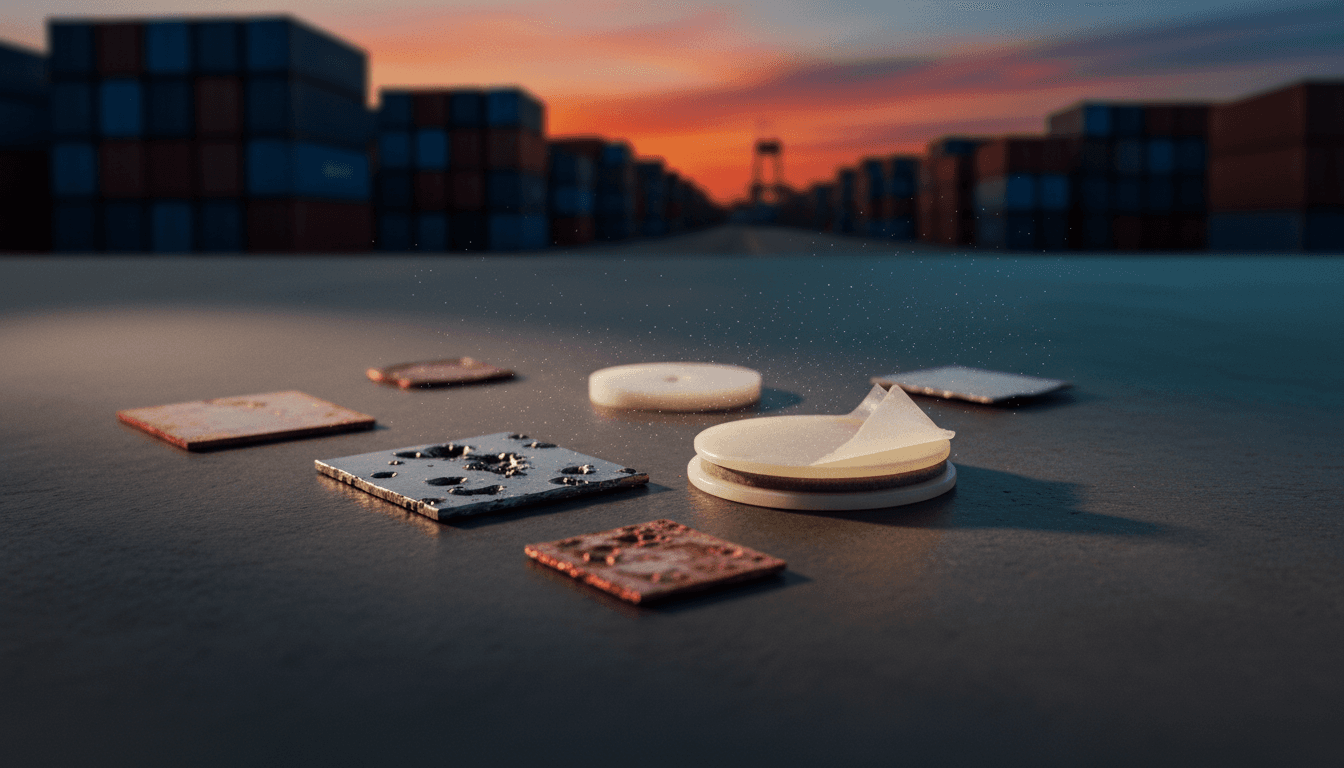
NASA engineers have meticulously studied this phenomenon for years, mounting trays of diverse material samples outside the ISS. Their findings consistently show that carbon-based polymers, frequently used in spacecraft construction, suffer considerably from atomic oxygen exposure. Polymide film, for instance, erodes significantly, while carbon composites experience measurable mass loss. Other materials exhibit different forms of degradation; an optical surface, for example, may roughen and lose its functionality over time due to this constant bombardment.
“Designing for long-duration missions in low Earth orbit demands a deep understanding of atomic oxygen’s corrosive effects on advanced materials, often requiring innovative protective coatings or entirely new material compositions.”
Mitigating Material Damage: Strategies for Spacecraft Longevity
The standard engineering response to the challenge of atomic oxygen in low Earth orbit involves over-designing components for mission objectives or applying protective coatings. For vulnerable polymers, common solutions include layers of silicon dioxide or aluminum oxide, both of which are far less reactive to free oxygen atoms. For extended missions like the ISS, meticulous attention to material selection and ongoing maintenance is paramount. Satellites in very low Earth orbits face an even greater challenge, as the concentration of atomic oxygen increases at lower altitudes, demanding even more robust protective measures.
While atomic oxygen is a primary concern in Earth orbit, deep-space probes generally encounter it rarely, unless, of course, they venture to other celestial bodies with significant oxygen-rich atmospheres. However, spacecraft materials in any environment must contend with other harsh realities, including extreme thermal cycles, the constant threat of debris strikes, and various other indignities inherent to space travel. Understanding and mitigating these environmental factors is crucial for ensuring the long-term success and safety of space missions.