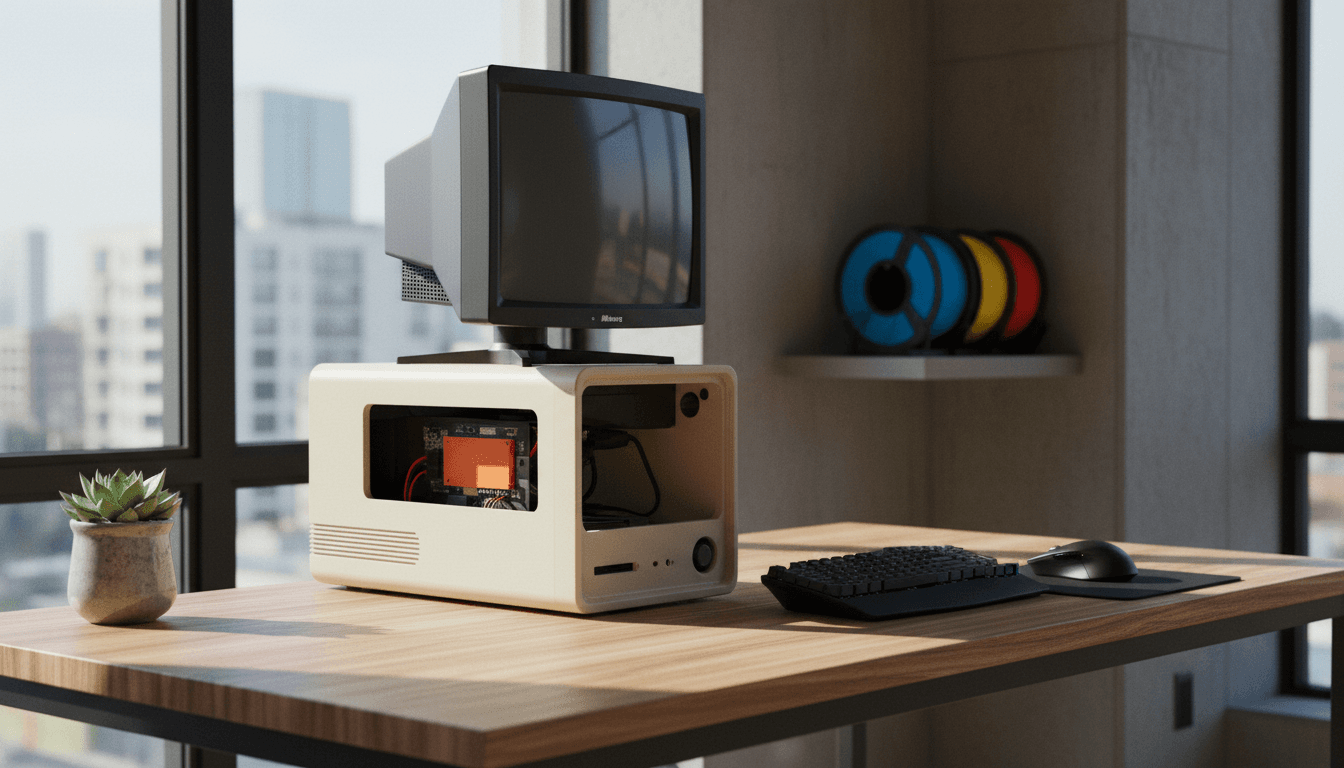
Enthusiasts 3D print retro desktop case designs, bringing back the horizontal computer chassis that once dominated desks before the rise of vertical towers. For many decades, the horizontal ‘desktop’ arrangement was a popular choice, offering a distinct aesthetic and ergonomic advantage that modern PC cases rarely replicate.
The resurgence in interest for these classic form factors is largely driven by the maker community, armed with accessible 3D printing technology. This allows them to recreate and even innovate upon vintage computer designs, offering a unique blend of nostalgia and cutting-edge manufacturing. The appeal extends beyond mere aesthetics; a horizontal case can offer different cooling dynamics and component layouts, appealing to those who enjoy custom builds and unique system integrations.
The Allure of Horizontal Chassis
Before the ubiquitous ‘tower’ PC, horizontal desktop cases were the standard. They often served as a base upon which CRT monitors were placed, creating a compact and integrated workstation. This design philosophy prioritized desk space and a clean look, contrasting sharply with today’s often bulky, floor-standing towers. Modern interpretations, often created when enthusiasts 3D print retro desktop case components, aim to capture this bygone era’s elegance while accommodating contemporary hardware.
“The ability to 3D print custom enclosures has democratized case design, allowing a niche but passionate community to resurrect beloved retro aesthetics with modern functionality.”
The process often involves detailed CAD modeling, reverse-engineering classic designs, and then printing them in various durable plastics. This enables a level of customization previously impossible without expensive industrial tooling. Builders can select specific textures, colors, and even integrate features like custom ventilation patterns or unique front panel I/O. This hands-on approach fosters a deeper connection to the hardware and the computing experience.
Enthusiasts 3D Print Retro Desktop Case: A Growing Trend
The trend of creating custom computer cases through additive manufacturing isn’t new, but the focus on retro desktop cases represents a specific and growing niche. This movement is particularly strong within communities dedicated to vintage computing, single-board computers (SBCs) like the Raspberry Pi, and small form factor (SFF) builds. The relatively compact nature of many retro desktop designs makes them ideal candidates for 3D printing, as larger prints can be broken down into manageable sections.
This movement also highlights the broader shift in consumer electronics towards personalization and DIY culture. Instead of being limited to mass-produced options, consumers are increasingly empowered to create products that perfectly fit their needs and aesthetic preferences. This extends beyond just cases, touching on custom keycaps, peripheral enclosures, and internal component brackets, all facilitated by accessible 3D printing technology. For more on how additive manufacturing is reshaping industries, explore our related Industries news.
Designing for Modern Components
While the aesthetic is retro, the internal design of these 3D printed cases must accommodate modern components. This means careful consideration of airflow, GPU clearance, and power supply integration. Many designers are cleverly adapting classic layouts to support micro-ATX or mini-ITX motherboards, along with modern cooling solutions. The flexibility of 3D printing allows for rapid prototyping and iteration, enabling designers to refine their models based on real-world testing and community feedback.
This innovative blend of old and new demonstrates how technology can bridge eras, allowing enthusiasts to enjoy the best of both worlds: the nostalgic charm of a retro desktop case with the power and efficiency of contemporary hardware. The accessibility of 3D printing continues to drive this creative wave, proving that the future of computing can look a lot like its past, albeit with a modern twist.