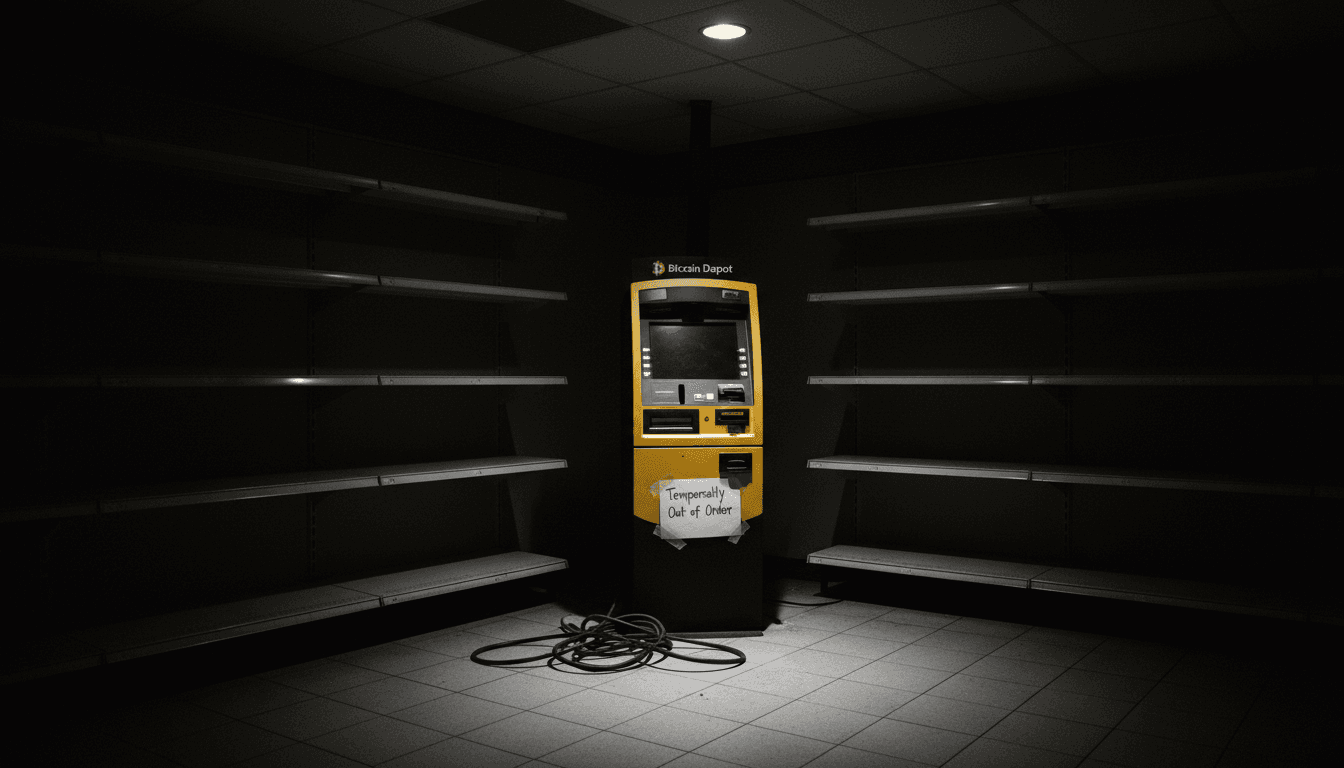
Bitcoin Depot files for bankruptcy, marking a significant downturn for North America’s largest bitcoin ATM operator. The company, which facilitated cash-to-bitcoin transactions through a network of nearly 10,000 kiosks across gas stations and convenience stores, announced its Chapter 11 filing on Monday, May 18, 2026. This move comes after its entire fleet of ATMs was taken offline, signaling the end of an era for a service that once aimed to make cryptocurrency accessible.
The bankruptcy filing reveals assets and liabilities ranging between $10 million and $50 million. This financial distress follows a challenging period for Bitcoin Depot, including a reported 49% year-over-year revenue reduction and a net loss of $9.5 million. Further compounding its troubles was a significant $3.67 million hack in April, highlighting the persistent security risks within the digital asset space.
Regulatory Headwinds Sink Bitcoin Depot
Bitcoin Depot has attributed its downfall primarily to a “challenging state-level regulatory environment.” The company points to a growing wave of restrictions and outright bans on crypto ATMs, which have increasingly been identified as significant conduits for crypto scams. An FBI report on Internet crime in 2024 underscored this issue, detailing 11,000 reports of fraud involving crypto ATMs, a staggering 99% increase from the previous year. These scams reportedly led to nearly $250 million in losses, with a disproportionate number of victims being individuals over 60 years old.
“The surge in crypto ATM-related fraud has prompted states to implement stringent compliance requirements and even outright bans, directly impacting operators like Bitcoin Depot.”
In response to the escalating fraud, states like Indiana and Tennessee have completely banned these kiosks. Other jurisdictions have imposed strict transaction limits and compliance mandates. Bitcoin Depot is also currently defending against lawsuits from Massachusetts and Iowa, which allege misleading pricing structures, knowing enablement of scams, and predatory refund policies. These legal battles, combined with the broader regulatory crackdown, have created an unsustainable operational landscape for the company. The decision for Bitcoin Depot files for bankruptcy reflects an industry grappling with the consequences of its rapid, often unregulated, expansion.
The Future of Crypto ATMs and Regulatory Oversight
The collapse of Bitcoin Depot raises critical questions about the future viability of crypto ATM services in North America. While proponents often highlight the ease of access these machines provide for purchasing digital assets, their role in facilitating illicit activities and scams has led to intensified scrutiny. Regulators are increasingly prioritizing consumer protection, and the FBI’s findings on fraud demonstrate a clear need for greater oversight in this sector.
The Chapter 11 process initiated by Bitcoin Depot aims to facilitate an “orderly wind-down and sale of the company’s assets.” This development serves as a stark reminder of the evolving risks and regulatory challenges within the cryptocurrency ecosystem, particularly for companies operating at the intersection of traditional finance and emerging digital assets. Investors and consumers alike should closely monitor these regulatory shifts, as they will undoubtedly shape the landscape of crypto access and adoption moving forward. The saga of how Bitcoin Depot files for bankruptcy underscores the urgent need for a more secure and transparent operating framework for all participants.