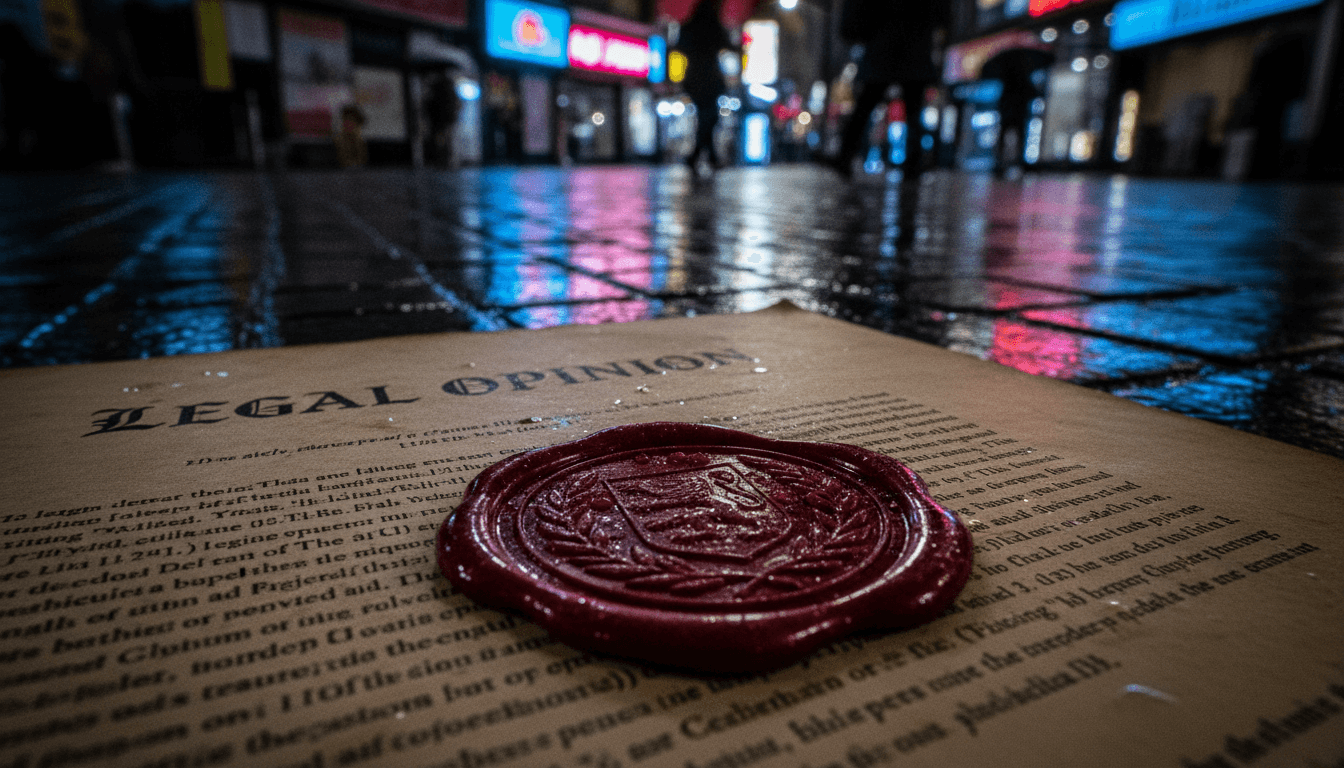
Ulf Johannemann, once a towering figure in the sophisticated world of international tax law, now faces the harsh reality of a prison cell, his meticulously crafted legal opinions exposed as the scaffolding for one of Germany’s most audacious financial frauds. The estimated €46.5 million loss to the German treasury in the latest charges against him underscores the devastating impact of the Cum-Ex scheme, a complex web of transactions that drained public coffers for over a decade.
Who Is Ulf Johannemann?
Born in February 1971, Ulf Johannemann carved out an impressive career, ascending to the pinnacle of the legal profession. A German national, he was a partner at Freshfields Bruckhaus Deringer, a global legal powerhouse. His journey began with law studies at Münster University, culminating in a master’s degree from Southern Methodist University in the US. Joining Freshfields in 2000, he quickly rose through the ranks, becoming a partner in 2007, then head of the international tax department, and eventually the global head of tax. His specialization lay in the intricate taxation and accounting treatment of derivatives, a niche that would later become central to his downfall. Before the scandal erupted, Johannemann was seen as an authority, even gaining experience in internal investigations – a bitter irony given the nature of his eventual conviction.
The Scheme Exposed
Ulf Johannemann was found guilty of aiding and abetting aggravated tax evasion, a crime inextricably linked to the infamous “Cum-Ex” scandal. This sophisticated dividend arbitrage trading practice exploited a critical loophole in German tax law, allowing multiple parties to falsely claim refunds on capital gains tax that had, in reality, been paid only once or, in some cases, never at all. The mechanics were deceptively simple yet devastatingly effective: shares were rapidly traded with (“cum”) and then without (“ex”) dividend rights around the dividend payout day. This flurry of transactions deliberately obscured the true ownership, creating a fog of legal ambiguity that allowed for the fraudulent claims.
Johannemann’s pivotal role was to provide legal opinions to clients, most notably Maple Bank, effectively endorsing the tax admissibility of these Cum-Ex transactions. Prosecutors argued that he “deliberately provided ‘accommodation’ opinions”—legal advice designed to lend a veneer of legitimacy to deals whose legality was, at best, deeply questionable. His involvement with Maple Bank’s transactions spanned from 2006 to 2009, a critical period during which the scheme flourished. He was also accused of attempting to misrepresent Cum-Ex deals to tax authorities in 2009, an alleged effort to preempt state repayment claims. His legal counsel was not merely advisory; it was a crucial enabler, providing the necessary legal cover for banks like Maple Bank to proceed with these highly controversial trades. The Cum-Ex scheme, in its broader form, operated between 2001 and 2011, with the loophole finally sealed in Germany in 2012.
Following the Money
The Cum-Ex scandal stands as the largest tax fraud in German history, with overall losses to the German state treasury estimated at a staggering €10 billion. Across Europe, the total impact is believed to be as high as €55 billion. In Ulf Johannemann’s specific case, his legal advice was instrumental in enabling Maple Bank to reclaim approximately €383 million to €390 million in taxes it had never actually paid. The prosecution detailed that his “accommodation opinions” directly led to a total tax loss of around €388 million. These vast sums represent public funds diverted from essential services, a direct impact on the German populace. While the immediate victim was the German state treasury, the ripple effects were profound. Maple Bank itself, deeply entangled in the Cum-Ex web, faced insolvency in 2016 due to tax provisions related to these transactions, ultimately leading to its closure.
The Investigation
The unraveling of the Cum-Ex scandal has been a monumental undertaking, stretching over many years and involving multiple agencies. The Frankfurt Public Prosecutor General’s Office has been at the forefront of prosecuting Ulf Johannemann and numerous other individuals involved. German authorities, including the police, conducted extensive raids, notably at Freshfields’ Frankfurt office, as part of their relentless pursuit of justice. The fraud itself began to come to light around 2017, long after the legislative loophole that permitted these trades was closed in 2012. The scope of the investigation has been vast, ensnaring financial institutions, investment bankers, and legal and accounting professionals across the continent, revealing the systemic nature of the scheme.
Victims Left Behind
The primary victim of the Cum-Ex scheme, and specifically Ulf Johannemann’s role within it, is the German state treasury, and by direct extension, every German taxpayer. Billions of euros in uncollected tax revenue represent vital public funds that could have been allocated to infrastructure, education, healthcare, or social services. Beyond the state, Maple Bank, a direct client of Freshfields, suffered a catastrophic fate, driven into insolvency and closure in 2016 due to its deep involvement in Cum-Ex transactions. This led to job losses and significant disruption. Freshfields itself endured substantial financial and reputational damage, paying a €50 million settlement to Maple Bank’s liquidators and a further €10 million voluntary payment to the German tax authority to avert further prosecution. The scandal’s tendrils reached wide, implicating a broad spectrum of financial institutions globally, including JPMorgan, Merrill Lynch, Barclays Plc, Lehman Brothers, Fortis, Macquarie Group Ltd., and ICAP Plc, all of whom received Cum-Ex advice from Freshfields. The human cost, while not quantified in individual victims, is borne by an entire nation deprived of its rightful tax revenue.
Justice & Consequences
Ulf Johannemann’s journey through the German justice system culminated in his conviction on January 30, 2024. The Frankfurt Regional Court found him guilty of aiding and abetting aggravated tax evasion in four distinct cases, handing down a sentence of three years and six months in prison. His appeal against this conviction was decisively rejected on September 16, 2025, solidifying his fate: he must now serve his jail term. The legal battles are far from over for Johannemann, however, as he faces new charges in Germany starting in February 2025. These charges pertain to other Cum-Ex deals, which allegedly resulted in an additional estimated loss of €46.5 million to the German treasury. While information regarding specific asset freezes is not publicly available, the legal and financial ramifications for Johannemann and his former firm have been immense. His confession in December 2023 – admitting he “totally failed” as an adviser and “didn’t want to know the whole truth” – offered a stark glimpse into the mindset that enabled this colossal fraud.
“Johannemann’s confession, admitting he ‘didn’t want to know the whole truth,’ speaks volumes about the willful blindness that often underpins complex financial fraud.”
Lessons Learned
The Ulf Johannemann case, and the broader Cum-Ex scandal, serves as a stark reminder of the critical importance of ethical conduct and robust oversight within the financial and legal sectors. Several red flags, visible in hindsight, could have potentially averted or mitigated the scale of this fraud. Foremost among them was the inherent ambiguity surrounding the legality of Cum-Ex transactions. Even as Johannemann drafted his opinions, the legal landscape was unclear, a situation that should have prompted extreme caution, not aggressive endorsement. The fact that other top-tier German law firms, such as Hengeler Mueller and Linklaters, reportedly refused to issue Cum-Ex opinions because they deemed them legally untenable, should have been a screaming siren for Freshfields and its partners. The prosecution’s characterization of Johannemann’s opinions as “accommodation opinions” points to a deliberate willingness to bend legal interpretations to suit client demands, rather than upholding objective legal principles. Johannemann’s own admission that he “didn’t want to know the whole truth” highlights a conscious turning of a blind eye, a dangerous complacency in the face of potentially illicit activities. Furthermore, the high-risk appetite prevalent among clients during that era, as noted by legal experts, should have triggered heightened scrutiny from legal advisors, rather than enabling aggressive tax strategies. The internal knowledge within Freshfields about the firm’s role in Cum-Ex transactions, with Johannemann remaining tax chief until his arrest, raises serious questions about internal governance, accountability, and risk management.
Readers should remain vigilant for schemes that promise unusually high returns or exploit complex financial instruments, particularly when legal advice seems overly accommodating or skirts established norms. Always question the underlying legality of transactions that appear too good to be true, and scrutinize any advice that seems to prioritize client desires over clear ethical boundaries. The Cum-Ex scandal demonstrates that even highly sophisticated fraud can be built on a foundation of seemingly legitimate legal opinions. For more insights into such intricate financial deceptions, explore our related fraud investigations.