A historic ruling has seen four Palestine Action activists sentenced as terrorists, marking a significant escalation in how direct action protests targeting corporate entities with alleged links to international conflicts are legally classified in the UK. Charlotte Head, 29, Samuel Corner, 23, Leona (Ellie) Kamio, 30, and Fatema Rajwani, 21, received custodial sentences ranging from five years and eight months to eight years and eight months following their conviction for criminal damage at an Israeli weapons manufacturer’s factory. The court’s decision, delivered by Justice Jeremy Johnson at Woolwich Crown Court on June 12, 2026, has profound implications for the future of protest law and the definition of terrorism within British jurisprudence.
The activists were found guilty in May for breaking into an Elbit Systems factory in Filton, near Bristol, in 2024, causing an estimated £1.2 million in damage. This included the destruction of military assets such as “Magni X” and multiple “Thor” drones in “Legion X” and “Helios” configurations, described by Elbit as advanced observation and tactical mule platforms for military applications, including the Israel Defense Forces (IDF). Samuel Corner also faced an additional conviction for grievous bodily harm without intent.
Justice Johnson stated that the defendants were “well aware” of Palestine Action’s “aims and strategy,” which included “shutting down Elbit and ending what they regarded as British complicity in Israeli war crimes” and to “intimidate it into ceasing operations or cause the government to prevent it from operating.” The judge concluded that the damage, even to non-weapon items like a disabled toilet, was “one part of a broader and more strategic purpose” to “shut down Elbit” and exert “pressure on the government,” thus establishing a “terrorism connection” under existing legislation.
Legal Precedent and Broader Implications
The application of a ‘terrorism connection’ in a case primarily involving property damage is a critical legal development. Defence barristers strongly contested this classification. Rajiv Menon KC, representing Head, described the ruling as “dramatic and draconian,” arguing it would permanently affect the defendants and represented an “invitation to chilling and creeping authoritarianism that undermines the very democratic fabric of our society.” He highlighted the unprecedented nature of applying a terrorism connection to property damage alone, contrasting it with cases involving violence against individuals, such as the murder of MP Jo Cox by far-right extremist Thomas Mair.
Tom Wainwright KC, representing Corner, warned that “redefining direct action protest as terrorism would be… crossing a rubicon,” suggesting it could retrospectively label historical protest movements, like the suffragettes, as terrorist organizations. The prosecution, led by Deanna Heer KC, countered that the activists’ actions were not simple crime prevention but aimed to influence both the UK and Israeli governments, citing a Palestine Action training manual referencing Britain’s “imperial” role in the Middle East. She asserted that the scale and nature of the damage meant “this is not a protest, freedom of assembly case.”
“I am bound by the legislation to find that the offence in each case has a terrorism connection,” Justice Jeremy Johnson stated, a declaration that sent shockwaves through the courtroom and beyond.
The terror connection significantly increases the custodial sentences, extending beyond what would typically be imposed for criminal damage. This ruling comes despite a High Court decision in February that found the government’s proscription of Palestine Action as a terrorist group unlawful, a ban that remains in place pending an appeal next week.
Controversies and Courtroom Drama
The trial has been fraught with controversy from its inception. The activists had already spent 18 months in prison on remand following an initial trial in February where they were acquitted of aggravated burglary. At the retrial in May, the jury convicted them of criminal damage, reportedly without knowledge that a terrorism connection would later be applied by the judge. Menon criticized this approach, alleging that the CPS “took a deliberate decision to allow a judge to ultimately decide the issue rather than a jury… That’s manipulation, that’s playing games, that’s abusive.”
Further issues arose outside the courtroom, with Menon condemning the “wholly unacceptable” actions of a police officer and security guards who questioned a young Muslim woman, attempted to bar a defendant’s mother, and denied entry to two journalists. Justice Johnson himself faced scrutiny, having to apologize for an “unprecedented attempt” to prosecute Menon for contempt of court regarding his final speech in the first trial, where he reminded jurors of their right to acquit based on conscience. Despite this apology, the judge refused a request to recuse himself due to alleged prejudicial bias.
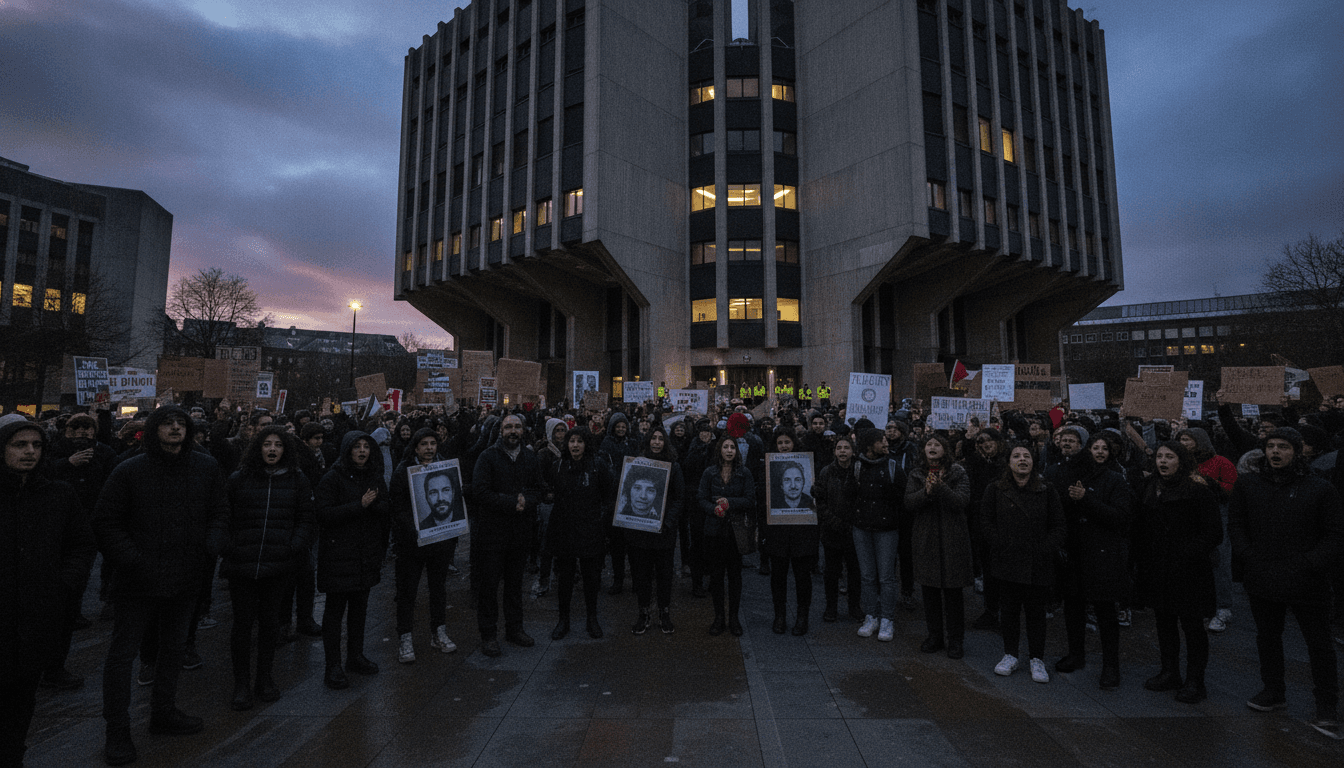
The sentences delivered were: Charlotte Head, six years less 45 days, and disqualified from driving for four years; Leona Kamio, six years less 45 days; Fatema Rajwani, five years and eight months less 45 days; and Samuel Corner, a combined eight years and eight months for both offences. As Head was ushered out, she quoted Palestinian poet Marwan Makhoul, shouting, “In order to hear the birds, the warplanes must be silent,” to applause from hundreds of supporters gathered outside Woolwich Crown Court.
This landmark decision to classify property damage by Palestine Action activists as having a terrorism connection sets a powerful precedent for future direct action cases. It signals a potentially stricter legal landscape for protest movements, particularly those targeting corporations with perceived links to geopolitical conflicts, and raises fundamental questions about the balance between freedom of expression, civil disobedience, and national security interpretations within the UK judicial system. The legal community and civil liberties advocates will undoubtedly be scrutinizing the implications of this ruling for years to come.