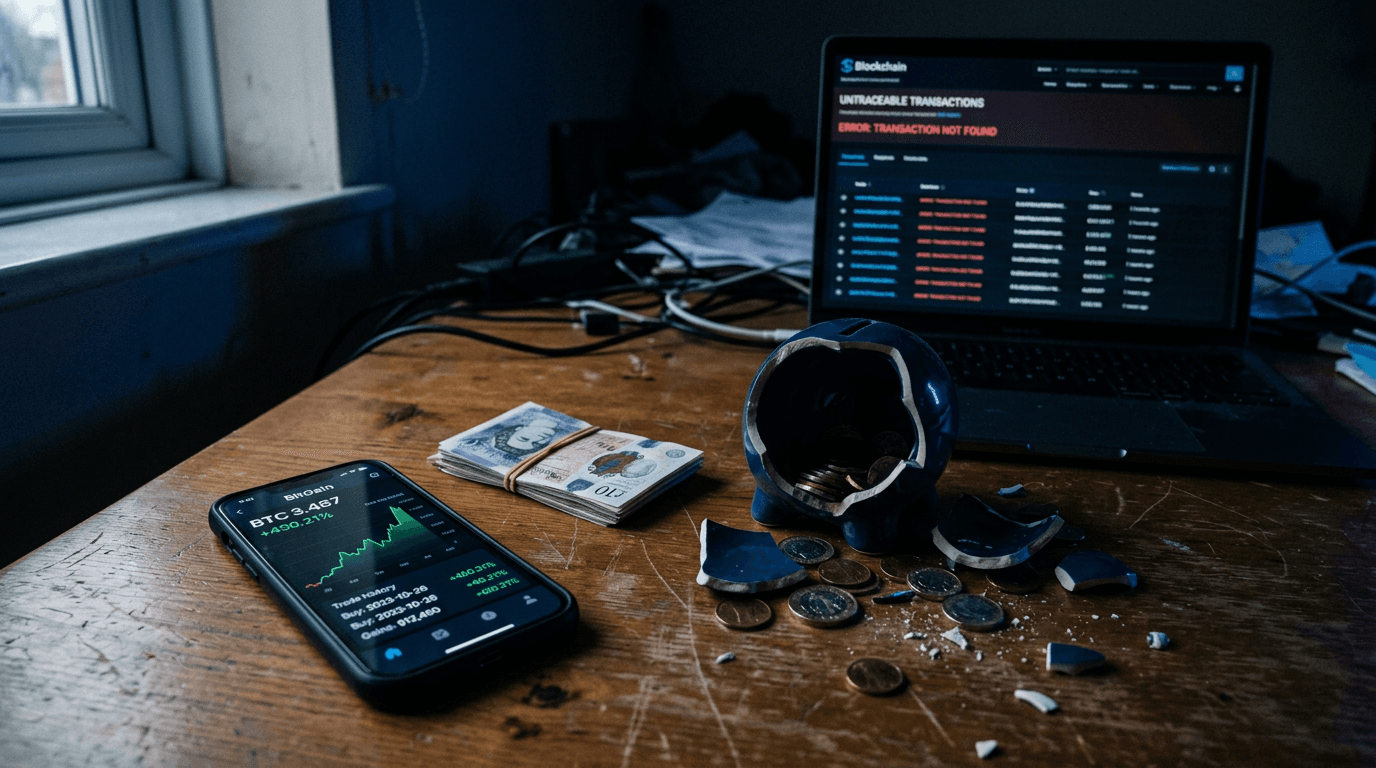
UK cryptocurrency scams have siphoned an astounding $14 billion from unsuspecting victims, leaving a trail of financial devastation across the nation. This staggering figure, revealed by Bitget on March 11, 2026, highlights the escalating threat posed by sophisticated digital fraud operations that exploit the burgeoning interest in digital assets.
The Architects of Deceit
While specific individuals responsible for the entire $14 billion figure remain under ongoing investigation, the scale of the fraud points to a vast, interconnected network of perpetrators, ranging from individual scammers to highly organized criminal syndicates. These fraudsters employed a variety of tactics, primarily focusing on investment scams, romance scams, and phishing attempts. They leveraged the perceived anonymity and rapid transaction speeds of cryptocurrency to their advantage, making it incredibly difficult for law enforcement to trace funds and identify culprits.
The schemes often began with seemingly legitimate online interactions – a promising investment opportunity advertised on social media, an unexpected message from a charismatic stranger, or a seemingly official email. Victims were then lured into fake trading platforms, often mirroring legitimate exchanges, where they were encouraged to deposit significant sums of cryptocurrency. Initially, small, fabricated returns might be shown to build trust, prompting victims to invest even more. However, when individuals attempted to withdraw their ‘profits’ or initial capital, they were met with excuses, technical difficulties, or demands for additional ‘fees’ or ‘taxes,’ until all communication ceased, and their funds vanished.
The Devastating Impact of UK Cryptocurrency Scams
The victims of these UK cryptocurrency scams span all demographics, from seasoned investors to first-time digital asset enthusiasts. Many were drawn in by the promise of quick wealth, especially during periods of high market volatility and public interest in cryptocurrencies. The deception was often deeply personal. Romance scams, for instance, saw fraudsters cultivate emotional relationships over months, only to exploit that trust for financial gain, convincing victims to invest in non-existent crypto projects. The human cost extends far beyond monetary loss; victims frequently report severe psychological distress, including feelings of betrayal, shame, and despair. Retirement savings have been wiped out, homes mortgaged, and lives irrevocably altered. Related fraud investigations consistently show that the emotional toll can be as debilitating as the financial one.
“The ripple effects of these scams are profound, impacting not just individual finances but also mental health and trust in the digital economy,” a financial fraud expert noted.
How the Fraud Unraveled
The unraveling of these vast UK cryptocurrency scams is not a single event but an ongoing process driven by a combination of victim reports, financial intelligence gathering, and collaborative efforts between national and international law enforcement agencies. As more individuals came forward, patterns began to emerge, highlighting common tactics and fraudulent platforms. Financial institutions and cryptocurrency exchanges have also played a crucial role, implementing stricter KYC (Know Your Customer) protocols and monitoring suspicious transaction patterns. While the source material does not detail a specific ‘unraveling’ event for the entire $14 billion, it implies a continuous investigative effort by bodies like the National Cyber Security Centre and the Financial Conduct Authority, working to track illicit funds and dismantle criminal operations. Evidence often includes digital footprints, communication logs, and blockchain analysis, though the pseudonymous nature of many cryptocurrencies presents significant challenges.
Consequences and the Road to Recovery
While the Bitget report provides the staggering total of $14 billion, specific details regarding arrests, charges, and convictions directly tied to this entire sum are not explicitly detailed within the provided information, indicating an ongoing and complex investigative landscape. However, it is understood that various law enforcement actions across the UK have led to numerous arrests and prosecutions for individual cryptocurrency fraud cases. Sentences for such crimes can range from several years to over a decade in prison, alongside substantial fines. Asset recovery remains a significant challenge due to the cross-border nature of these schemes and the difficulty in tracing funds once they enter mixers or privacy coins. Efforts are continuously being made to freeze illicit assets and return them to victims, though success rates vary. The fight against UK cryptocurrency scams is a long-term commitment, requiring sustained vigilance and international cooperation.
Lessons and Red Flags
To avoid falling prey to similar UK cryptocurrency scams, individuals must exercise extreme caution. Key red flags include unsolicited investment opportunities promising unusually high returns with little to no risk, pressure to invest quickly, and demands for payment in cryptocurrency. Always verify the legitimacy of any platform or individual. Research companies thoroughly, check for official registrations, and be wary of anyone who asks you to send money to an unknown wallet. Legitimate financial advisors will never pressure you or ask you to transfer funds to their personal accounts. If an offer seems too good to be true, it almost certainly is. Always remember to protect your personal and financial information, and never share your private keys or seed phrases.