The story of Ruja Ignatova is one of audacious ambition, dazzling deception, and a global trail of devastation that left investors worldwide stripped of over $4 billion. From seemingly revolutionary promises of financial democratization to an abrupt disappearance and a place on the FBI’s Ten Most Wanted Fugitives list, Ignatova’s journey from a lauded consultant to the architect of one of history’s largest Ponzi schemes is a stark warning in the volatile world of digital finance.
Who Is Ruja Ignatova?
Born on May 30, 1980, in Ruse, Bulgaria, Ruja Ignatova cultivated an image of intellectual prowess and business acumen. Her family relocated to Germany in 1990, where she would later achieve significant academic milestones, including a PhD in private international law from the University of Konstanz in 2005 and a Master’s degree in European law from Oxford University. Before her descent into the crypto underworld, Ignatova honed her strategic thinking as a consultant at McKinsey & Company in Sofia, a role that lent her an air of credibility and expertise.
However, beneath the veneer of success, a pattern of questionable dealings had already begun to emerge. In 2012, Ignatova received a 14-month suspended sentence for fraud in Germany, linked to her father’s acquisition of a company that subsequently imploded under suspicious circumstances. This early brush with the law foreshadowed her later, far more extensive criminal endeavors, including her involvement in another multi-level marketing scam, BigCoin, in 2013, just prior to launching OneCoin.
The Scheme Exposed
In late 2014, Ruja Ignatova, alongside co-founder Sebastian Greenwood, launched OneCoin, marketing it as a groundbreaking digital currency – a “Bitcoin killer” poised to revolutionize global finance. The pitch was compelling, but the reality was a meticulously crafted mirage. OneCoin was not a legitimate cryptocurrency; it fundamentally lacked a transparent and verifiable blockchain, the immutable ledger that underpins genuine digital currencies. Instead, OneCoin operated on a centralized database, entirely controlled by Ignatova’s company, OneCoin Ltd., based in Sofia, Bulgaria, and registered in Belize and Dubai. This opaque structure was the first, and perhaps most critical, red flag.
The fraud functioned as a sophisticated Ponzi and pyramid scheme. Investors were enticed to purchase “educational packages,” with prices ranging from a modest €100 to an astronomical €225,500. These packages purportedly contained “tokens” that could be used to “mine” OneCoins. The crucial deception lay in the valuation: the price of OneCoin was not dictated by market supply and demand but was artificially inflated and manipulated by the company, creating a deceptive illusion of consistent, exponential growth. Early investors were paid their seemingly impressive returns using funds from newer investors, a classic characteristic of a Ponzi scheme. The operation was further amplified by aggressive multi-level marketing (MLM) tactics, which generously rewarded members for recruiting new victims into the ever-expanding pyramid. OneCoin even operated an internal exchange, Xcoinx, where members could supposedly trade their tokens for fiat currency. However, access was severely restricted, and the exchange was abruptly shut down in 2016, leaving countless investors unable to cash out their “fortunes.” The scheme ran from its inception until Ignatova’s sudden disappearance in October 2017.
“OneCoin was built on a foundation of lies, preying on the allure of cryptocurrency and promising riches that never materialized. It was a digital ghost, designed solely to enrich its creators at the expense of millions.”
Following the Money
The scale of the OneCoin fraud is staggering, cementing its place as one of the biggest scams in financial history. US prosecutors allege that the scheme defrauded victims of more than $4 billion globally. OneCoin’s own internal records paint a grim picture, showing €4.037 billion in sales revenue and €2.735 billion in “profits” generated between the fourth quarter of 2014 and the fourth quarter of 2016 alone. While Ignatova’s company boasted of 3.5 million members, the true human cost involved hundreds of thousands of individuals who lost life savings, homes, and futures. Victims spanned the globe, from wealthy investors to vulnerable communities in rural Uganda, and included individuals from China, Brazil, Pakistan, Hong Kong, Norway, Canada, Yemen, and Palestine. In China, authorities successfully recovered 1.7 billion yuan (approximately US$267.5 million) and prosecuted 98 individuals involved in the scheme. Related fraud investigations often reveal similar patterns of global reach and diverse victim profiles.
In August 2024, a significant step towards asset recovery was taken when a UK court ordered a global asset freeze against Ruja Ignatova and her OneCoin associates. This order specifically targets preventing the sale or movement of her substantial assets, which reportedly include luxury properties in Dubai and London. A portion of the proceeds from the sale of these London properties is reportedly earmarked for victim repayment, offering a glimmer of hope to those who lost so much.
The Investigation
The unraveling of OneCoin was a complex, multi-national effort. International agencies, including the FBI and the United States Attorney’s Office Southern District of New York, spearheaded the investigation. This culminated in the unsealing of indictments against Ignatova and her eventual placement on the FBI’s Ten Most Wanted Fugitives list. German authorities also played a crucial role, issuing criminal charges and an Interpol warrant for her arrest.
The fraud began to unravel as financial regulators worldwide grew suspicious. Bulgaria’s Financial Supervision Commission issued a warning in September 2015, followed by the Hungarian Central Bank in 2016. Cryptocurrency enthusiasts and investigative journalists also contributed significantly, exposing the truth behind OneCoin’s claims. Key revelations included the manual assignment of values to OneCoin by Ignatova and her partners, the widespread plagiarism within their “educational” materials, and, most damningly, the absolute absence of a true, public, and verifiable blockchain. The “coins” touted by OneCoin did not genuinely exist, functioning merely as entries on a privately controlled database.
Victims Left Behind
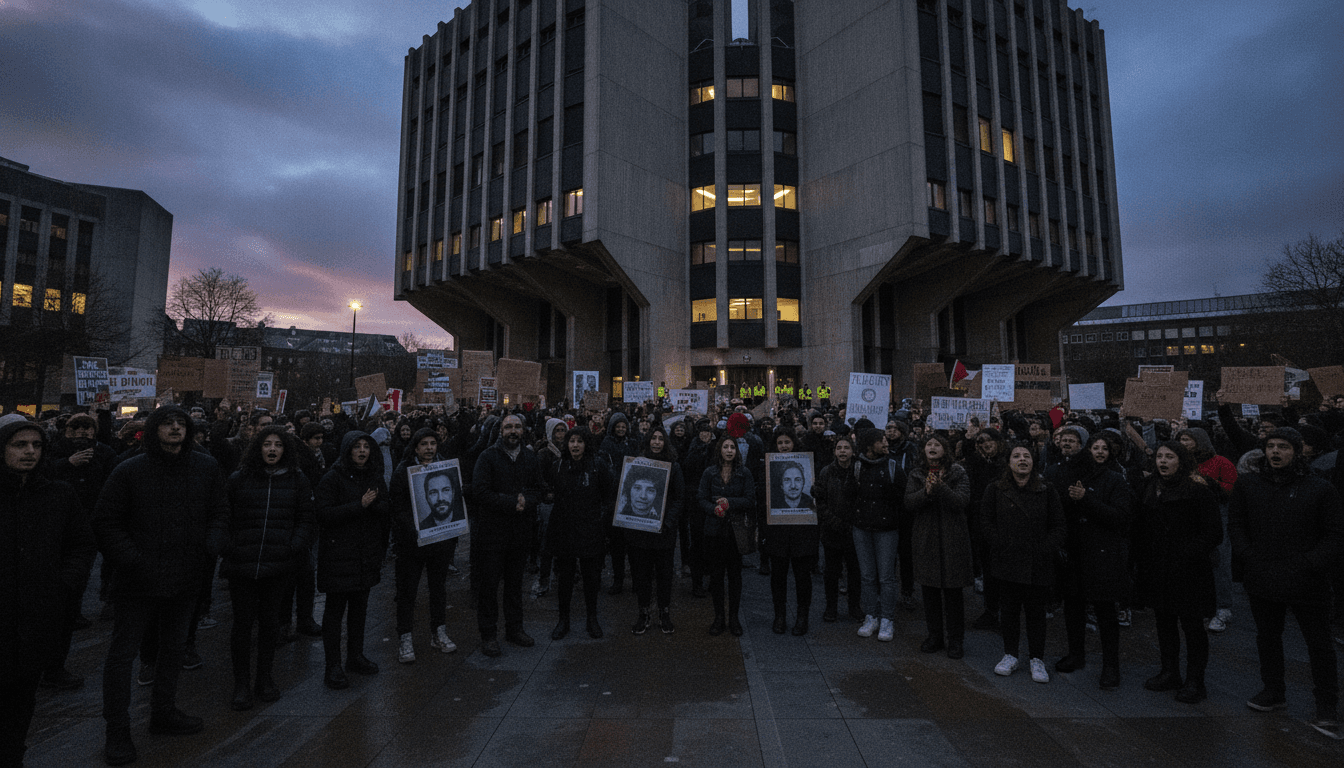
The human toll of the OneCoin scheme is immense and tragic. The fraud’s promotional materials ambitiously claimed over 3 million investors, a testament to its global reach. These victims were not a monolithic group; they included sophisticated, wealthy investors alongside vulnerable individuals who invested their life savings, losing homes and livelihoods. Investments poured in from an astonishingly diverse array of countries across every continent, underscoring the universal appeal of the promise of quick riches and the devastating impact of its betrayal. More than 400 victims have united to petition the UK court for the asset freeze against Ignatova and her associates, a desperate attempt to reclaim some semblance of what was lost.
Justice & Consequences
Ruja Ignatova remains a fugitive, her whereabouts unknown since her disappearance on October 25, 2017, when she traveled from Sofia, Bulgaria, to Athens, Greece. She was initially charged in the U.S. District Court, Southern District of New York, on October 12, 2017, with conspiracy to commit wire fraud, wire fraud, and conspiracy to commit money laundering. A superseding indictment in February 2018 added charges of conspiracy to commit securities fraud and securities fraud. If apprehended and convicted, she faces a potential sentence of up to 90 years in prison for her role in the Ponzi scheme.
While Ignatova eludes capture, several of her key associates have faced justice. Sebastian Greenwood, her co-founder, was arrested in Thailand in 2018, extradited to the US, and in September 2023, sentenced to 20 years in prison for wire fraud and money laundering, ordered to pay back $300 million. Ignatova’s brother, Konstantin Ignatov, who took over her position at OneCoin, was arrested at Los Angeles International Airport in March 2019 and pleaded guilty to fraud and money laundering in November 2019, being released from jail in March 2024. Lawyer Mark Scott was also found guilty of money laundering and bank fraud for his role in routing $400 million out of the US for OneCoin. The U.S. Department of State currently offers a reward of up to $5 million for information leading to Ignatova’s arrest and/or conviction, a testament to the gravity of her crimes and the determination to bring her to justice.
Lessons Learned
The OneCoin saga is a powerful cautionary tale, replete with red flags that, in retrospect, scream fraud. The most critical warning sign was the lack of a transparent and verifiable blockchain – a fundamental component of any legitimate cryptocurrency. OneCoin’s promise of guaranteed high returns, a classic hallmark of Ponzi schemes, should have immediately raised suspicion, as legitimate investments always carry risk. The heavy reliance on an aggressive multi-level marketing (MLM) structure, where recruitment was prioritized over a genuine product, further exposed its fraudulent nature. The artificial price manipulation, limited withdrawal options, and the absence of a working product or prototype were all glaring indicators. Furthermore, Ignatova’s prior criminal history for fraud in Germany was a significant, albeit often overlooked, red flag. Always be wary of schemes that lack transparency, promise unrealistic returns, and prioritize recruitment over genuine value. Legitimate cryptocurrencies thrive on open-source technology, community engagement, and market-driven valuations, not the dictates of a centralized authority. Protect yourself by thoroughly researching any investment, especially in emerging and complex sectors like cryptocurrency, and by seeking independent, expert advice.