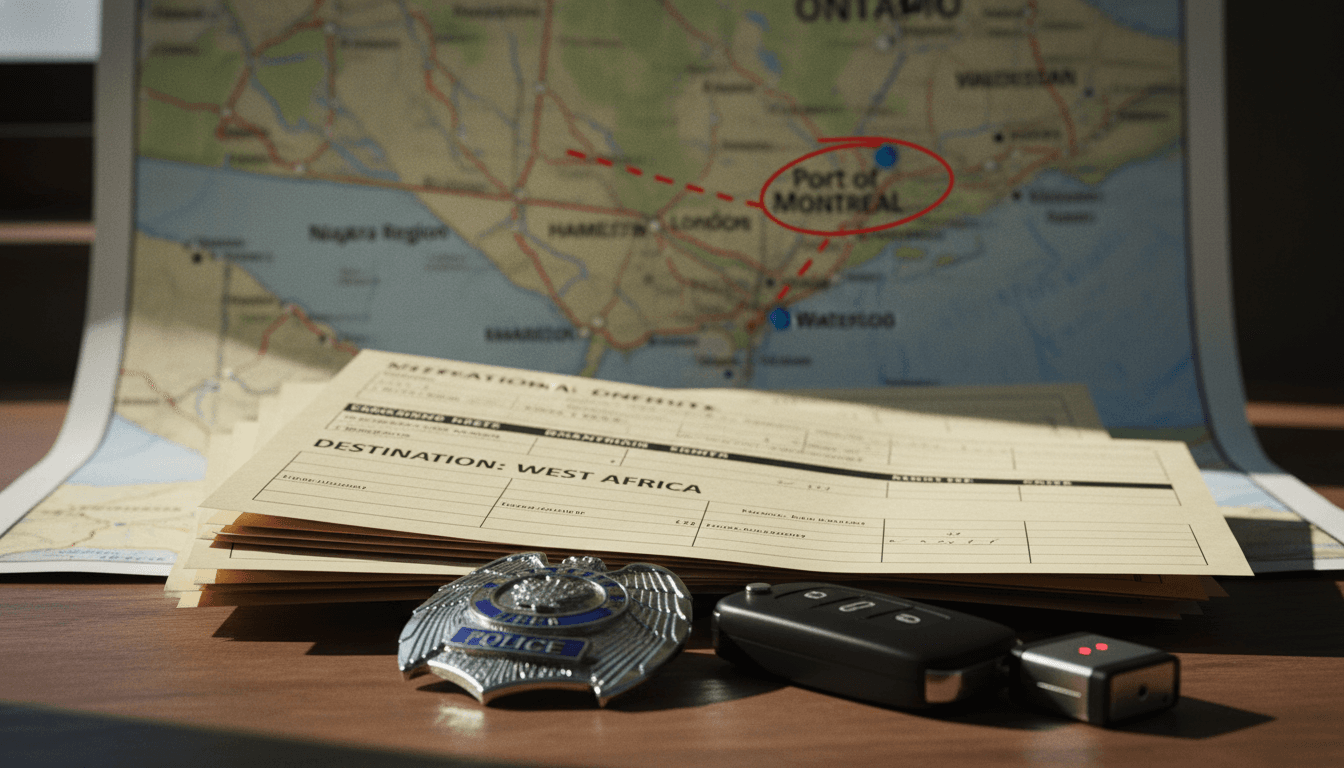
Niagara police auto theft investigation has culminated in the arrest of nine individuals, including eight teenagers, exposing a sophisticated organized crime network responsible for over 112 high-end vehicle thefts across southern Ontario. The multi-jurisdictional probe, which initiated with a single stolen Lexus, ultimately traced the illicit operations from the Niagara Region to Montreal, where stolen vehicles were being prepared for export overseas, specifically to West Africa.
The scale of the operation underscores a growing challenge for law enforcement agencies grappling with increasingly organized auto theft rings. Investigators revealed that the arrested individuals are believed to be connected to thefts spanning the Niagara Region, the Greater Toronto Area, Hamilton, London, and Waterloo. Furthermore, warrants have been issued for two additional suspects, a 20-year-old from North Dumfries, Ont., and a 22-year-old from Quebec, who are believed to be linked to more than 100 additional thefts, suggesting the network’s reach is even broader.
Niagara Police Auto Theft Investigation Unravels Complex Network
The initial arrests in January saw two 17-year-olds from St. Catharines charged with theft and possession of property obtained by crime. The investigation intensified, leading to further arrests in April, when an 18-year-old and a 23-year-old, both from Hamilton, were apprehended on charges including theft, trafficking, and weapons offences. Mid-May brought another wave of arrests, with five teenagers, aged between 16 and 17, facing similar charges, highlighting the disturbing involvement of minors in these illicit activities.
The collaborative efforts of Niagara police with the Canada Border Services Agency (CBSA), RCMP, Ontario Provincial Police (OPP), and Montreal police were instrumental in disrupting the international arm of this network. Numerous stolen vehicles were successfully recovered at the Port of Montreal, poised for shipment to West Africa. This discovery not only illustrates the global dimension of modern auto theft but also the lucrative nature of the trade, with high-end vehicles fetching significant prices in overseas markets.
“The recovery of vehicles at the Port of Montreal, destined for West Africa, reveals the intricate layers of these organized crime groups and their global reach. It’s a stark reminder that local thefts often feed into international criminal enterprises.”
The ongoing nature of the investigation means that further arrests and charges are anticipated in the coming weeks. This suggests law enforcement is actively working to dismantle the full extent of this organized crime network, from the local thieves to those facilitating international export.
Impact on the Broader Crime & Justice Landscape
The Niagara police auto theft investigation’s findings resonate deeply within the broader crime and justice landscape, particularly concerning the rise of organized auto theft. The involvement of numerous teenagers not only points to a troubling recruitment trend by criminal organizations but also raises questions about preventative measures and youth engagement strategies. The seamless coordination required to steal vehicles across multiple jurisdictions and then facilitate their export overseas indicates a level of sophistication that demands equally sophisticated law enforcement responses.
This case also underscores the critical role of inter-agency cooperation. The collaboration between municipal police forces, provincial authorities like the OPP, and federal agencies such as the CBSA and RCMP, is essential to combatting criminal enterprises that transcend geographical and jurisdictional boundaries. Without such concerted efforts, these networks would likely continue to operate with relative impunity, exacerbating the financial and social costs associated with auto theft.
Context and Background
Auto theft has been a persistent issue across Canada, though recent reports in early 2025 indicated a downward trend in cases. However, the sheer volume of thefts attributed to this single network – over 112 confirmed and potentially more than 100 additional cases – suggests that while overall numbers might fluctuate, organized groups continue to pose a significant threat. Previous investigations, such as those by the OPP and CBSA recovering 306 stolen cars and making 20 arrests, highlight the ongoing battle against these well-structured operations.
The financial implications of auto theft are substantial, impacting insurance premiums, vehicle availability, and consumer confidence. The preference for high-end vehicles in these schemes further inflates these costs. The export market, particularly to regions like West Africa, has long been identified as a primary driver for organized auto theft in Canada, making ports critical choke points for law enforcement.
What’s Next
As the investigation progresses, the public can expect further developments, including additional arrests and charges. The warrants issued for the 20-year-old and 22-year-old suspects indicate a continued focus on apprehending key figures within the network. Law enforcement agencies will likely continue to analyze the operational methods of these groups to refine their strategies for prevention and apprehension. Public awareness campaigns, encouraging vehicle owners to implement security measures such as locking doors, parking in well-lit areas, and utilizing tracking devices, will also remain crucial in mitigating the risk of theft.
Key Takeaway
The Niagara police auto theft investigation serves as a stark reminder of the evolving nature of organized crime in Canada. The integration of young individuals into these complex, international schemes presents a multifaceted challenge for both law enforcement and society at large. Addressing this issue effectively requires not only robust policing and inter-agency collaboration but also a deeper understanding of the socio-economic factors that draw youth into criminal activities, alongside enhanced public vigilance and preventative measures.