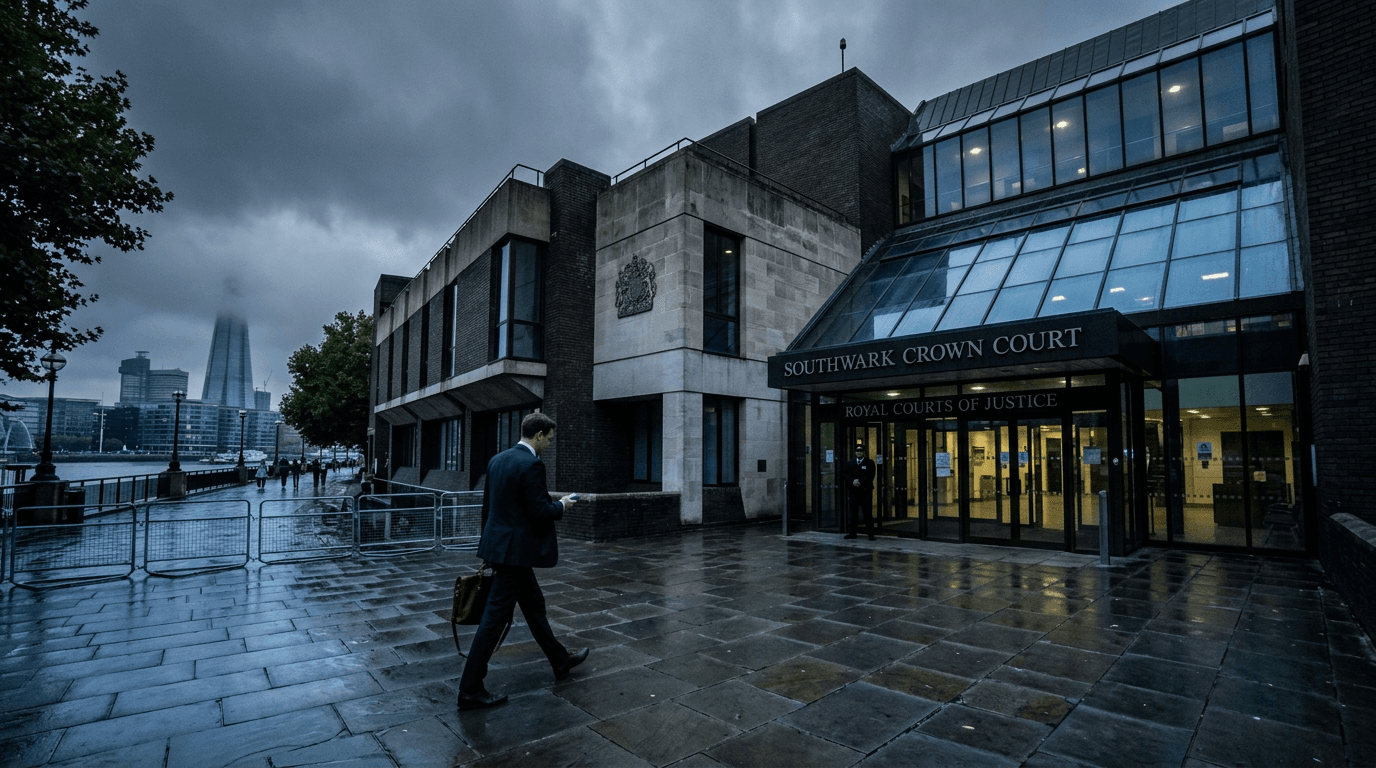
Matthew Pickard, the 56-year-old former director of Ethical Forestry Limited, has been convicted for orchestrating a sophisticated £70 million investment fraud that systematically stripped more than 3,000 UK citizens of their retirement savings. The conviction, finalized at Southwark Crown Court following a multi-year investigation by the Serious Fraud Office (SFO), marks the end of a decade-long saga of deception that promised green sustainability while delivering financial ruin.
On Friday, March 6, 2026, legal proceedings reached a critical milestone as the full scale of the operation was laid bare. Pickard, alongside co-directors Stephen Greenaway and Paul Laver, admitted to fraudulent trading, a charge that carries significant weight under Section 993 of the Companies Act 2006. The trio had previously attempted to maintain a facade of innocence, but the weight of evidence compiled by investigators—ranging from deceptive call center scripts to complex offshore financial trails—forced a change in plea shortly before their trial was set to commence.
The Rise and Fall of Matthew Pickard
The architecture of the fraud was as elaborate as it was predatory. Operating out of a high-pressure call center in Bournemouth, Matthew Pickard and his associates utilized various trading names, including Richmond Solutions and the Pension Report Service, to lure victims. Their primary tactic was the “free pension review,” a red-flag technique that targeted individuals with frozen or underperforming retirement funds.
Victims were persuaded to transfer their life savings from regulated, secure pension schemes into Self-Invested Personal Pensions (SIPPs). These funds were then funneled into Ethical Forestry Ltd, a company that claimed to manage vast plantations of melina and teak trees in the Paraíso region of Costa Rica. The pitch was seductive: high-yield returns from fast-growing hardwood, coupled with the ethical appeal of sustainable forestry.
“The directors presented themselves as pioneers of green investment, but our investigation revealed that the only things growing were their personal bank accounts at the expense of thousands of hardworking people,” an SFO spokesperson stated following the conviction.
While some trees were indeed planted, the SFO’s investigation found that the project was a hollow shell. The directors failed to allocate the necessary capital to maintain the plantations or execute commercial harvests. By 2015, the scheme collapsed entirely, leaving investors with worthless assets and the directors with millions in diverted capital.
A Trail of Luxury and Deception
The scale of the personal enrichment discovered by the SFO is staggering. Of the £70 million raised, a significant portion was siphoned off to fund the directors’ extravagant lifestyles. Matthew Pickard personally acquired a £4.3 million luxury property, while his co-director Greenaway purchased a £1.9 million home in the exclusive Sandbanks area of Poole—one of the most expensive coastal postcodes in the world.
The SFO also identified a fleet of high-performance supercars that served as a testament to the magnitude of the fraud. The seized assets included a Maserati Nero Granturismo, a Ferrari 458 Italia, a McLaren MP4-12C, an Audi R8 V10 Spyder, and a Porsche 911 Turbo S. Furthermore, the investigation uncovered a complex tax avoidance scheme used to hide £2.77 million in personal gains from HMRC.
For many victims, the financial loss was total. Individuals like Julie Bertelli, who lost £12,000 of her inheritance, represent the human cost of Pickard’s enterprise. Many of the 3,000 victims were nearing retirement age and now face a future of financial insecurity. This case serves as a grim addition to our archive of related fraud investigations involving unregulated green investments.
The SFO Takedown
The road to conviction began in December 2015, when Ethical Forestry Ltd abruptly collapsed after hurricane damage provided a convenient excuse for the directors to abandon the project. The SFO formally opened its criminal investigation in March 2017, working in close coordination with the Dorset Police and authorities in Costa Rica.
Investigators spent years reviewing thousands of pages of financial records, internal memos, and the scripts used by call center staff to deceive pensioners. The probe was complicated by the international nature of the assets and the deliberate use of front companies to obscure the flow of money. However, the SFO’s persistence eventually unmasked Matthew Pickard as the primary driver behind the fraudulent trading.
The prosecution highlighted that the “independent” pension advice given to victims was anything but independent. The reviewers were employees of the same organization, creating a closed-loop system designed to funnel money into Ethical Forestry without any external oversight or risk assessment.
What Happens Next?
While the conviction of Matthew Pickard brings a sense of justice, the legal process is far from over. A sentencing hearing is scheduled for May 2026, where the directors are expected to receive substantial custodial sentences reflecting the severity of the £70 million fraud.
Simultaneously, the SFO has initiated Proceeds of Crime proceedings to recover as much of the stolen funds as possible. Victims have been invited to submit a compensation questionnaire by April 10, 2026. While the recovery of the full £70 million is unlikely given the directors’ spending habits, the court-ordered compensation schedule aims to return a fraction of the losses to those most affected.
Protecting Your Future
The Matthew Pickard case highlights several critical red flags that investors must remain vigilant against. The use of cold-calling for “pension reviews” remains the most common entry point for high-value fraud. Furthermore, investments in unregulated “alternative” assets—such as timber, carbon credits, or overseas land—do not carry the protection of the Financial Services Compensation Scheme (FSCS).
Investors should be wary of any scheme that promises high, guaranteed returns from biological assets subject to environmental risks. Most importantly, always verify that any financial advisor is fully regulated by the Financial Conduct Authority (FCA) and is not linked to the investment product they are recommending. As the conviction of Matthew Pickard proves, the promise of a “green” future can often be a smokescreen for a very dark financial reality.