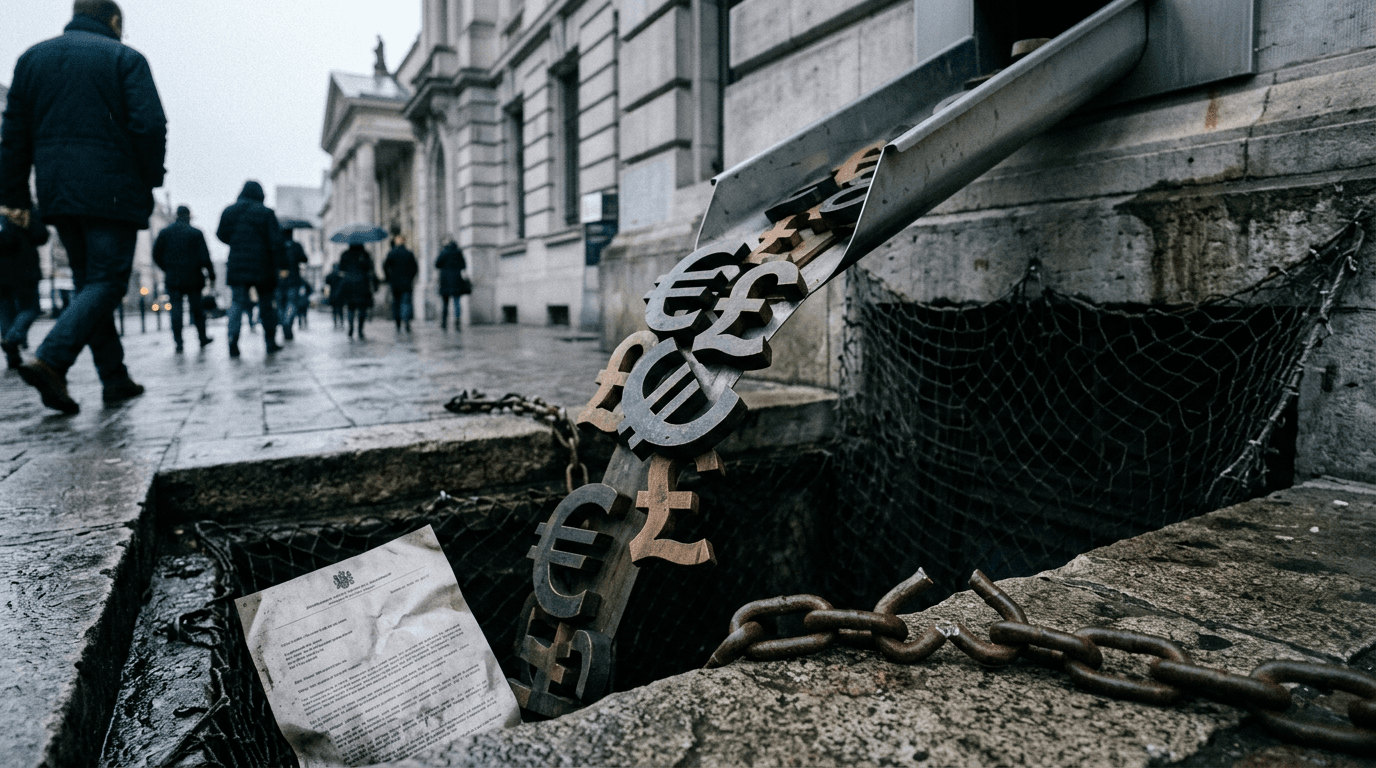
PARIS – In a stunning development that reverberates across the European political landscape, Marine Le Pen, the formidable figurehead of France’s far-right, was today convicted of embezzlement and corporate fraud. The verdict, handed down by French judiciary Judge Bénédicte de Perthuis on Wednesday, March 11, 2026, marks a significant downfall for the three-time presidential candidate, finding her guilty of orchestrating a sophisticated ‘fake jobs scam’ that siphoned €4.8 million from European parliamentary funds.
The Charges Against Marine Le Pen
Marine Le Pen, 57, was found guilty of a meticulously planned scheme that diverted European Union taxpayer money – ostensibly earmarked for parliamentary assistants – to instead pay National Rally (formerly Front National) party workers based in France. These individuals, the court determined, had no legitimate connection to any work undertaken at the European Parliament in Strasbourg or Brussels. Judge de Perthuis declared Le Pen to be “at the heart” of this “carefully organised system,” directly orchestrating eight fictitious contracts valued at approximately €474,000. The fraudulent activities spanned a considerable period, from 2004 to 2016, allowing the National Rally party, then facing financial difficulties, to make “large savings” by funding its centralized staff with European public money.
Scale of the Crime: Millions Diverted, Political Fallout
The financial scale of the embezzlement is staggering, with the court establishing a loss of €4.8 million to European funds. While some estimates placed the figure at €4.5 million or €4.6 million, the European Parliament itself estimated the total embezzled funds to be around €7 million. This substantial sum was used to prop up the National Front, enabling it to operate with funds intended for vital parliamentary functions. The scandal implicates a total of 24 individuals who were convicted, including Le Pen, eight other former Members of the European Parliament (MEPs), and 12 parliamentary assistants involved in fictitious contracts. Two accountants, the party treasurer, and three other party members were also found guilty of complicity.
Marion Anne Perrine “Marine” Le Pen, born on August 5, 1968, is a French national and a lawyer by profession. She rose to prominence after succeeding her father, Jean-Marie Le Pen, as leader of the National Front (later National Rally) party in 2011, a position she held until 2022. Her political career includes serving as a Member of the European Parliament from 2004 to 2017 and three unsuccessful bids for the French presidency. Since June 2022, she has led the National Rally parliamentary party in the National Assembly.
Investigation Details: OLAF Uncovers the Scheme
The fraud was initially brought to light in January 2014, when the European Anti-Fraud Office (OLAF) received an anonymous tip-off detailing possible fraud and “fictitious employment” within Le Pen’s circle. OLAF, the EU body tasked with investigating economic crimes and corruption involving EU funds, first scrutinized Thierry Légier, Le Pen’s bodyguard, and Catherine Griset, her chief of staff, both of whom held contracts as European parliamentary assistants. Further irregularities were noted in March 2015 by then-European Parliament President Martin Schulz, who referred concerns about other assistants’ salaries to OLAF. French authorities placed Le Pen under criminal investigation in 2004 for misuse of funds during her tenure as an MEP, leading to a comprehensive legal process.
“The court’s findings confirm a deliberate and systematic abuse of public trust, where European funds meant for democratic representation were instead diverted to bolster a political party’s domestic operations.”
What Happens Next: Appeal and Political Ban
Following a trial that commenced in September 2024, a French criminal court found Marine Le Pen guilty on March 31, 2025. She received a four-year prison term, with two years suspended and two to be served outside jail with an electronic bracelet. A €100,000 fine was also imposed. Crucially, Le Pen has been banned from running for public office for five years, effective immediately, rendering her ineligible for the 2027 French presidential election. While she has appealed this verdict, with a Paris appeals court scheduled to rule on July 7, 2026, the ban on holding office took immediate effect. The National Rally party itself was fined €2 million and will relinquish another €1 million confiscated during the investigation.
Protecting Yourself: Recognizing the Red Flags of Misappropriation
This case serves as a stark reminder of the sophisticated methods employed in corporate and political fraud. Several red flags, evident in internal communications, could have prevented or curtailed this decade-long scheme. An email from an MEP to the party treasurer in 2014 explicitly warned that “What Marine is asking is equivalent to us signing for fictitious jobs…” and that this was likely to be detected. The treasurer’s reply, “I think Marine knows all that…”, underscored an internal awareness of the illicit nature of the activities. Furthermore, an email from the treasurer to Le Pen in June 2014 detailed the party’s financial woes, stating, “We’ll only get through if we make big savings thanks to the European parliament…” This laid bare the deliberate strategy to exploit European funds. The fundamental discrepancy between staff paid with parliamentary funds and their actual work for a national political party in France was a critical warning sign, as was the referral of irregularities by MEP Martin Schulz. For readers, understanding that such internal communications and a clear divergence between stated purpose and actual function are potent indicators of potential fraud is essential for safeguarding public and corporate integrity.