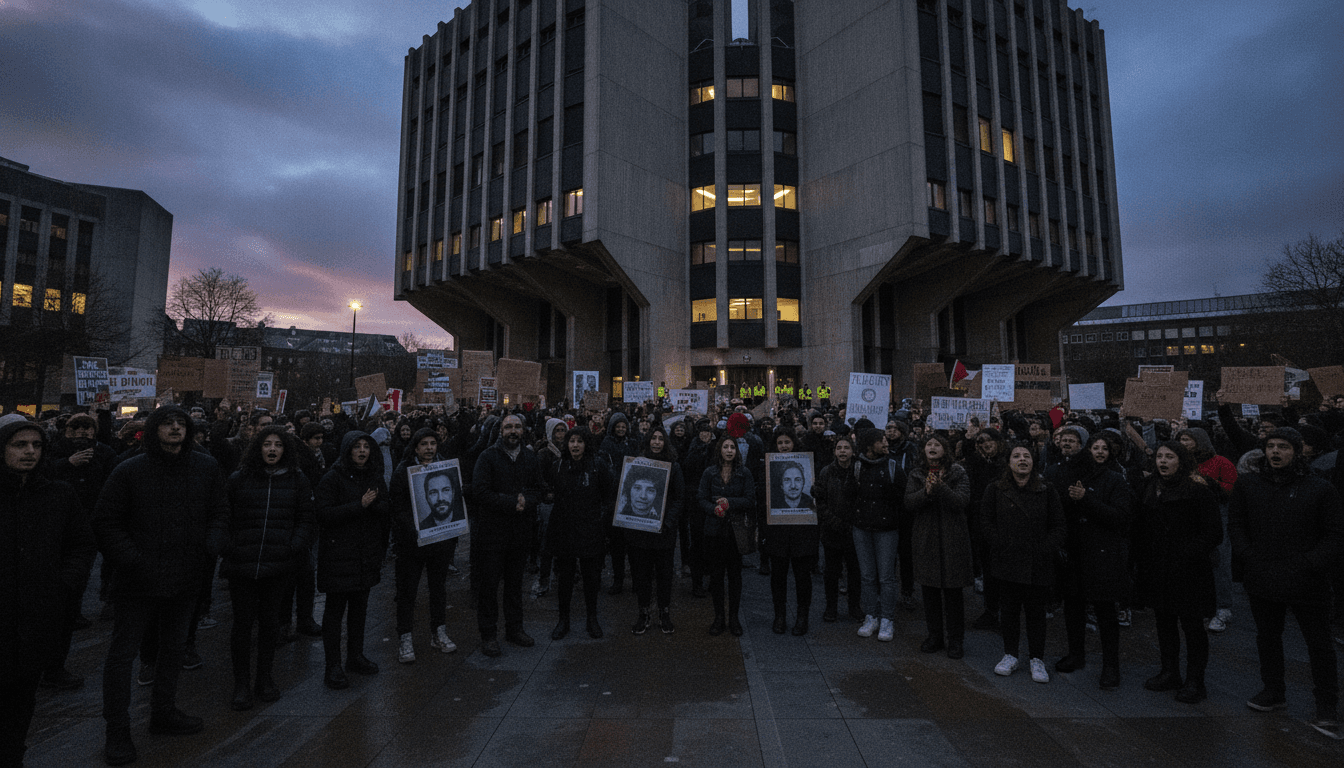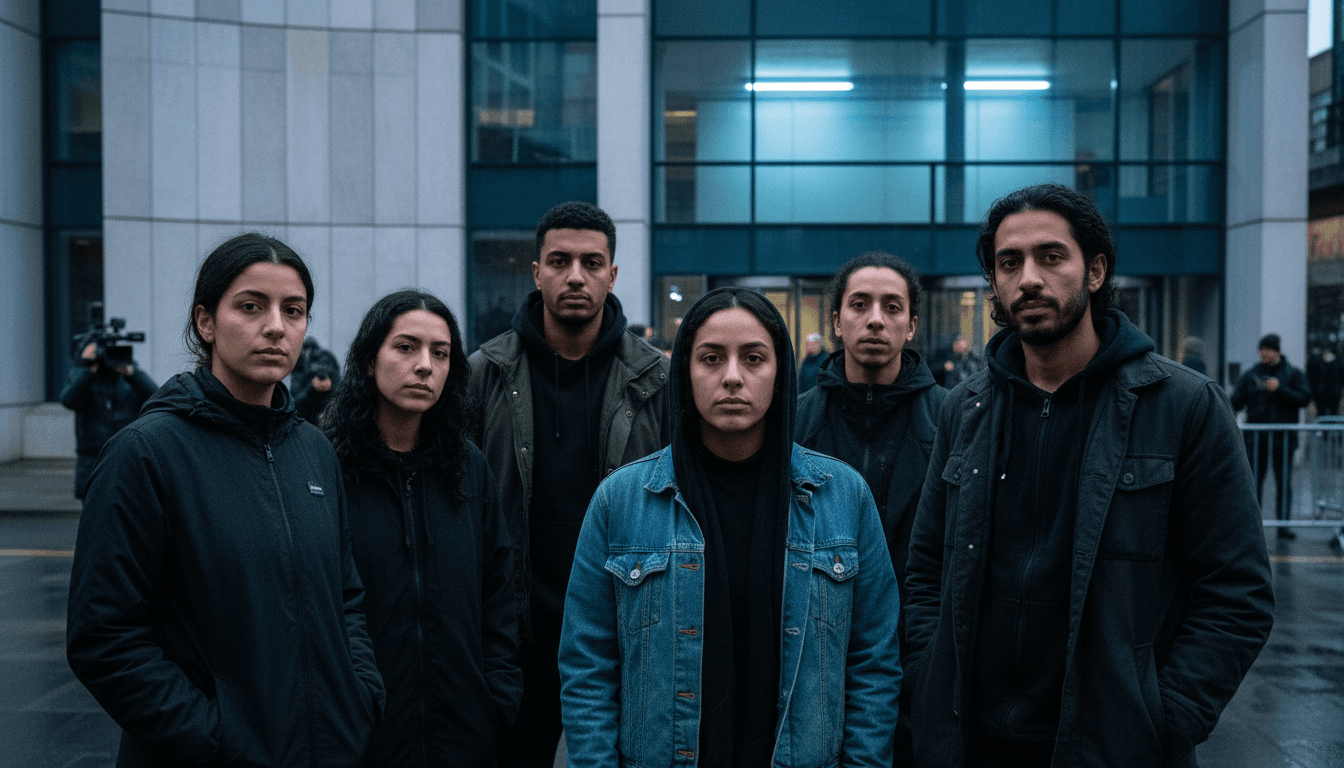
A historic terror connection is poised to be added to the charges of four Palestine Action activists, a move that marks a significant escalation in the UK’s approach to direct action and protest. Charlotte Head, Samuel Corner, Leona (Ellie) Kamio, and Fatema Rajwani, all aged between 21 and 30, were convicted on May 5, 2026, of criminal damage following a raid on an Elbit factory near Bristol in August 2024. During the incident, they damaged Israeli quadcopter drones. Corner also faced a conviction for a lower category of GBH without intent.
Crucially, the jury that convicted them was unaware that a ‘terrorist connection’ could later be imposed on these charges. This unprecedented legal manoeuvre, revealed by Novara Media, was kept secret from both the jury and the wider UK media due to court-imposed restrictions that were only lifted on May 12, 2026. Judge Jeremy Johnson is expected to apply section 69 of the Sentencing Act 2020, which could lead to significantly longer prison sentences and the lifelong burden of being listed as terrorists upon release for the activists.
Impact Analysis: Redefining Direct Action
The potential classification of these activists as terrorists, despite being convicted solely of criminal damage, represents a profound shift in the legal landscape surrounding protest in the UK. This case, believed to be the first of its kind in British history, utilizes the ‘serious property damage’ clause under the Terrorism Act 2000. The judge’s March 2025 preparatory hearing ruling indicated that the activists’ intent to influence the Israeli government by restricting its access to weapons constituted a ‘terrorist connection’.
This ruling sets a dangerous precedent, potentially broadening the scope of terrorism legislation to encompass acts of direct action aimed at political influence through property damage. Palestine Action co-founder Huda Ammori, who successfully challenged the government’s proscription case in February 2026, expressed strong condemnation.
“The judge kept secret from the jury that the defendants would be sentenced as terrorists, presenting that they were only charged for criminal damage which the jury decided four were guilty of. Unknowingly, the jury actually likely convicted them of terrorism,”
Ammori stated, calling the move “more outrageous than the proscription of Palestine Action.”
Court Restrictions and Public Information
The trial was shrouded in stringent restrictions that barred UK media outlets from reporting on critical aspects, including the defendants’ motivations for joining Palestine Action, information regarding the conflict in Gaza, or details about Elbit Systems. Defence teams were also prohibited from referring to jury equity – the jury’s absolute power to acquit based on conscience – or informing them that a judge cannot direct a jury to convict. Furthermore, key legal defences, such as acting out of necessity to save lives or prevent a greater crime, were disallowed.
These restrictions extended to any mention of Elbit’s activities, the nature of the damaged property, the defendants’ belief that weapons would be used to kill, their prior arrests for terrorism offences, or the history of the Middle East, including events since October 7, 2023. Coventry South MP Zarah Sultana used parliamentary privilege in April to expose these court orders, highlighting concerns about civil liberties and the suppression of information. The severe limitations prompted all defendants, except Samuel Corner, to self-represent and deliver their own closing speeches, with some alluding to the restrictions. Zoe Rogers, who was acquitted, remarked, “My co-defendants should be outside here with me. I don’t blame the jury for their decision as the truth was withheld from them throughout the trial. This is a miscarriage of justice and the litmus test has been failed for democracy and rule of law in this country.”
The Broader Context of Protest and Terrorism Legislation
This case unfolds against a backdrop of increasing scrutiny on protest movements and the application of anti-terrorism laws. While the Terrorism Act 2000 defines terrorism broadly to include acts designed to influence a government or international governmental organisation by serious violence against a person or serious damage to property, its application to non-violent property damage in a context where the jury was not informed of the potential terror link raises profound questions about due process and judicial transparency. Previous cases involving activists have often navigated the line between criminal damage and more severe charges, but the retrospective application of a terror connection after a jury verdict on lesser charges is indeed a novel development. This could have chilling effects on future protest movements, particularly those targeting corporations linked to international conflicts. The Financial Standard has previously covered rising tensions between protest rights and national security legislation, noting a trend towards harsher penalties for disruptive actions.
What’s Next for Palestine Action Activists?
The immediate future for Charlotte Head, Samuel Corner, Leona Kamio, and Fatema Rajwani involves sentencing proceedings where the ‘terrorist connection’ will be a central factor. Having already served significant time on remand – 18 months for most, and 21 months for Corner – the addition of this connection could drastically extend their incarceration periods. Beyond prison, the designation as a terrorist carries severe lifelong implications, affecting employment, travel, and social reintegration. The legal community and civil liberties advocates will be closely watching the sentencing, as it will further define the boundaries of protest and the state’s power to label dissent. The outcome will undoubtedly shape how future direct action campaigns are conducted and prosecuted in the UK.
This unprecedented move to impose a historic terror connection on activists convicted of criminal damage, without the jury’s knowledge, represents a critical juncture for civil liberties and the future of protest in the United Kingdom. It signals a potential redefinition of what constitutes terrorism, extending its reach beyond conventional understandings and into the realm of political dissent through property damage.