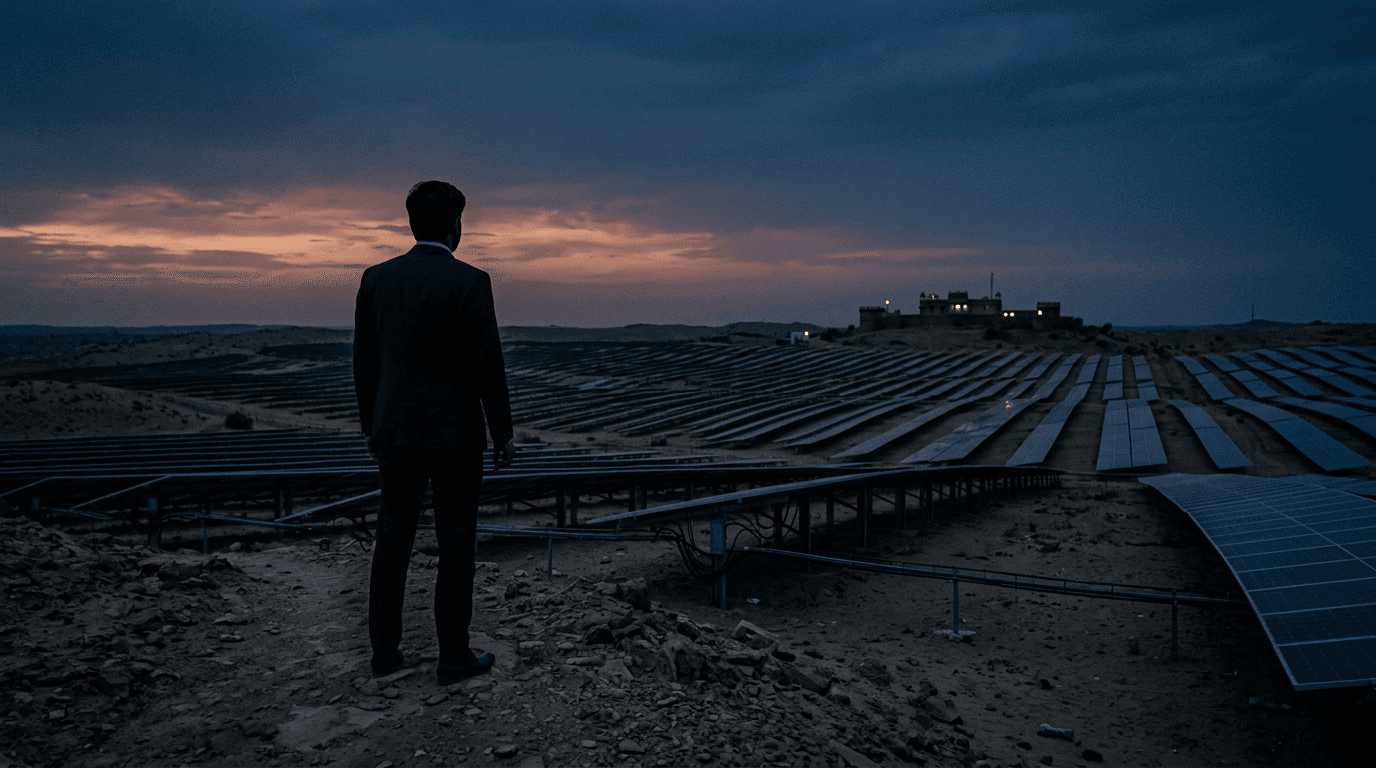
NEW YORK — Gautam Adani, the Indian industrialist and chairman of the Adani Group, has been charged by U.S. federal prosecutors in a massive $250 million bribery and securities fraud conspiracy that has sent shockwaves through global financial markets. The unsealing of the five-count indictment in the U.S. District Court for the Eastern District of New York marks a stunning fall for one of the world’s wealthiest individuals, alleging a multi-year scheme to corruptly secure lucrative energy contracts while defrauding American investors.
The Allegations Against Gautam Adani
According to the Department of Justice (DOJ) and the Securities and Exchange Commission (SEC), between 2020 and 2024, the billionaire and several high-ranking executives orchestrated a plot to pay more than $250 million in bribes to Indian government officials. The objective was clear: to induce state-owned power distribution companies to sign Power Supply Agreements (PSAs) with the Solar Energy Corporation of India (SECI) at rates significantly above market value. These contracts were projected to yield more than $2 billion in after-tax profits over a 20-year period.
The indictment names not only the elder Adani but also his nephew, Sagar Adani, and Vneet Jaain, the CEO of Adani Green Energy. Prosecutors allege that while these bribes were being promised and paid, the defendants were simultaneously raising billions of dollars from U.S. and international capital markets. They allegedly provided false and misleading statements to investors and financial institutions, claiming that the Adani Group maintained rigorous anti-bribery policies and had never engaged in corruption.
“This was a calculated, multi-billion dollar deception designed to extract wealth from the public and international investors through a web of corruption and lies,” stated a senior official involved in the investigation.
The Digital Trail: “Numero Uno” and “The Big Man”
The investigation, led by the FBI’s New York Field Office, leveraged a wealth of digital evidence that paints a damning picture of the conspiracy’s inner workings. In March 2023, FBI agents seized electronic devices belonging to Sagar Adani during a visit to the United States. Analysis of these devices revealed meticulous tracking of the bribery scheme. Sagar Adani reportedly used his mobile phone to document specific details of the bribes offered to officials in states such as Andhra Pradesh, Odisha, and Tamil Nadu.
Furthermore, messaging logs and internal documents show that associates used various code names to refer to Gautam Adani, including “Numero Uno” and “The Big Man.” This level of internal secrecy underscores the clandestine nature of the operations, which the DOJ describes as a “brazen” attempt to bypass international legal standards for corporate conduct. This case serves as a landmark in related fraud investigations targeting high-level corporate corruption on a global scale.
Scale of the Deception and Market Impact
The financial scale of the fraud is staggering. During the period of the alleged bribery, the Adani Group raised over $3 billion in loans and bonds. This included a high-profile $750 million “green bond” offering in September 2021, of which approximately $175 million was sourced directly from U.S. investors. These investors were led to believe their capital was funding sustainable, ethically managed energy projects, when in reality, the underlying contracts were allegedly born of systemic bribery.
The fallout has been immediate and severe. When the initial details of the investigation were unsealed, Adani Group companies saw a catastrophic loss of over $28 billion in market value in a single day. This volatility has raised serious questions about the oversight of international conglomerates and the efficacy of due diligence performed by major global banks that facilitated these capital raises.
A Global Investigative Effort
The charges are the result of a coordinated effort between the DOJ’s Criminal Division and the SEC. The investigation was catalyzed in part by the 2023 Hindenburg Research report, which first alleged widespread stock manipulation and accounting irregularities within the group. While the Adani Group initially dismissed the report as a “calculated attack on India,” the subsequent FBI probe found substantial evidence of criminal conduct that went far beyond mere accounting discrepancies.
In addition to the Adani family, five other individuals have been charged, including former executives of Azure Power Global and employees of a Canadian institutional investor. These defendants face charges of conspiracy to violate the Foreign Corrupt Practices Act (FCPA) and obstruction of justice, for allegedly attempting to hide evidence from federal investigators.
What Happens Next?
As of today, Thursday, March 5, 2026, U.S. arrest warrants remain active for Gautam Adani and Sagar Adani. While the defendants are currently in India, the U.S. government is reportedly seeking cooperation from international law enforcement agencies to execute these warrants. The Adani Group has continued to deny the allegations, labeling them “baseless,” but the legal pressure is mounting as more evidence enters the public record.
The next phase of the legal battle will likely involve complex extradition proceedings and further civil litigation from defrauded investors seeking to recover billions in lost capital. The case is being handled by the U.S. Attorney’s Office for the Eastern District of New York, which has a long history of prosecuting international financial crimes.
Protecting the Global Market
For investors and analysts, the wealth of Gautam Adani was once seen as a symbol of India’s rapid industrial rise. However, the current charges highlight critical red flags that were overlooked for years. High turnover in executive positions—specifically the fact that the Adani Group saw five Chief Financial Officers in just eight years—is often a primary indicator of internal instability or a lack of financial transparency. Furthermore, the use of complex corporate structures in tax havens like Mauritius should always serve as a warning sign for potential foul play.
As this breaking story develops, the international community will be watching closely to see if the “Big Man” of Indian industry will face a U.S. jury. Investors are urged to remain vigilant, as this case proves that even the most powerful industrial empires are not immune to the reach of federal law enforcement when built on a foundation of fraud.