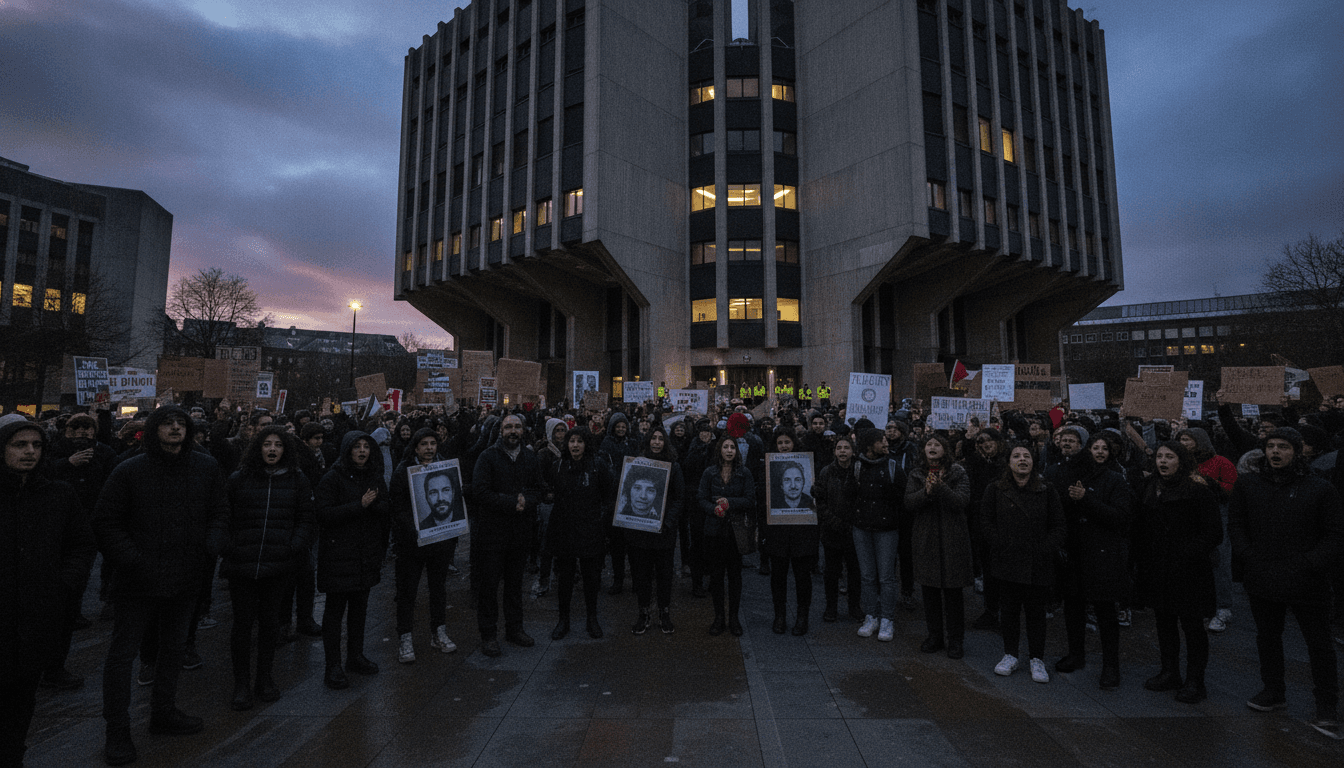
Dmitry Artyakov was arrested early Saturday morning, March 7, 2026, in a high-stakes raid conducted by the Spanish Anti-Corruption Prosecution in Madrid. The arrest marks the culmination of one of the largest financial crime investigations in European history, with Artyakov accused of laundering a staggering $28,000,000,000 through a sophisticated network of shell companies and luxury real estate holdings. The operation, which began at dawn, targeted multiple properties linked to the financier, sending shockwaves through the global banking sector.
The Spanish Anti-Corruption Prosecution executed the warrant at a private estate in the exclusive La Moraleja district. Artyakov, who had been under surveillance for over eighteen months, was taken into custody without incident. Authorities have also seized digital assets, physical ledgers, and a fleet of luxury vehicles as part of the ongoing operation. This arrest is the first major move in what officials describe as a multi-jurisdictional crackdown on illicit financial flows that have compromised the integrity of the Mediterranean property market.
The Charges Against the Financier
The specific charges against the accused are as expansive as the sum of money involved. Prosecutors allege that the $28 billion figure represents nearly a decade of illicit financial flows originating from various international criminal enterprises. The core of the indictment focuses on large-scale money laundering, tax fraud, and criminal association. According to court documents, the funds were filtered through a labyrinthine structure of offshore entities designed to obscure the ultimate beneficial owner.
Investigators claim that the network managed by the accused utilized “smurfing” techniques on an industrial scale, breaking down massive sums into smaller, less conspicuous transactions that bypassed standard AML (Anti-Money Laundering) triggers. Furthermore, the Spanish Anti-Corruption Prosecution alleges that the defendant corrupted several mid-level banking officials to ensure that high-value wire transfers were flagged as “legitimate trade settlements.” This systematic subversion of financial controls is what allowed the scheme to persist for so long without detection.
“The scale of this operation is unprecedented in the history of Spanish law enforcement. We are not just looking at a single man, but a shadow infrastructure that facilitated the movement of billions in dirty capital across our borders.” — Lead Investigator, Spanish Anti-Corruption Prosecution.
The Scale of the $28 Billion Crime
To put the $28,000,000,000 figure into perspective, the amount exceeds the annual GDP of several small nations. The mechanism of the crime involved what investigators have dubbed the “Matryoshka Protocol.” This involved creating layers upon layers of shell companies in jurisdictions such as Panama, the British Virgin Islands, and Cyprus. These entities would then “loan” money to Spanish subsidiaries, which would use the funds to purchase high-end real estate, vineyards, and commercial developments along the Costa del Sol.
The victims in this case are not just the taxpayers who lost out on billions in uncollected revenue, but the entire economic ecosystem of the regions where the money was deployed. By flooding the market with illicit cash, the scheme artificially inflated property prices, making housing unaffordable for local residents and distorting the competitive landscape for legitimate businesses. For more on how these schemes impact global markets, see our related fraud investigations.
The Rise and Fall of Dmitry Artyakov
Before his legal troubles began, Dmitry Artyakov was known in elite circles as a “ghost financier”—a man with immense resources but a very low public profile. He moved comfortably between the boardrooms of Zurich and the villas of Marbella, often presenting himself as a consultant for international trade and logistics. His background remains somewhat opaque, though he is believed to have deep ties to the post-Soviet industrial sectors, where he allegedly first learned the art of capital flight.
Throughout the early 2020s, Dmitry Artyakov built a reputation for being able to move large sums of capital across borders with minimal friction. This reputation made him a go-to figure for those looking to distance themselves from the origins of their wealth. However, it was this very notoriety that eventually drew the attention of the Spanish Anti-Corruption Prosecution. As his web grew larger, the digital footprint left behind became impossible to ignore, leading to the surveillance operation that ultimately resulted in his downfall.
Investigation Details and Evidence
The probe, codenamed “Operation Clean Slate,” involved a task force of over 150 specialists, including forensic accountants, cyber-intelligence analysts, and international legal experts. The breakthrough came when a whistleblower within a Swiss boutique bank provided a cache of encrypted emails that detailed the internal workings of the laundering network. These emails allegedly showed Dmitry Artyakov personally approving the creation of several shell companies used in the $28 billion scheme.
Further evidence surfaced during a raid on a secondary office in Barcelona last year, where investigators found a hidden server containing a secondary set of books. These ledgers meticulously tracked the “cleaning fees” charged by the organization, which ranged from 5% to 15% depending on the complexity of the transaction. The Spanish Anti-Corruption Prosecution has stated that this evidence is “irrefutable” and provides a direct link between the defendant and the illicit funds.
What Happens Next
Following the arrest on Saturday, Dmitry Artyakov is scheduled to appear before a magistrate in Madrid on Monday morning. Prosecutors have already indicated they will argue against bail, citing him as a significant flight risk with access to private aviation and numerous foreign bank accounts. If convicted on all counts, legal experts suggest he could face a sentence of up to 30 years in prison, given the unprecedented scale of the financial damage.
The investigation is far from over. Authorities are now looking into the potential involvement of other high-ranking individuals who may have facilitated or profited from the scheme. There are also ongoing discussions regarding the seizure and liquidation of the assets tied to the laundering operation, with the goal of returning funds to the public coffers. The case is expected to drag on for years as international legal teams navigate the complex web of corporate ownership.
Protecting Yourself from Financial Fraud
The arrest of Dmitry Artyakov serves as a stark reminder of the prevalence of high-level financial crime. For investors and business owners, there are several red flags to watch for when dealing with new partners or investment opportunities. Be wary of complex corporate structures that lack a clear purpose or entities that rely heavily on offshore jurisdictions with poor transparency. If a deal involves “back-to-back” loans or unexplained third-party payments, it is essential to conduct thorough due diligence. Always verify the ultimate beneficial owner of any company you do business with, and remember that if a financial arrangement seems unnecessarily complicated, it is often designed that way to hide the truth. Vigilance is the only true defense against the sophisticated mechanisms of modern money laundering.