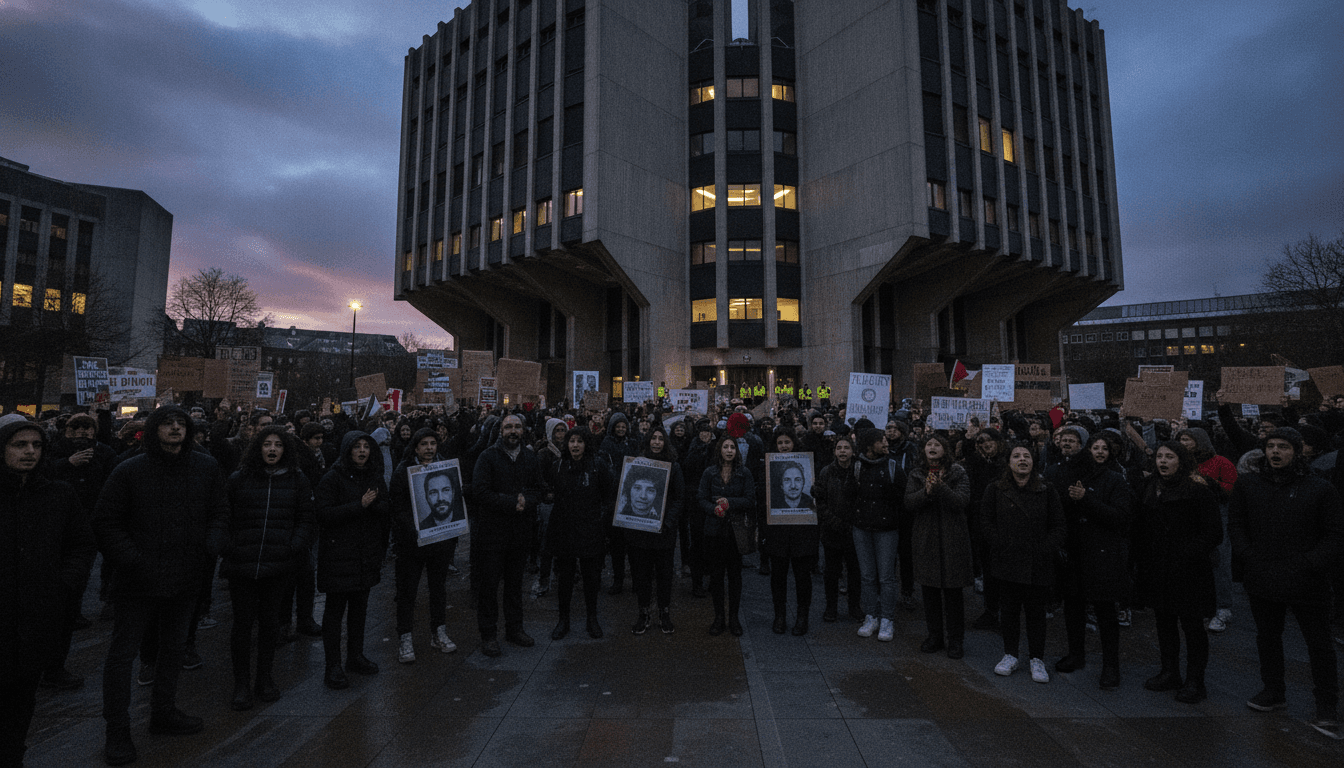
A landmark ruling on April 6, 2026, saw nine police personnel sentenced to death in Madurai, Tamil Nadu, for the brutal custodial torture and murder of trader P Jayaraj and his son J Benicks in June 2020. This unprecedented verdict, delivered after a five-year trial, marks a critical moment in India’s fight against police brutality and abuse of authority, sending a stark message about accountability within law enforcement agencies.
The Story Unfolds: A Grievous Abuse of Power
The tragic sequence of events began at the Sattankulam police station during the COVID-19 lockdown. Jayaraj and Benicks were detained for an alleged violation of lockdown norms—keeping their mobile phone shop open slightly past permitted hours. What transpired next, as detailed in court proceedings and a subsequent Central Bureau of Investigation (CBI) probe, was a horrifying act of state-sanctioned violence.
According to the court, the father and son were “stripped, ruthlessly assaulted” throughout the night. The CBI investigation further revealed that the initial detention was not even based on any actual violation of lockdown rules, and a false case was registered against them. The two were subjected to such severe beatings that they were made to clean their own blood. Both Jayaraj and Benicks succumbed to their injuries within days of their detention, sparking widespread public outrage and demands for justice.
The trial court found the nine policemen guilty of custodial torture and murder, describing the case as a profound abuse of authority. The judge, in a somber pronouncement, stated that the “heart shudders reading about the case.” The court unequivocally rejected arguments that pre-existing health conditions contributed to their deaths, concluding that both men were murdered in custody due to repeated assault. The convicts included Inspector S Sridhar, Sub-Inspectors K Balakrishnan and P Raghu Ganesh, Head Constables S Murugan and A Samadurai, and Constables M Muthuraja, S Chelladurai, X Thomas Francis, and S Veilumuthu. A tenth accused, Special Sub-Inspector Pauldurai, died during the trial.
Impact Analysis: A Deterrent Against Custodial Deaths
This sentencing is a pivotal moment for the Indian justice system, particularly concerning police accountability. The court classified the case as the “rarest of rare,” emphasizing that the crime had deeply shaken the collective conscience of society. The judge’s imposition of a combined fine of ₹1.40 crore on the convicts, intended as compensation to the victims’ families, underscores the gravity of the offense and the court’s commitment to restorative justice.
The ruling is expected to serve as a significant deterrent, as the court stressed that the punishment must prevent such incidents in the future.
“If ordinary citizens had committed the same crime, ordinary punishment could have been given, but the police themselves have committed the crime,” the judge stated, highlighting the heightened responsibility of law enforcement.
This verdict aims to instill confidence that the justice system will not tolerate abuses of power, even from those sworn to uphold the law. It reinforces the principle that no one, regardless of their position, is above the law. For more insights into such cases, readers can explore related crime & justice articles.
Context & Background: A History of Scrutiny
The Jayaraj-Benicks custodial deaths case brought national and international attention to the persistent issue of custodial violence in India. While incidents of police brutality are not uncommon, the sheer brutality and subsequent public outcry in this particular case forced a rigorous legal response. The Madurai Bench of the Madras High Court took suo motu cognisance of the case, ordering a judicial inquiry that ultimately led to the state government transferring the investigation to the CBI. This ensured an impartial probe, a crucial step in building public trust and securing justice for the victims.
The CBI counsel argued persuasively that the case fell within the category of the rarest of rare, necessitating the maximum possible punishment. The High Court’s initial finding of prima facie material to book the police personnel for murder laid the groundwork for the trial court’s ultimate decision to impose the death penalty on all nine surviving accused. This comprehensive judicial oversight, from initial inquiry to final sentencing, showcases a robust response to a grave miscarriage of justice.
What’s Next: Upholding Accountability
While the sentencing marks a closure for the victims’ families in terms of justice delivered, the broader implications for police reform and accountability will continue to unfold. The judgment is likely to be appealed to higher courts, a standard procedure in death penalty cases. However, the strong findings and clear rationale provided by the trial court will present a formidable challenge to any appeal. This case will undoubtedly be cited in future legal battles against custodial violence, potentially influencing policy changes and training protocols within police forces across the nation.
Key Takeaway: A Defining Moment for Justice
The sentencing of nine policemen to death for the custodial torture and murder of Jayaraj and Benicks is a defining moment for justice in India. It underscores the judiciary’s unwavering commitment to holding those in power accountable and sends an unequivocal message that abuse of authority, particularly resulting in custodial deaths, will not be tolerated. This verdict serves as a powerful reminder that the rule of law applies equally to all, reinforcing public faith in the justice system and setting a crucial precedent for future cases of police misconduct.