Bill Hwang, the man behind the catastrophic collapse of Archegos Capital Management, was sentenced today, Friday, March 6, 2026, to 18 years in federal prison, marking the end of one of the most audacious securities fraud cases in the history of Wall Street. The U.S. Department of Justice (DOJ) confirmed that the sentencing follows a lengthy investigation into a $10 billion market manipulation scheme that sent shockwaves through global financial markets and ultimately led to the demise of major banking institutions.
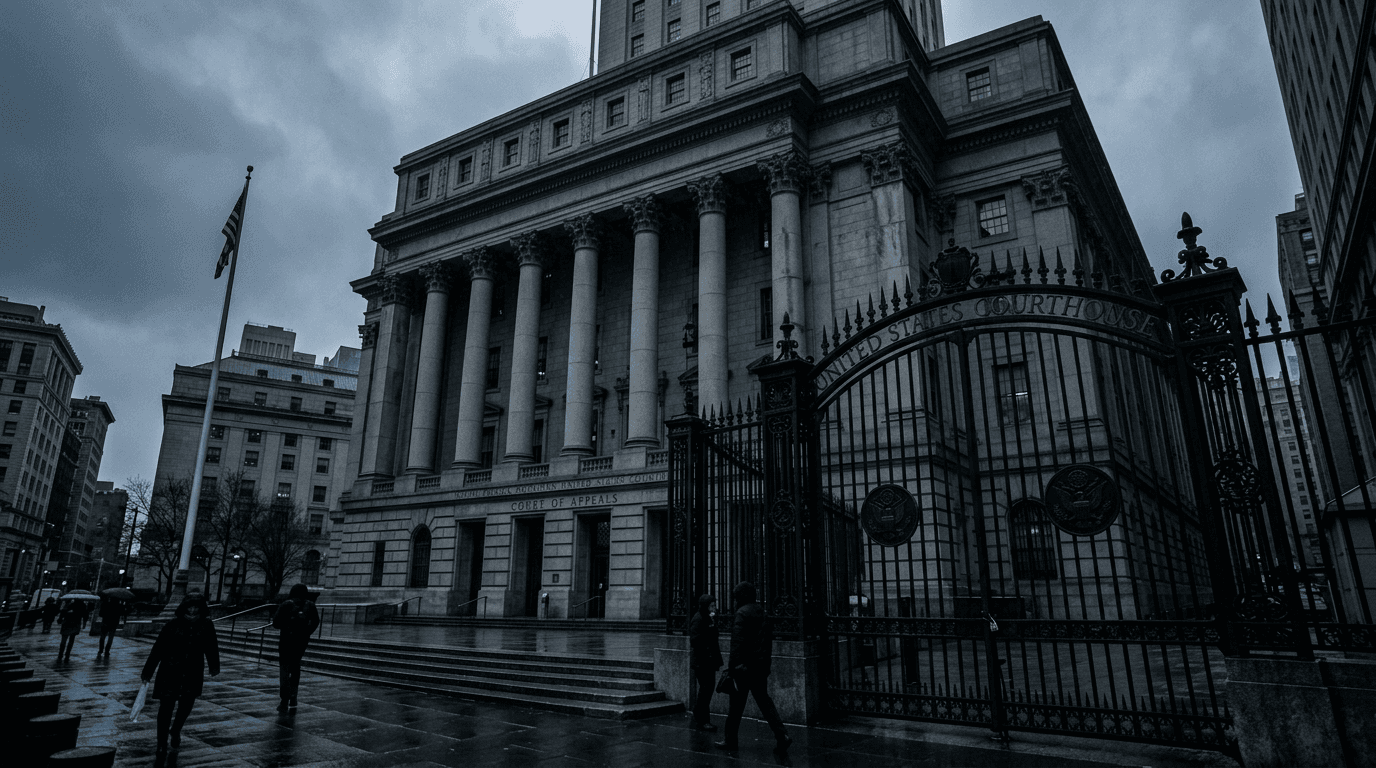
Standing before a federal judge in the Southern District of New York, the 60-year-old former hedge fund manager remained stoic as the court detailed the “unprecedented” scale of his deception. In addition to his prison term, Hwang has been ordered to pay a staggering $12.35 billion in forfeiture and more than $9 billion in restitution to the victims of his multi-year campaign of market manipulation.
The Calculated Deception of Bill Hwang
The core of the government’s case against Bill Hwang centered on his use of complex financial instruments known as Total Return Swaps (TRS). Between March 2020 and March 2021, Hwang utilized these derivatives to secretly amass massive, highly leveraged positions in a handful of volatile stocks, including ViacomCBS, Discovery, and Baidu. By using swaps, Archegos was able to gain the economic benefits of share ownership without actually holding the titles, effectively bypassing federal disclosure requirements.
This “shadow” ownership allowed Hwang to hide the true size of his positions from both regulators and the very banks that were financing his trades. Prosecutors successfully argued that Hwang misled at least nine global investment banks, claiming his portfolio was diversified and liquid while he was simultaneously using the same capital to secure billions in trading capacity across multiple institutions.
“This was not a series of unfortunate trades; it was a calculated, fraudulent effort to manipulate the open market for personal gain while shifting the risk of failure onto the shoulders of global financial institutions and public shareholders.”
The scale of the exposure was gargantuan. At its peak, Hwang’s market exposure reached nearly $160 billion. To maintain the upward trajectory of his core holdings, Hwang engaged in a practice known as “marking the close,” where he would execute aggressive trades in the final minutes of the trading day to artificially inflate stock prices. This house of cards began to wobble in March 2021 when ViacomCBS announced a $3 billion stock offering, causing a price dip that triggered a cascade of margin calls Archegos could not meet.
The ensuing “fire sale” of Archegos’s assets wiped out more than $100 billion in market value for the companies in its portfolio within a single week. For a deeper look at how similar mechanisms have been used in other white-collar crimes, see our related fraud investigations.
The Victims: A Global Financial Contagion
The fallout from the collapse was not limited to Hwang’s personal $20 billion fortune, which evaporated in 48 hours. The banking sector bore the brunt of his deceit. Credit Suisse, once a pillar of European banking, suffered a $5.5 billion loss—a blow so severe it catalyzed the bank’s eventual collapse and forced takeover by UBS. Other major victims included Nomura, which lost $2.85 billion, and Morgan Stanley, which reported a $911 million hit.
However, the DOJ emphasized that the victims extended far beyond the boardrooms of Wall Street. Thousands of ordinary retail investors who held shares in the manipulated companies saw their life savings diminished as stock prices plummeted during the forced liquidations. Furthermore, Archegos employees lost hundreds of millions of dollars in deferred compensation that was tied to the firm’s artificially inflated value.
A Career Defined by Recidivism
Bill Hwang was no stranger to regulatory scrutiny. A protégé of Julian Robertson and a member of the elite “Tiger Cubs,” Hwang’s earlier firm, Tiger Asia Management, was shuttered after a 2012 settlement with the SEC over insider trading. Despite a guilty plea to wire fraud and a $44 million fine at that time, Hwang was able to reinvent himself by opening Archegos as a “family office.”
This designation allowed him to operate with significantly less oversight than traditional hedge funds. The investigation revealed that several banks, including Goldman Sachs, had initially blacklisted Hwang due to his criminal history but eventually relented, lured by the promise of lucrative trading fees generated by his high-volume swap activity.
The FBI and the U.S. Attorney’s Office for the Southern District of New York spent years untangling the web of lies Hwang spun for his lenders. The evidence presented during the trial included internal communications and testimony from co-conspirators, including former Chief Risk Officer Scott Becker and head trader William Tomita, both of whom pleaded guilty and cooperated with the government.
What Happens Next
With the sentencing of Bill Hwang, the focus now shifts to his co-defendant, former CFO Patrick Halligan, who is also awaiting his final judgment. The 18-year sentence sends a clear message to the financial sector regarding the misuse of derivatives and the exploitation of regulatory loopholes. Regulatory bodies are currently debating new rules that would require family offices to provide greater transparency regarding their swap positions to prevent another Archegos-style event.
As the DOJ continues to pursue the recovery of assets, the case serves as a grim reminder of the risks inherent in the “shadow banking” system. Investors and institutions alike are urged to look for red flags such as extreme portfolio concentration, lack of transparency in derivative holdings, and a history of regulatory non-compliance in fund managers. Bill Hwang will now serve his sentence in a federal facility, a stark contrast to the high-stakes trading floors where he once commanded billions.