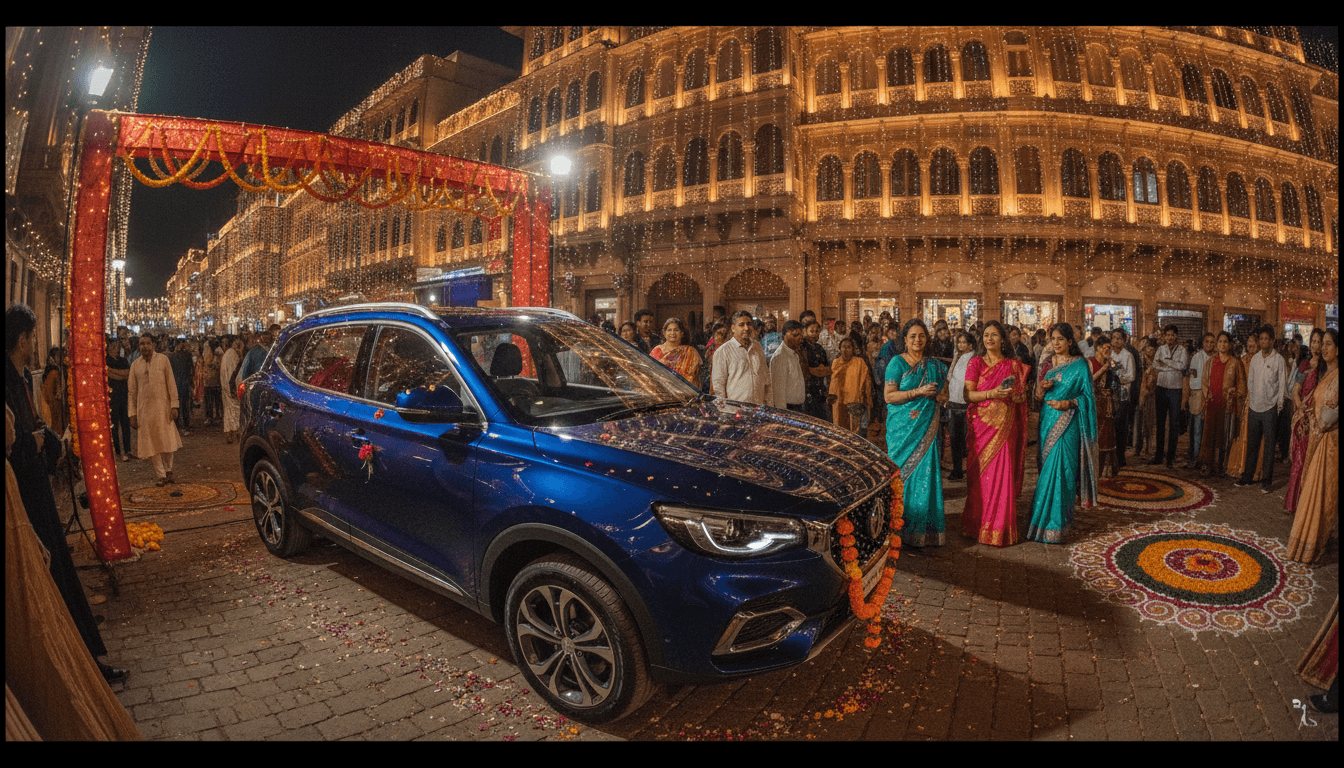
MG’s first hybrid SUV is confirmed for a Diwali 2026 launch, marking JSW MG Motor India’s significant entry into the plug-in hybrid segment. This strategic move, announced on Monday, June 8, 2026, positions the upcoming vehicle, codenamed 520, to directly challenge established players like the Mahindra XUV 7XO and XEV 9S in the competitive Indian SUV market. The vehicle is strongly speculated to be a rebadged version of the Wuling Starlight 560 SUV, with design patents already secured, signaling MG’s intent to leverage its global partnerships for rapid market penetration.
The introduction of MG’s first hybrid SUV comes at a time when the Indian automotive landscape is witnessing a palpable shift towards sustainable mobility solutions. While pure EVs are gaining traction, plug-in hybrids offer a compelling bridge for consumers seeking reduced emissions and fuel efficiency without range anxiety. MG’s decision to launch a PHEV ahead of its fully electric counterpart in this segment underscores a calculated approach to cater to a broader consumer base.
Powertrain Specifications and Market Positioning
The anticipated MG Starlight 560, if it mirrors its global Wuling counterpart, will offer robust powertrain options. The plug-in hybrid variant features a 1.5L petrol engine coupled with a 20.5kWh battery pack, delivering a combined power output of 197bhp and 230Nm of torque. This configuration promises a substantial electric-only range of up to 100km, as per the China Light-Duty Vehicle Test Cycle (CLTC), making it highly practical for daily commutes on electric power. For those inclined towards full electrification, an EV model with a 56.7kWh battery pack and a front-mounted electric motor producing 136bhp and 200Nm, offering a 500km range, is also available globally, though the initial India launch focuses on the PHEV.
Dimensionally, the MG Starlight 560 is poised to be a formidable contender. Measuring 4,745mm in length, 1,850mm in width, and 1,755mm in height, with a 2,810mm long wheelbase, it is notably larger than the Mahindra XUV 7XO. The new MG plug-in hybrid SUV will be 50mm longer and boast a 60mm longer wheelbase, potentially offering a more spacious cabin and commanding road presence, a crucial differentiator in the SUV segment where size often equates to prestige and comfort.
“MG’s strategic entry with a plug-in hybrid SUV of this scale indicates a clear intent to disrupt the mid-to-large SUV segment, offering a blend of performance, efficiency, and space that could appeal strongly to discerning Indian buyers,” notes a leading industry analyst.
Interior Features and Technological Edge
Inside, the Wuling Starlight 560, expected to be rebranded as the MG Starlight 560, presents a minimalist yet sophisticated dual-tone interior. A dominant 12.8-inch central touchscreen infotainment system takes center stage, complemented by an 8.8-inch digital driver’s display. This modern setup allows for most vehicle functions to be controlled digitally, while essential physical buttons for critical operations are thoughtfully integrated on the steering wheel, center console, and door armrests, striking a balance between futuristic design and user-friendliness.
The feature list is comprehensive, including a 6-speaker audio system, automatic climate control, luxurious leatherette upholstery, and modern connectivity options like OTA (over-the-air) updates and 4G connected car technology. Safety is also a priority, with multiple airbags, rear parking sensors and camera, electronic stability control, and ABS with EBD, ensuring a secure driving experience. These features collectively aim to position MG’s first hybrid SUV as a premium offering in its segment.
Context and Broader Market Implications
The Indian automotive market is currently in a transitional phase, with manufacturers increasingly investing in hybrid and electric vehicle technologies. MG’s parent company, SAIC, has a strong presence in the Chinese market with Wuling, and bringing a rebadged, proven model like the Starlight 560 to India makes strategic sense. It allows for faster market entry and leverages existing R&D, reducing time-to-market and development costs. This move also aligns with the broader global trend of electrification and the Indian government’s push for greener mobility.
The competition is fierce, with homegrown players like Mahindra and Tata Motors aggressively expanding their EV and hybrid portfolios. The recent announcement of the Tata Sierra EV launch within two months and the Safari EV by Diwali further intensifies the race, indicating a robust pipeline of new-age vehicles entering the market. MG’s decision to introduce a PHEV first, rather than a pure EV for this specific model, suggests a nuanced understanding of the Indian consumer’s current preferences and infrastructure readiness.
What’s Next for JSW MG Motor India?
The Diwali 2026 launch of MG’s first hybrid SUV will be a pivotal moment for JSW MG Motor India. Its success will not only validate MG’s strategy of leveraging global platforms for the Indian market but also set a precedent for future hybrid and EV introductions. The pricing strategy will be crucial, as will the after-sales service network and charging infrastructure support for the PHEV variant. As the festive season approaches, further details on localized features, specific trim levels, and official pricing are eagerly awaited. The battle for market share in India’s rapidly evolving automotive landscape is intensifying, and MG is clearly positioning itself to be a significant player.
This launch underscores a critical shift in the Indian automotive narrative, moving beyond conventional internal combustion engines towards a more diverse and sustainable product portfolio. The emphasis on plug-in hybrids serves as a practical stepping stone for mass adoption, offering the best of both worlds – electric efficiency for urban commutes and petrol reliability for longer journeys. MG’s first hybrid SUV could very well redefine expectations in the competitive segment.