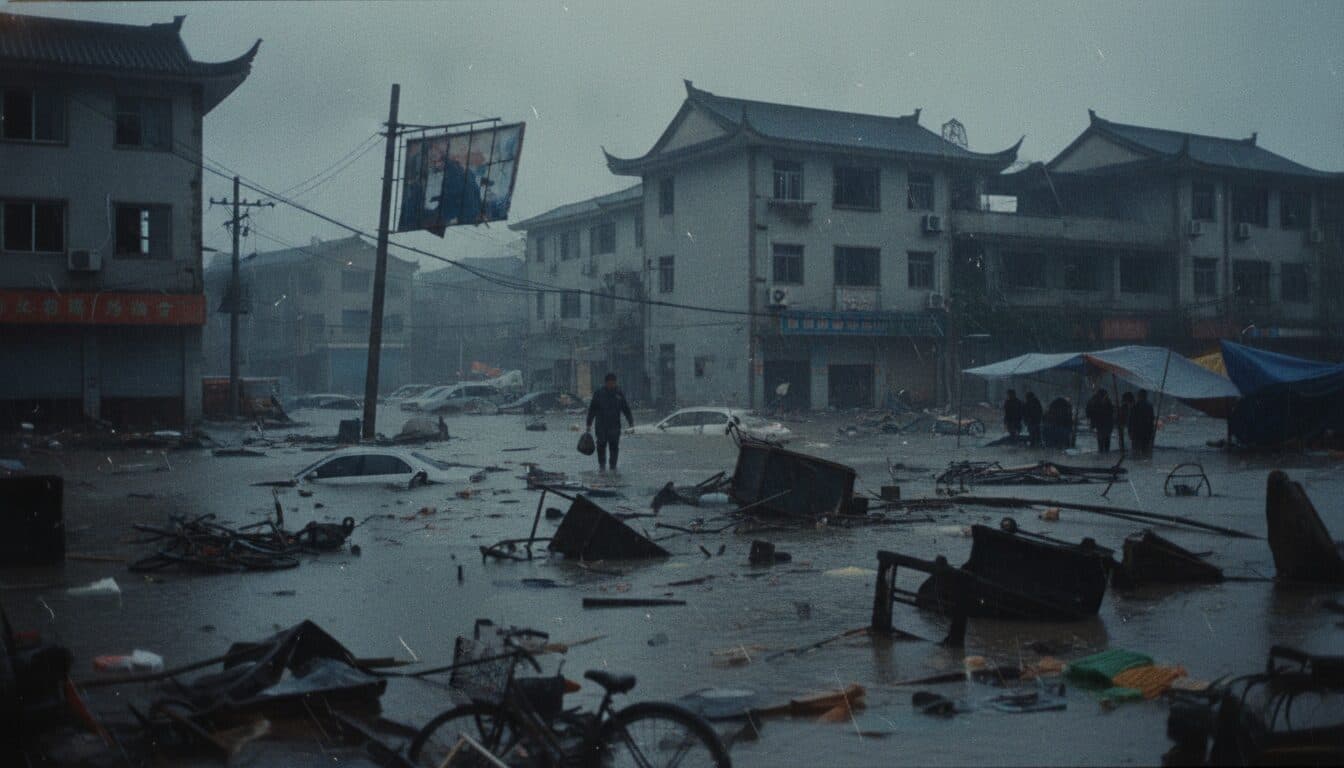
Southern China is grappling with the immediate aftermath of Typhoon Noul’s landfall, a powerful storm that forced the relocation of over 715,000 people and brought widespread disruption to one of the world’s most economically vibrant regions. Making landfall in Guangdong province early Sunday, July 26, 2026, Noul arrived with maximum sustained winds of 162 kilometers per hour (100 mph), marking it as the strongest typhoon to hit China this year.
The storm’s eye passed over Huidong County, Huizhou City, at approximately 3:50 a.m. local time, unleashing torrential rains and powerful gusts across Guangdong, including the critical financial hub of Hong Kong. While Noul has since begun to weaken, its initial impact necessitated an unprecedented level of preparedness. Chinese authorities elevated their emergency response for major meteorological disasters to Level 2, with Guangdong province activating its third-highest disaster relief emergency response.
The sheer scale of the preventative measures underscores the potential for devastation. By Saturday afternoon, 340,000 people had already been evacuated in Guangdong, a number that swelled to over 715,000 by Sunday. The National Meteorological Centre had initially issued a red alert for the typhoon – its first this year – before downgrading it to orange and then yellow as the storm moved inland and weakened. This proactive approach aimed to mitigate human casualties, a stark lesson learned from past natural disasters in the region.
Mass Evacuations Ripple Through Southern China’s Economy
The immediate economic fallout from Typhoon Noul has been significant, primarily through widespread transportation paralysis. All train services across Guangdong province were canceled for Sunday, effectively severing crucial logistics and commuter links. Hong Kong International Airport, a major global aviation hub, reported approximately 350 flight cancellations on Sunday alone, adding to over 150 flights already scrapped on Saturday. This disruption impacts not only travel and tourism but also supply chains reliant on timely air freight and passenger movement in and out of southern China.
Beyond the immediate travel chaos, the typhoon’s torrential rains, expected to persist until at least Tuesday in some areas, threaten agricultural output and industrial operations. Provinces such as Jiangxi, Hunan, Hubei, Fujian, Henan, and Shandong are bracing for continued heavy precipitation. Rainfall rates exceeding 30 mm (1 inch) per hour were recorded in parts of Guangdong, raising alarms for potential flash floods, river flooding, urban inundation, landslides, and debris flows, particularly in mountainous regions and densely populated river basins.
“The economic resilience of southern China will be tested in the coming days as infrastructure is assessed and recovery efforts begin. The sheer number of people evacuated highlights the critical importance of robust disaster preparedness in highly populated coastal areas.”
Early reports from Hong Kong indicate at least nine injuries and over 100 fallen trees, alongside a scaffolding collapse on a high-rise building on Saturday. While these initial reports suggest manageable damage for the city, the broader impact on infrastructure across Guangdong, from roads to water conservancy facilities, schools, and hospitals, is yet to be fully quantified.
The central government has already moved to support recovery, with the National Development and Reform Commission allocating 100 million yuan (approximately US$14.7 to US$14.8 million) from the central budget. This funding is earmarked for critical post-typhoon reconstruction efforts, underscoring the government’s commitment to rapid restoration of normalcy and economic activity.
Typhoon Noul is the 12th tropical cyclone of 2026 and the third to impact China this month, following Typhoon Maysak on July 3 and Typhoon Bavi on July 11. Typhoon Bavi notably led to the evacuation of over 2 million people, setting a precedent for the large-scale preparedness seen with Noul. This succession of severe weather events highlights a concerning trend for a region vital to global manufacturing and trade. The increasing frequency and intensity of such storms pose long-term challenges for urban planning, infrastructure development, and risk management strategies for businesses operating in southern China.
Looking ahead, the immediate focus will be on assessing the full extent of the damage, restoring essential services, and ensuring the safe return of the evacuated population. For investors and businesses, the repeated disruptions underscore the need for resilient supply chains and diversified operations. The ongoing climate challenges facing coastal China will likely necessitate significant investments in climate-resilient infrastructure and advanced early warning systems. The experience with Typhoon Noul serves as a stark reminder of the growing financial and human costs associated with extreme weather events in a rapidly developing world.