The France electric vehicle charging infrastructure market is projected to reach a staggering USD 20.57 billion by 2035, growing from USD 5.79 billion in 2025 at a robust compound annual growth rate (CAGR) of 13.66% over the forecast period (2025-2035). This significant expansion underscores France’s commitment to electric mobility and its strategic position as a leader in Europe’s decarbonization efforts, driven by an accelerating pace of EV adoption and substantial public and private investment.
The market encompasses a comprehensive ecosystem, from AC Level 2 chargers for residential and workplace use to high-power DC fast and ultra-fast chargers strategically deployed along highway corridors. Key players include charging point operators (CPOs), mobility service providers (MSPs), hardware manufacturers, and software platform developers, all contributing to a dynamic and rapidly evolving landscape. France’s strong government policy, coupled with one of Europe’s lowest-carbon electricity grids due to its reliance on nuclear power, provides a fertile ground for this growth.
Accelerated Deployment and Technological Advancement
France’s EV adoption has surged, propelled by incentives like the ecological bonus and conversion bonus, alongside a CO2-based emissions penalty system. This has spurred an accelerated deployment of charging infrastructure, particularly fast and ultra-fast chargers crucial for long-distance travel. Residential and workplace charging, while less conspicuous, remain fundamental enablers of broader EV uptake.
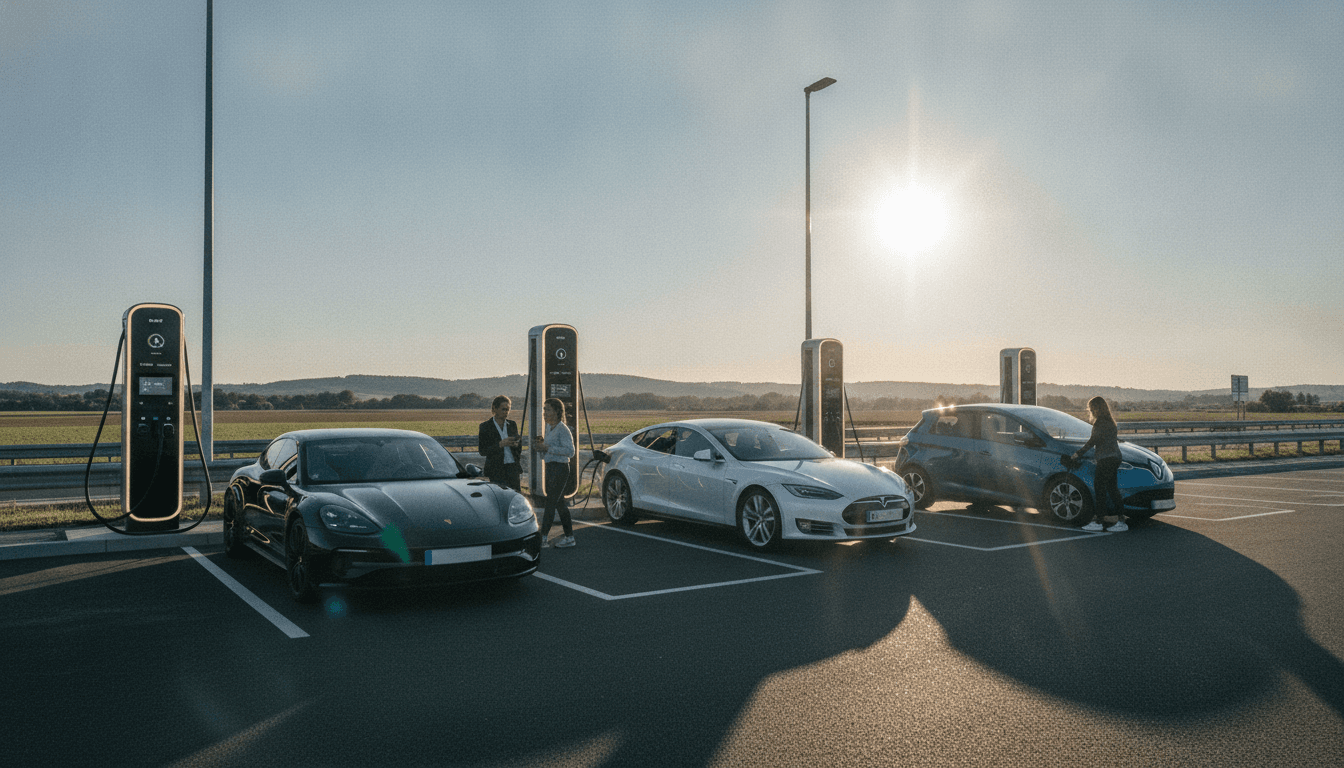
Industry trends highlight several key developments. Ultra-fast charging, with power levels ranging from 150 kW to 350 kW and above, is becoming more prevalent, significantly reducing charging times to 15-30 minutes. This development is making highway travel for EVs increasingly competitive with internal combustion engine vehicles. Consolidation among charge point operators is also evident, with larger networks acquiring smaller players and establishing roaming agreements to enhance user experience through seamless cross-network access.
“The integration of charging with renewable energy sources and battery storage is increasing, especially for ultra-fast chargers where grid connection capacity can be a limiting factor. This trend is vital for sustainable and resilient charging networks.”
Technological advancements are driving much of this progress. Ultra-fast charging power levels continue to climb, with 400 kW+ chargers emerging, though vehicle compatibility remains a key consideration. Plug & Charge technology (ISO 15118) is improving user convenience by enabling automatic authentication and billing. Dynamic load management is becoming a standard feature for multi-charger installations, optimizing power distribution based on grid and building capacity. Furthermore, Vehicle-to-Grid (V2G) and Vehicle-to-Home (V2H) technologies are being piloted, allowing bidirectional power flow from EV batteries, while predictive maintenance using data analytics is enhancing charger reliability.
Policy and Regulatory Influence on the France Electric Vehicle Charging Infrastructure Market
Government policy and regulatory frameworks exert substantial and supportive influence on the France electric vehicle charging infrastructure market. The “loi d’orientation des mobilités” (LOM) sets ambitious deployment targets, including mandates for charging infrastructure in new and renovated buildings. The “France Nation Verte” plan and the “Plan de déploiement des infrastructures de recharge” further define strategic roadmaps.
The ADVENIR program provides critical subsidies for charging installations, particularly benefiting businesses, local authorities, and apartment buildings. Corridor deployment requirements ensure fast-charging stations are mandated along the highway network, with operators bidding for concessions at rest areas. Additionally, the European Union’s Alternative Fuels Infrastructure Regulation (AFIR) reinforces these national efforts by requiring member states to meet deployment targets for fast charging along core TEN-T corridors, providing an overarching regulatory impetus.
The demand outlook for French EV charging infrastructure is exceptionally strong. While public charging points, especially fast and ultra-fast chargers, are rapidly growing from a lower base, significant headroom exists to meet urban and corridor needs. Residential charging, though accounting for the majority of charging events, faces deployment challenges in multi-unit dwellings. Workplace charging is expanding as an employee benefit, and commercial fleet charging for logistics, delivery, and ride-hailing vehicles represents a substantial growth segment.
Regional Dynamics and Future Prospects
Within France, regional variations in EV charging infrastructure deployment are notable. The Île-de-France (Paris region) boasts the highest concentration, reflecting its population density and policy leadership, yet it grapples with challenges like a high proportion of apartment dwellers lacking private parking, necessitating extensive on-street public charging. Lyon and Grenoble in Auvergne-Rhône-Alpes show strong adoption, with Lyon actively promoting charging in apartment buildings and the region’s mountainous terrain presenting unique requirements for tourist routes.
Provence-Alpes-Côte d’Azur, encompassing Marseille and Nice, exhibits high demand fueled by tourism and a wealthy populace, requiring extensive destination charging at hotels and attractions. Other regions like Nouvelle-Aquitaine (Bordeaux) and Occitanie (Toulouse, Montpellier) are also witnessing significant growth and investment in their charging networks. These regional dynamics highlight the tailored approaches needed to address diverse geographical and demographic needs across France.
As France progresses towards its ambitious decarbonization goals, the sustained growth of its EV charging infrastructure market will be paramount. The projected surge to USD 20.57 billion by 2035 solidifies France’s role as a European leader in electric mobility, setting a benchmark for other nations. The continuous interplay of supportive policies, technological innovation, and private sector investment will be crucial in overcoming remaining challenges and ensuring a seamless transition to an electrified transport future. This robust expansion not only facilitates EV adoption but also positions France at the forefront of sustainable transportation innovation.