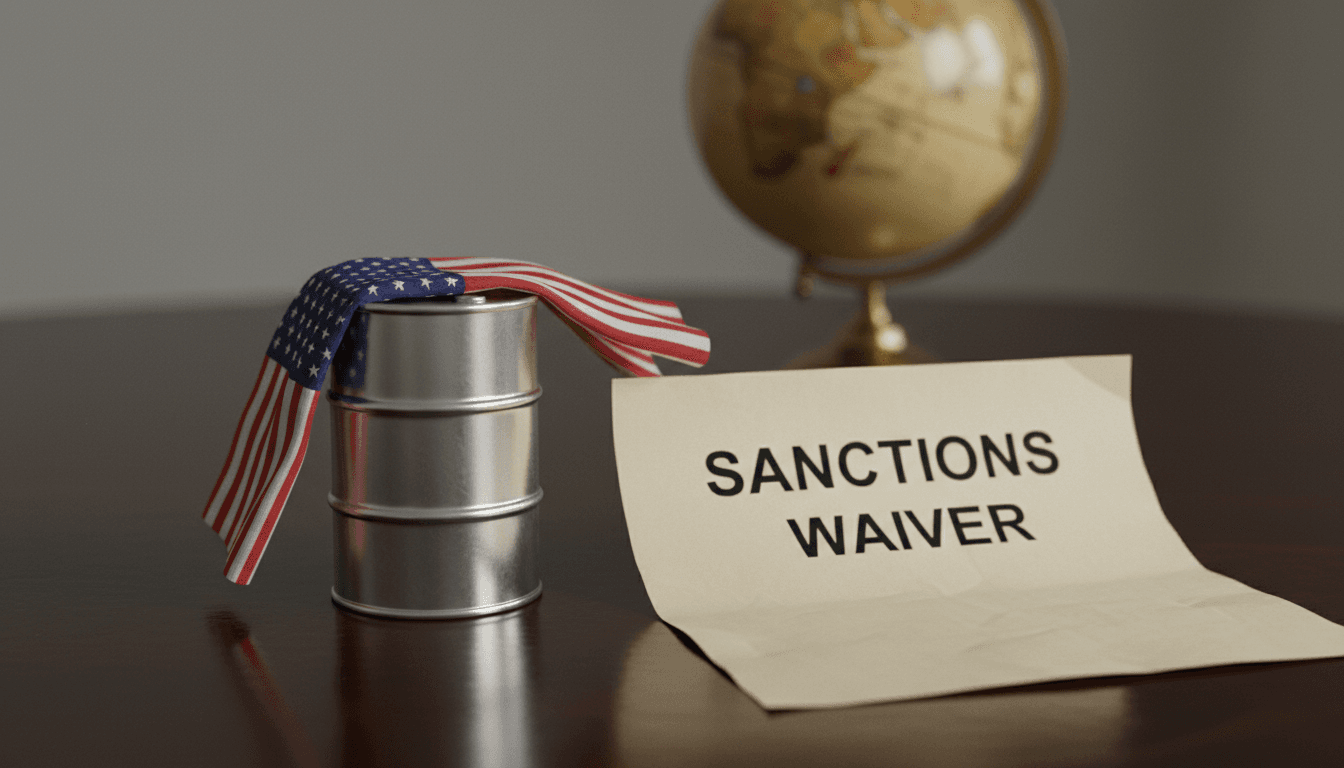
The US extends Russian oil sanctions waiver, a move announced on Saturday, April 18, 2026, signaling a pragmatic shift in Washington’s approach to global energy stability amidst ongoing geopolitical tensions. This critical decision permits the continued sale of Russian oil that has been left stranded due to previous punitive measures, directly addressing concerns about escalating energy prices and potential supply disruptions worldwide.
The Story: A Pragmatic Extension Amidst Crisis
The United States, through an announcement reported by The Statesman on April 18, 2026, has formally extended a crucial sanctions waiver. This waiver specifically targets Russian oil that has become ‘stranded’ – oil that was bought or contracted before the full weight of sanctions descended, but has since been unable to reach market due to logistical, financial, or legal impediments imposed by the sanctions regime. The key players in this development are, of course, the United States government, whose Treasury Department is typically responsible for issuing such waivers, and the global oil market, which has been grappling with volatility exacerbated by the conflict in Eastern Europe.
The decision to extend this waiver is not merely a technicality; it’s a strategic maneuver designed to prevent an even deeper global energy crisis. Without such a waiver, significant volumes of Russian oil, already paid for or committed, would remain off the market. This scenario would inevitably tighten global supply, pushing crude oil prices higher and potentially triggering inflationary pressures in consumer economies already struggling with cost-of-living increases. The exact duration of this latest extension was not specified in the initial report, but its immediate impact is to provide a temporary reprieve and inject a degree of certainty into a highly uncertain market.
Impact Analysis: Navigating a Precarious Balance
This extension has immediate and far-reaching implications for the broader world news landscape. Economically, it acts as a pressure release valve on global oil markets. By allowing stranded Russian oil to flow, albeit under specific conditions, the US aims to mitigate price spikes that could otherwise destabilize economies from Europe to Asia. For countries heavily reliant on oil imports, this waiver offers a glimmer of stability, potentially easing the burden on consumers and industries. However, it also presents a delicate political tightrope walk for the Biden administration.
“The extension of the US sanctions waiver for Russian oil highlights the persistent tension between geopolitical objectives and the imperative of global economic stability. It’s a clear acknowledgment that the cost of completely cutting off Russian energy can be too high for the world economy to bear.”
On one hand, the move could be perceived by some allies as a softening of the stance against Russia, potentially complicating efforts to maintain a united front. On the other, it can be framed as a responsible measure to prevent an economic catastrophe that would ultimately hurt all nations, including those allied with the US. The decision implicitly acknowledges the limits of sanctions as a standalone tool when applied to a major energy producer like Russia, especially in a supply-constrained global market. It underscores the intricate web of interdependencies that define the modern global economy, where actions in one sector can ripple through countless others.
Context & Background: A History of Energy-Driven Diplomacy
The current situation is deeply rooted in the geopolitical events of the past few years. Following Russia’s actions in Ukraine, the US and its allies imposed unprecedented sanctions aimed at crippling Moscow’s ability to fund its military operations. Energy, being Russia’s primary export, became a central target. However, the sheer volume of Russian oil and gas in global markets meant that a complete and immediate embargo was deemed too disruptive, leading to a complex regime of price caps, import bans, and waivers.
Previous iterations of such waivers have consistently demonstrated the careful calibration required by policymakers. Each decision to either tighten or loosen the flow of Russian energy has been a calculated risk, weighing the desire to exert pressure on Moscow against the potential for self-inflicted economic damage globally. Industry trends, such as underinvestment in new oil and gas production over recent years, have further exacerbated supply concerns, making every barrel of oil, including those from Russia, critically important to market stability. This particular extension of the US extends Russian oil sanctions waiver reflects a continuation of this delicate balancing act, prioritizing immediate global energy stability over a more aggressive, but potentially destabilizing, sanctions enforcement.
What’s Next: The Enduring Energy Dilemma
Looking ahead, the extension of this waiver is likely a temporary solution rather than a permanent fix. Future decisions will hinge on a confluence of factors: the evolving geopolitical landscape in Eastern Europe, the state of global oil inventories, and the success (or failure) of efforts by other oil-producing nations to increase supply. There will undoubtedly be continued pressure on the US to maintain a strong stance against Russia, but also an ongoing need to manage the economic fallout. The global energy crisis remains a persistent challenge, and the possibility of further waivers or adjustments to sanctions policy cannot be ruled out if market conditions deteriorate.
Nations will be closely watching for any signals regarding the long-term strategy for Russian oil. Will there be a push towards more robust alternative energy sources, or will the world continue to rely on a complex, often contradictory, patchwork of sanctions and waivers? Upcoming decisions from OPEC+ and other major oil producers will also play a crucial role in shaping the market. The US extends Russian oil sanctions waiver, therefore, sets the stage for continued, complex negotiations and policy adjustments in the months to come.
Key Takeaway: The Unavoidable Interdependence
The decision by the US to extend Russian oil sanctions waiver underscores a fundamental truth of contemporary international affairs: even in an era of heightened geopolitical confrontation, economic interdependence remains a powerful, often unavoidable, force. The imperative to maintain global energy stability, and thus prevent widespread economic distress, has momentarily outweighed the desire for a more stringent application of sanctions. This pragmatic concession reflects the enduring challenge of wielding economic power without inadvertently harming the global systems it seeks to influence. It is a stark reminder that in a globalized world, the consequences of isolating a major player like Russia ripple far beyond intended targets, necessitating continuous, often difficult, recalibrations of policy.