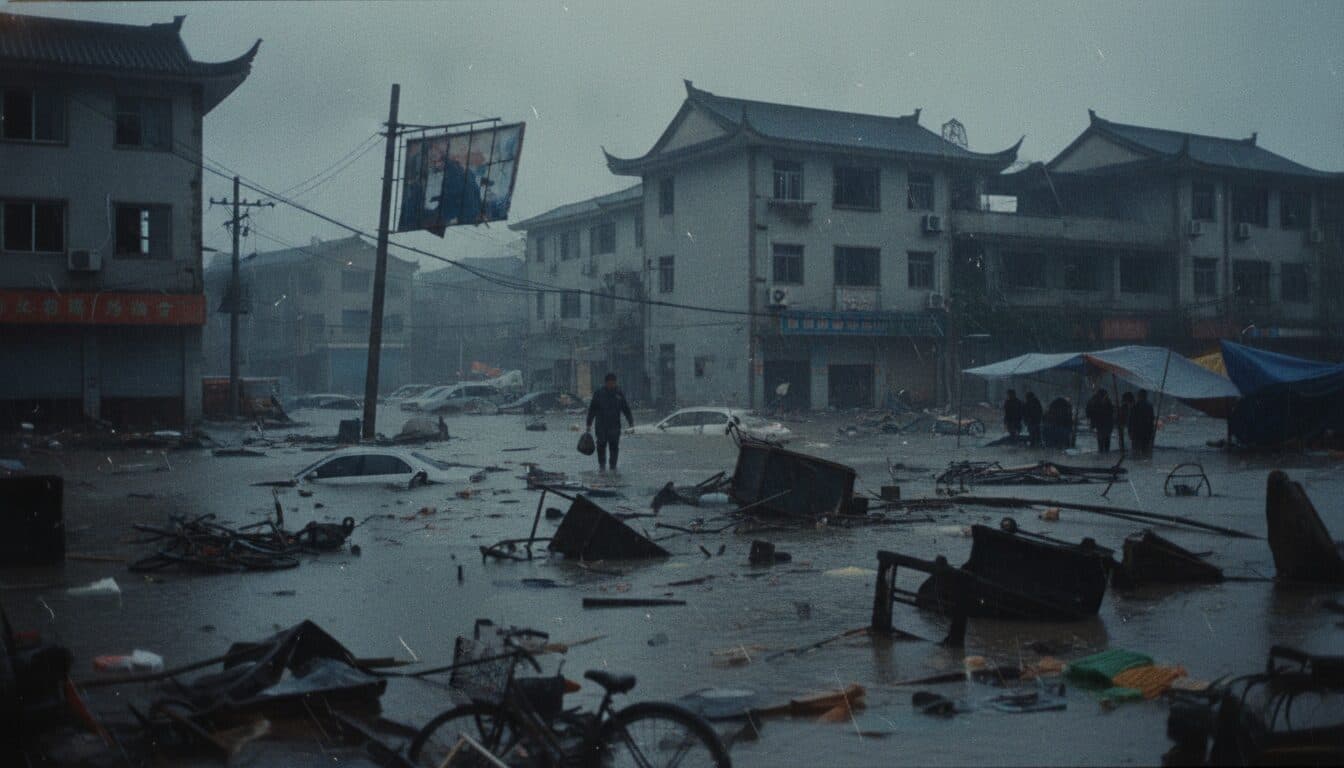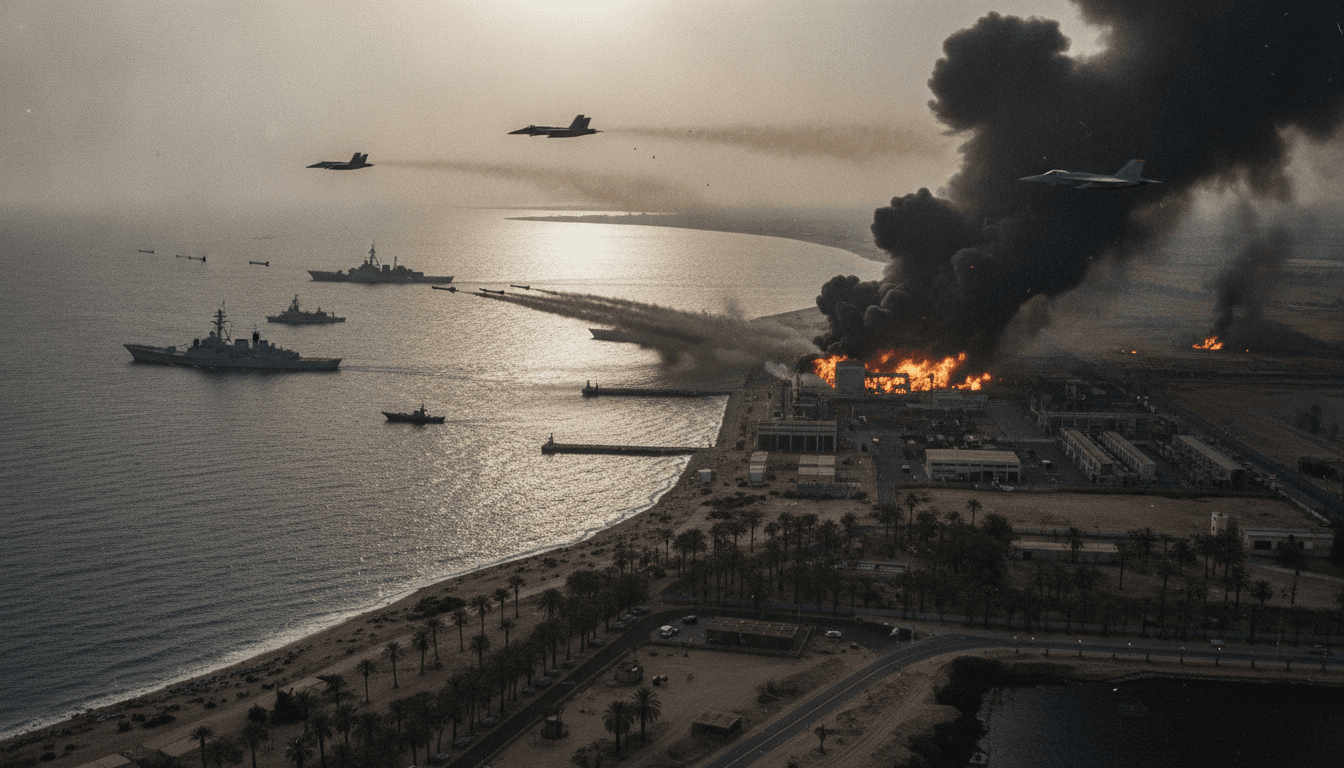
The United States has launched a second consecutive day of military strikes against Iran, significantly escalating Middle East tensions and sending ripples through global oil markets and the U.S. economy. These actions, coming on Thursday, June 11, 2026, follow strong rhetoric from President Trump and have directly contributed to a concerning surge in domestic inflation.
The latest barrage of U.S. strikes commenced at 5:15 p.m. ET on Wednesday, June 10, targeting key Iranian facilities including ammunition depots, command and control nodes, and warehouses. This follows an initial series of strikes on Tuesday, June 9, which focused on Iranian air defense, ground control stations, and surveillance radar sites near the critical Strait of Hormuz. U.S. Central Command (CENTCOM) characterized these as “self-defense strikes” in response to Iran’s “unwarranted and continued aggression,” specifically citing the downing of a U.S. Army Apache helicopter near the Strait of Hormuz on Monday evening, June 8, an incident President Trump directly attributed to Iran.
Iranian state media reported explosions in several cities, including Sirik, Qeshm Island, Minab, Isfahan, Bandar Abbas, Gorgan, and Hengam, underscoring the widespread nature of the U.S. offensive. Iran was not slow to retaliate, launching its own drone attacks and missiles targeting U.S. military installations in Bahrain, Kuwait, and Jordan. Jordan confirmed shooting down five incoming missiles, while Bahrain and Kuwait reported intercepting incoming fire, highlighting the dangerous tit-for-tat nature of the conflict.
President Trump’s statements have been unequivocally hawkish. On Wednesday, June 10, he warned reporters, “We’re going to hit them hard again today in case you miss it, in case you don’t turn on your television set.” He also criticized Iran for taking “too long to negotiate a deal” and stated they would “pay the price.” Adding a layer of intrigue, Trump also revealed a “secret mission” that he claimed secured 100 million barrels of oil through the Strait of Hormuz.
Defense Secretary Pete Hegseth echoed the President’s resolve, confirming the U.S. would hit “key facilities” overnight on June 10. Hegseth controversially remarked,
“If we need to negotiate with bombs, we’ll negotiate with bombs.”
This stark declaration comes despite a senior White House official confirming that U.S. peace talks with Iran are surprisingly still underway. However, Iran’s UN envoy, Amir Saeid Iravani, maintained that Iran “has never negotiated under threats and pressure and will never submit to pressure or question,” signaling a deep chasm in diplomatic approaches.
Economic Fallout: Rising Inflation and Oil Prices
The direct financial impact of this escalating conflict is significant, particularly for global energy markets and the U.S. economy. The renewed hostilities have caused oil prices to surge dramatically. NYMEX WTI crude for July delivery rose $1.83 to settle at $90.03 per barrel, while ICE Brent for August climbed $1.65 to settle at $93.10 per barrel on June 10, 2026. The instability has disrupted oil flows through the Strait of Hormuz, a choke point for roughly a fifth of the world’s oil supply, adding a substantial risk premium.
Domestically, the U.S. annual inflation rate, as measured by the Consumer Price Index (CPI), increased to 4.2% in May 2026, up from 3.8% in April. This marks the highest inflation rate since April 2023 and the third consecutive monthly increase since the start of the Iran war. Energy prices have been the primary driver of this acceleration, rising 3.88% in May and a staggering 23.54% year-on-year, accounting for over 60% of the overall CPI increase last month. Gasoline prices alone jumped 7% in May and are up 40.5% compared to a year ago, squeezing household budgets. Even core CPI, which excludes volatile food and energy costs, rose 2.9% year-over-year in May, indicating broader inflationary pressures.
The war’s effect on energy prices has reportedly erased all real (inflation-adjusted) wage gains for private-sector workers during President Trump’s second term, with the average hourly real wage in May 2026 being no higher than in January 2025. This erosion of purchasing power, coupled with rising inflation, puts immense pressure on the Federal Reserve, which targets a 2% inflation rate, to consider its monetary policy options amidst geopolitical instability. Investors are closely watching for any signals from the Fed regarding potential interest rate adjustments in response to these inflationary trends.
The direct consequences of this escalating conflict are far-reaching. Beyond the immediate human cost and geopolitical instability, the economic reverberations are being felt by consumers and businesses globally. The continued volatility in oil markets, coupled with persistent inflationary pressures, creates a challenging environment for policymakers and investors alike. The world watches anxiously as the U.S. and Iran navigate this perilous path, with the global economy hanging in the balance. For more on the economic impacts of global events, visit our related trending articles.