The global energy landscape faces renewed volatility as the US-Iran conflict escalates, with Houthi militants directly attacking oil tankers in the Red Sea. This aggressive move, marking a significant intensification of regional tensions, has sent Brent crude oil prices surging past the critical $100 per barrel mark, raising profound concerns about international trade routes and broader economic stability.
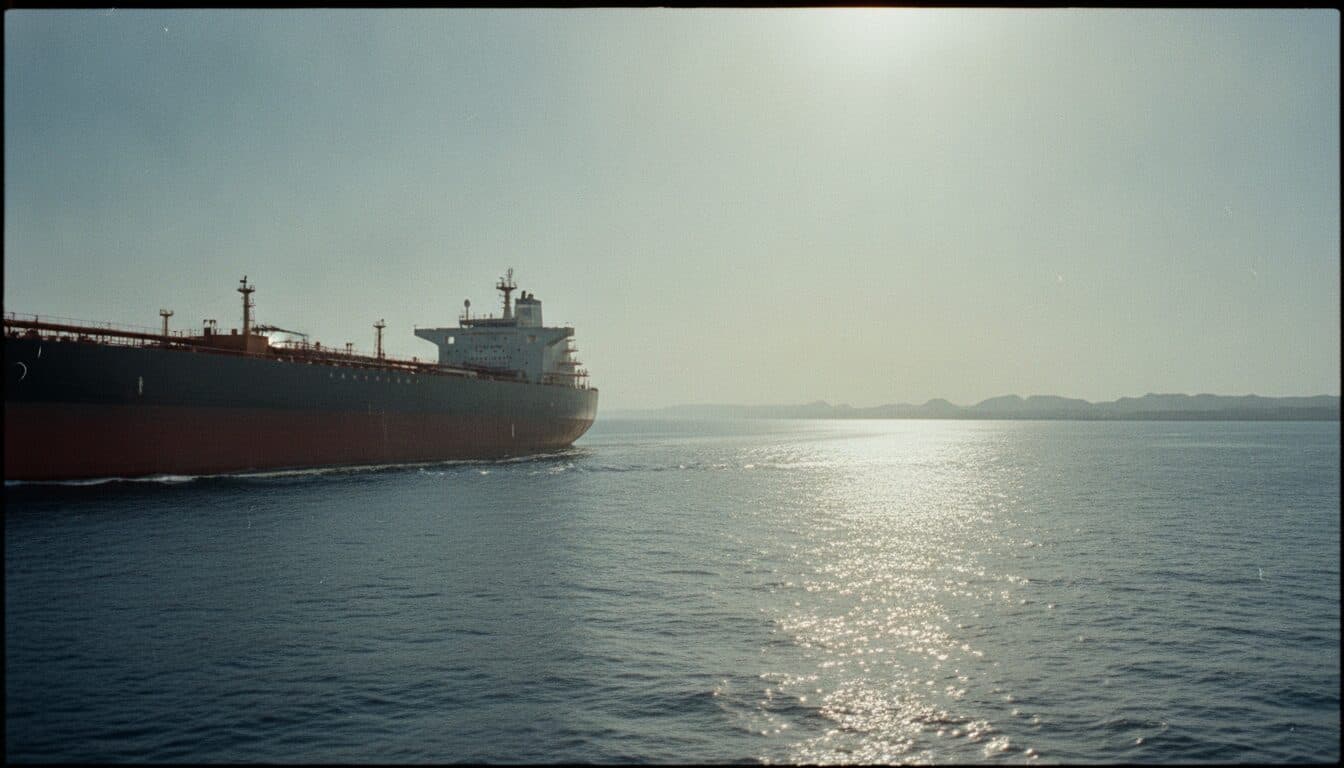
On Thursday, July 23, 2026, Yemen’s Houthi militants, widely understood to be backed by Iran, claimed responsibility for striking two Saudi Arabian oil tankers, the Encelia and the Layla, in the Red Sea. The Houthis described the action as a “qualitative military operation” in response to alleged violations of their declared blockade on the Red Sea. This incident follows an earlier Houthi announcement of a naval blockade targeting Saudi ships, specifically in the Bab al-Mandeb strait. This vital chokepoint, connecting the Red Sea with the Gulf of Aden, is a crucial conduit for global trade, with an estimated 7% of the world’s oil supply typically transiting through it. Saudi Arabia had recently rerouted approximately 4.5 million barrels per day of its oil exports through its Red Sea ports to circumvent ongoing disruptions in the Strait of Hormuz, making the Bab al-Mandeb a particularly vulnerable alternative.
The immediate consequence of the Houthi attacks was a dramatic surge in global oil markets. Brent crude oil prices climbed over 7% on Thursday, exceeding $100 per barrel for the first time in two months and settling at a new high. This sharp increase reflects fears that another critical energy corridor is being choked off by the conflict, effectively creating a “dual choke point” for global oil supplies alongside the already disrupted Strait of Hormuz. While prices eased slightly on Friday, July 24, 2026, to $98.15 a barrel, Brent crude remained up more than 12% for the week. Analysts from JPMorgan have warned that each additional month of disruption could add $7-8 per barrel to Brent prices, potentially pushing monthly averages to around $114 per barrel if these disruptions persist for three months. Domestically, the national average for gasoline prices in the US also rose, reaching $4.09 a gallon on Thursday, up from $3.94 a week prior.
The latest Houthi attacks come amidst a relentless campaign of US military actions against Iranian infrastructure. The US military completed its 13th consecutive night of strikes targeting Iranian military assets on Thursday, July 23, 2026. These operations have focused on missile and drone sites, naval assets, ammunition depots, communications networks, and coastal surveillance positions, primarily near the Strait of Hormuz and along Iran’s southern coast. US Central Command stated that these attacks aim to “further diminish the threat Iran poses to civilian mariners and commercial vessels transiting the Strait of Hormuz.”
President Donald Trump has responded with increasingly stark warnings. For the third consecutive day, he threatened that if the Houthis continue their attacks in the Red Sea, the US “will hold Iran responsible” and inflict “major military punishment” on both the Houthis and Iran. In an interview with Axios, Trump stated he is considering a “massive attack” against Iran, potentially “bigger than ever before,” and is “close to making a decision.” He further suggested that Iran’s leaders “haven’t received enough pain yet” to engage in negotiations.
This escalation of the US-Iran conflict follows the collapse of a ceasefire earlier in July and renewed hostilities in the Strait of Hormuz, which has been effectively closed to commercial shipping for 145 days as of July 23. Iran’s Islamic Revolutionary Guard Corps (IRGC) reported stopping three oil tankers in the Strait of Hormuz on the same day. Both the US and Iran have intensified their attacks, vying for control of the Strait of Hormuz, a waterway through which a fifth of the world’s oil and gas transited in peacetime. The conflict has already claimed the lives of at least 18 US service members since its inception on February 28. In a retaliatory move, Iran’s army claimed on Friday, July 24, 2026, to have conducted drone strikes against US military facilities in Bahrain and Jordan.
“The Middle East is being pushed to the edge of the unimaginable, with the potential for wider regional instability growing by the hour.”
The perilous situation has prompted widespread international alarm. UN Secretary-General António Guterres has warned that the Middle East is being pushed to the “edge of the unimaginable,” highlighting the severe risks of broader regional instability. Domestically, the US House of Representatives voted on Thursday to require congressional approval for military action against Iran, reflecting growing divisions within Washington over the ongoing war. The targeting of tankers in the Red Sea by Houthi militants represents a dangerous expansion of the conflict’s geographic scope and a direct threat to global energy security.
Looking ahead, the immediate focus will be on the US response to the Houthi attacks and whether President Trump will follow through on his threats of a “massive attack” against Iran. The ability of international naval forces to secure the Red Sea and Bab al-Mandeb strait will be crucial in mitigating further disruptions to shipping and preventing further oil price surges. The duration of these disruptions will dictate the sustained impact on global energy prices and inflation. Investors and businesses will be closely monitoring any developments that could affect the flow of oil and goods, as well as the potential for wider military engagement in an already volatile region. The financial implications, from increased shipping costs to higher energy prices, could reverberate through global supply chains and consumer economies for months to come.
The direct involvement of Houthi militants in attacking oil tankers in the Red Sea marks a perilous new chapter in the US-Iran conflict. This development not only drives oil prices above $100 but also threatens vital trade routes, signaling a significant escalation with profound economic and geopolitical ramifications that demand immediate and sustained attention from global leaders and markets alike.