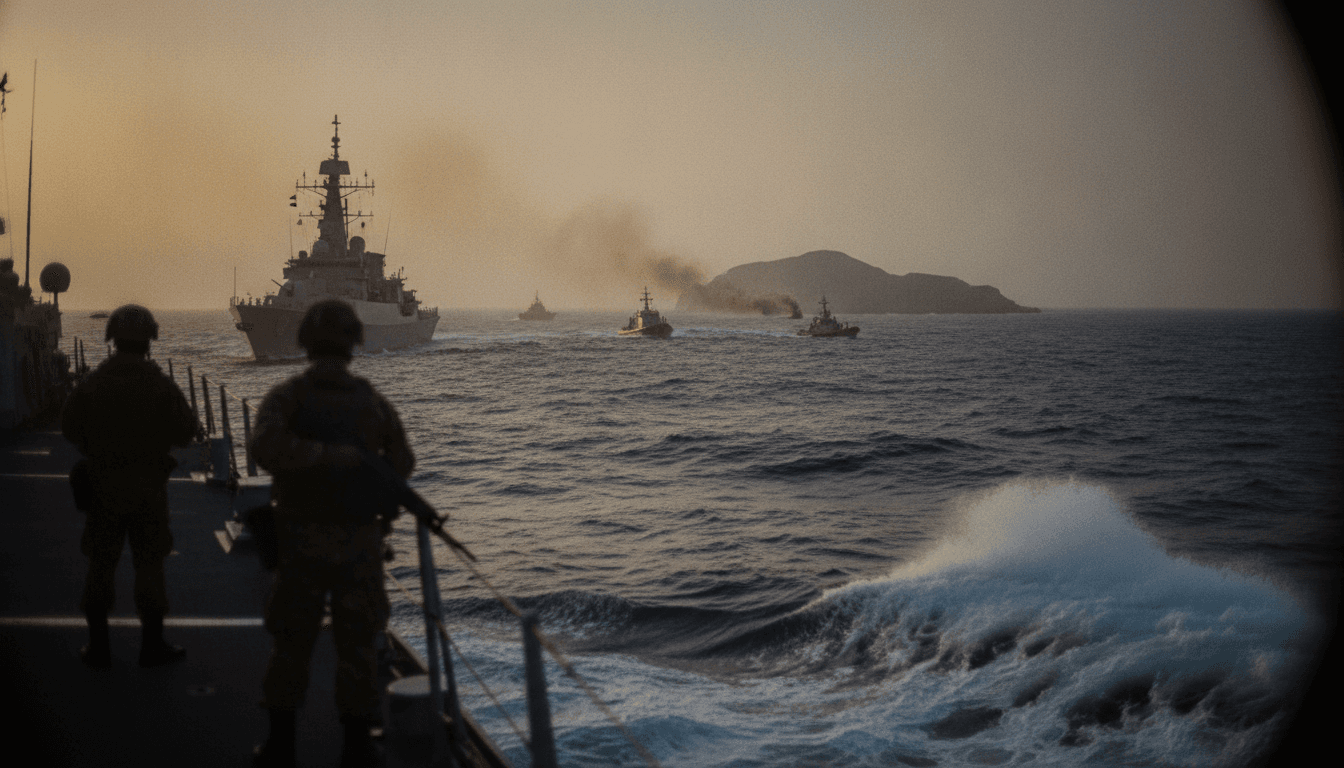
The fragile ceasefire between the United States and Iran has shattered, pushing Middle East tensions to a dangerous new precipice following direct military confrontation. The U.S. launched “self-defense strikes” against targets in Iran on Tuesday, June 9, 2026, in retaliation for the downing of a U.S. Army Apache helicopter near the Strait of Hormuz the previous day. This aggressive exchange marks a significant escalation with profound geopolitical and economic implications.
The incident unfolded early Monday, June 8, 2026, when a U.S. Army Apache attack helicopter crashed near the Strait of Hormuz, off the coast of Oman, around 3:30 AM local time. President Donald Trump confirmed on Truth Social that Iran was responsible for shooting down the “highly sophisticated Apache Helicopter” while it was patrolling the critical waterway. Remarkably, both crew members of the helicopter were rescued uninjured within approximately two hours by a U.S. Navy Corsair sea drone, marking the first known sea drone rescue operation by the U.S. military.
In response to what President Trump termed an “attack,” U.S. Central Command (CENTCOM) announced Tuesday evening that it had commenced “self-defense strikes” on Iran. CENTCOM characterized the operation as a “proportional response to unjustified Iranian aggression.” U.S. officials, speaking to CBS News, indicated that the retaliatory strikes targeted Iranian radar sites. Concurrently, Iranian state media reported explosions in eastern parts of Iran’s Hormozgan province, including on Hormuz island and Qeshm Island, and a projectile hit in Sirik.
This direct military confrontation casts a long shadow over previous diplomatic efforts. Prior to the helicopter incident, President Trump had expressed optimism about reaching a deal with Iran, stating that efforts were in their “final throes” and a deal was possible in “two or three days.” However, the downing of the Apache and the subsequent U.S. retaliatory strikes have effectively derailed these negotiations, injecting immense uncertainty into the future of U.S.-Iran relations and regional stability.
US Strikes Iran: Escalation Context and Economic Impact
The Strait of Hormuz, a vital choke point for global oil and gas shipments, remains central to the escalating tensions. Iran had previously slowed traffic through the waterway, underscoring its strategic importance. The current incident further strains an already fragile ceasefire agreed upon on April 7, 2026, which had largely halted fighting but failed to quell mutual accusations of violations.
The region has been plagued by increased military activity and exchanges of fire. On May 5, 2026, the U.S. accused Iran of ceasefire violations after two U.S. destroyers and two merchant vessels came under attack in the Strait of Hormuz, with Iran firing cruise missiles and drones, though without landing any hits. Iran, in turn, accused the U.S. of violating the ceasefire by targeting Iranian vessels and civilian areas in southern Iran on May 8, 2026.
The downing of the Apache helicopter represents the first reported loss of an AH-64 attack helicopter during the ongoing conflict, which began on February 28, 2026. Iran has previously claimed to have shot down approximately 30 MQ-9 Reaper drones. The U.S. has also experienced other aircraft losses, including F-15E fighter jets and a refueling aircraft, some attributed to friendly fire incidents.
“Foreign forces in proximity to our territory are at constant risk on account of their own human errors, plain accidents, or potentially being caught in crossfire… the best solution is for foreign forces to exit, as soon as possible.” – Iranian Foreign Minister Abbas Araghchi
Iranian Parliament Speaker Mohammad Ghalibaf had previously posted on X, “We prefer the language of diplomacy, but we speak other languages far more fluently,” and “Break your commitments, and we’ll switch to what we speak best.” While it is unclear if these comments were directly related to the helicopter incident, they underscore the underlying readiness for confrontation within Iranian leadership.
The immediate impact on global markets is likely to be significant. Oil prices are expected to surge amidst fears of supply disruptions from the Strait of Hormuz. Investors will be closely watching for any further military actions or diplomatic overtures that could de-escalate or further inflame the situation. Defense sector stocks may see a temporary boost, while broader market sentiment could turn bearish due to heightened geopolitical risk.
Looking ahead, the critical question is whether this direct exchange will lead to a wider conflict or if both sides will seek to de-escalate after these initial retaliatory strikes. The absence of casualties on the U.S. side from the helicopter downing may offer a narrow window for diplomatic off-ramps, but the tit-for-tat nature of the response suggests a dangerous cycle of action and reaction. The international community will be pressing for restraint, but the ball is now firmly in the court of Washington and Tehran. Related trending articles will continue to monitor developments closely.