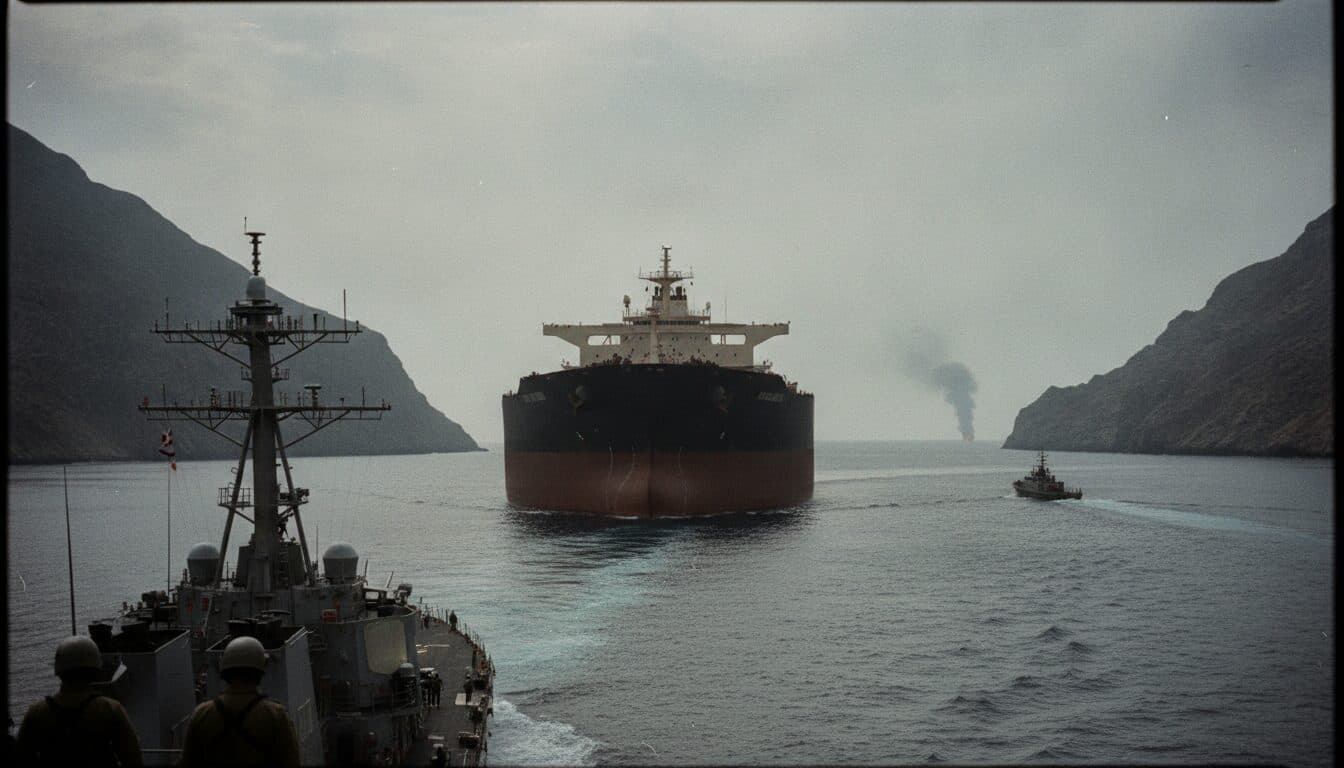
The already fragile ceasefire between the United States and Iran has been severely tested by a recent exchange of strikes, igniting renewed regional tensions and casting a long shadow over ongoing peace negotiations. This tit-for-tat escalation, involving Iranian drone activity, targeted US defensive strikes, and a retaliatory Iranian missile attack, underscores the precarious state of stability in a region vital to global commerce and energy supply.
The sequence of events unfolded rapidly on May 27-28, 2026. Late on May 27, Iranian forces launched five one-way attack drones, posing a direct threat to US forces and commercial maritime traffic in and near the Strait of Hormuz. US forces swiftly intercepted all five, preventing a sixth launch from an Iranian ground control site near Bandar Abbas. Hours later, at 10:17 p.m. ET, Iran launched a ballistic missile towards Kuwait, which Kuwaiti forces successfully intercepted. US Central Command (CENTCOM) unequivocally labeled this a “egregious ceasefire violation.”
The Iranian response was swift and assertive. In the early hours of May 28 (0120 GMT / 4:50 a.m. local time), Iran’s Islamic Revolutionary Guard Corps (IRGC) launched a retaliatory strike targeting an unidentified US air base in the region. Iranian state media, IRIB, reported the IRGC’s statement, claiming the strike was in response to earlier US actions near Bandar Abbas airport and served as a “serious warning” against further “aggression.” Kuwait’s Ministry of Foreign Affairs condemned Iran for “blatant aggression,” holding Tehran responsible for the attack, though no weapons impacted American facilities in Kuwait.
US officials justified their actions as “measured, purely defensive, and intended to maintain the ceasefire.” They confirmed striking an Iranian military site near Bandar Abbas, which they assessed as a threat, shooting down four drones and hitting a ground control station poised to launch a fifth. Conversely, Iranian state media claimed US strikes hit “an empty area” causing no damage, and that the IRGC’s response targeted the US base from which the initial attack originated.
Fragile Ceasefire and Stalled Negotiations
The current fragile ceasefire, officially announced in early April, now hangs by a thread. The recent military actions have significantly challenged its stability, despite ongoing negotiations for a broader peace agreement. Reports just days prior, on May 24, 2026, suggested the US and Iran were nearing a deal. This proposed agreement reportedly encompassed a 60-day ceasefire extension, the reopening of the Strait of Hormuz, Iran’s unfettered ability to sell oil, and discussions on curbing its nuclear program.
However, President Trump introduced a significant caveat on May 27, stating he would not be rushed into a deal and that progress had slowed. He further indicated US dissatisfaction and suggested he might not sign an agreement unless neighboring Gulf countries normalized ties with Israel under the Abraham Accords. This linkage drew sharp criticism, with former US envoy to Iran, Rob Malley, dismissing it as “completely crazy talk” and “purely delusional.”
“The recent exchange of fire has not only jeopardized the ceasefire but also injected a new layer of uncertainty into an already complex negotiation landscape, with President Trump’s demands adding further friction.”
The implications for global markets are immediate and significant. The Strait of Hormuz, a critical chokepoint for global crude flows, has been thrust back into the spotlight. Renewed hostilities provide further support for oil prices, reflecting investor anxiety over potential disruptions to supply. The US Treasury Department has also intensified economic pressure, sanctioning Iran’s newly established Persian Gulf Strait Authority, accusing it of attempting to “extort global maritime trade” by collecting passage fees. Treasury Secretary Scott Bessent warned that anyone paying these fees could be inadvertently supporting the Iranian regime. The US also cautioned Oman against facilitating any toll system in the Strait, threatening penalties.
This latest escalation underscores the inherent volatility of US-Iran relations and the enduring challenges to regional stability. The immediate future hinges on whether diplomatic channels can de-escalate the military tit-for-tat and salvage the ceasefire, let alone progress towards a more comprehensive peace deal. Investors and global businesses must brace for continued uncertainty, particularly concerning energy markets and maritime trade routes, as the region navigates this perilous geopolitical landscape. The fragility of the current peace efforts means that any further misstep could have far-reaching economic and political consequences.