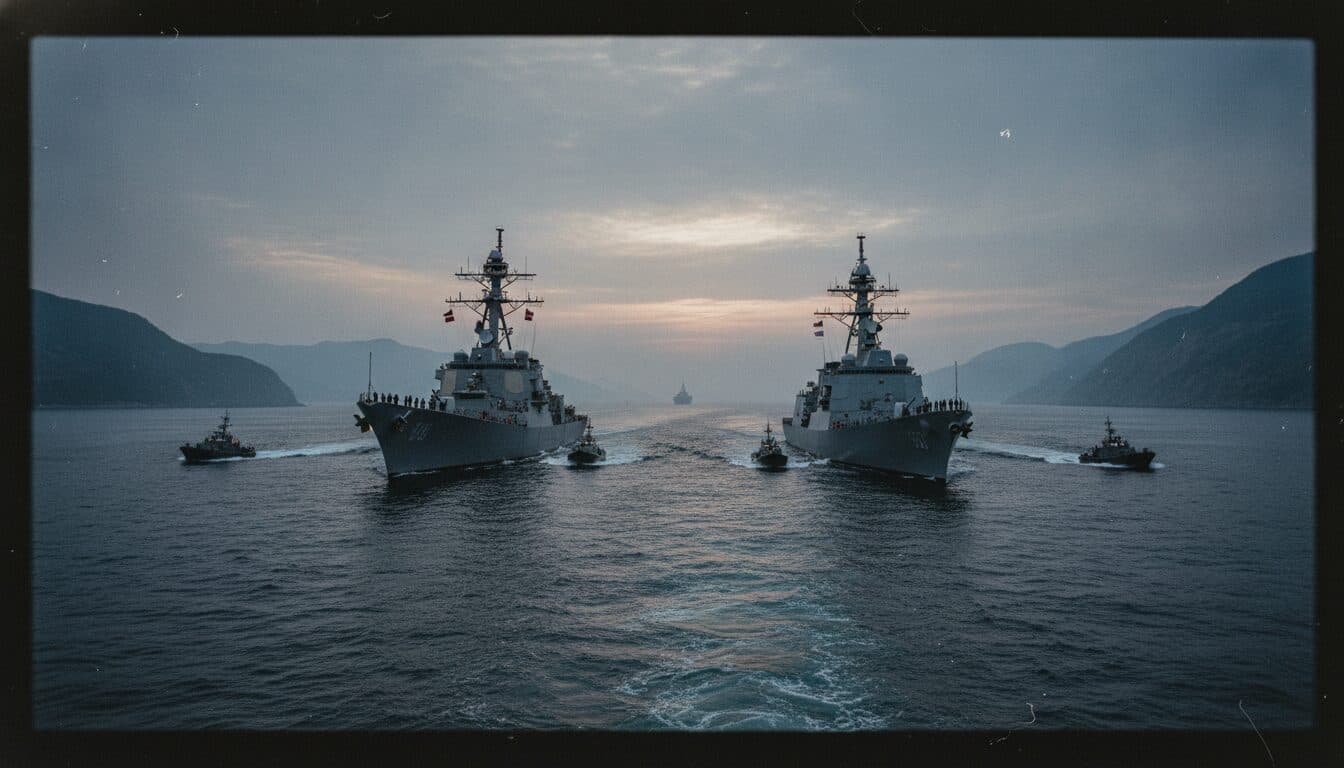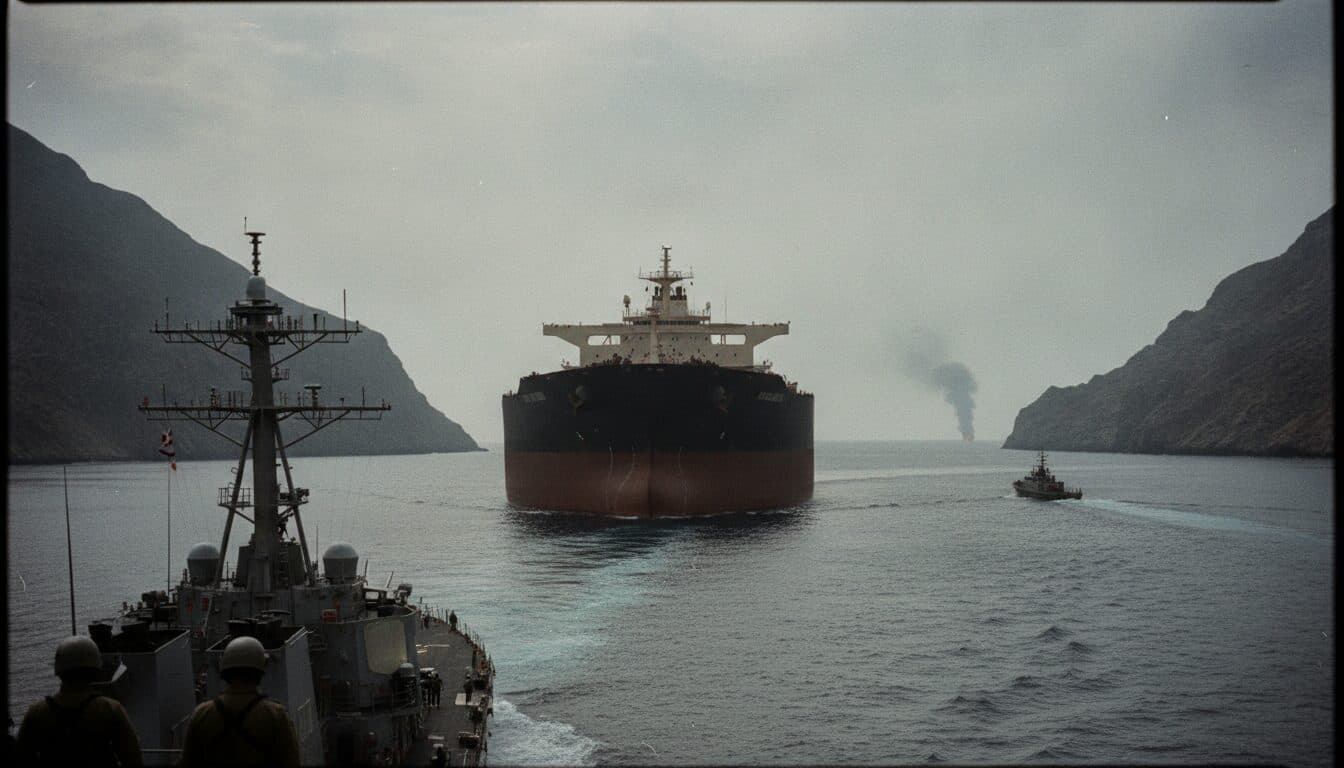
The already volatile geopolitical landscape of the Middle East has been plunged into deeper uncertainty as the United States and Iran engage in a renewed exchange of military strikes. This dangerous escalation comes amidst stalled negotiations for a comprehensive peace agreement, fueling fears of a wider regional conflict with significant implications for global energy markets and economic stability. The recent volley of attacks, culminating in Iran’s claim of striking a US air base and Kuwait’s interception of missile and drone attacks, underscores the fragility of the existing ceasefire and the hardening stances of both Washington and Tehran.
The latest round of hostilities commenced over the weekend of May 30-31, 2026, when Iran announced it had shot down an American MQ-1 drone, asserting the drone was operating within its territorial waters. The US Central Command (CENTCOM) countered, stating the drone was in international airspace. In swift retaliation, the United States conducted what it termed “self-defense strikes” on Iranian radar and drone command sites in Goruk and on Qeshm Island, strategically located along the Strait of Hormuz. CENTCOM reported these strikes effectively neutralized Iranian air defenses, a ground control station, and two one-way attack drones deemed threats to maritime traffic. No American personnel were reported harmed in these initial exchanges.
The tit-for-tat continued into Monday, June 1, 2026. Iran’s Islamic Revolutionary Guard Corps (IRGC) declared it had struck a US air base, an action it framed as a response to an alleged American attack on a telecommunications tower on Sirik Island. While the exact location of the targeted US air base remained unspecified, CENTCOM confirmed no US personnel suffered harm. The IRGC warned of a “completely different” response to any further aggression. Concurrently, Kuwait reported intercepting missile and drone attacks, with air raid sirens sounding across the country. The Kuwaiti Army confirmed its air defenses were “currently confronting hostile missile and drone attacks.” CENTCOM later clarified that its forces had intercepted two Iranian ballistic missiles launched towards Kuwait on Sunday night, stating these were “immediately defeated, and no American personnel were harmed.” Iran’s state-run IRNA news agency, citing the paramilitary Revolutionary Guard, implied Kuwait was the likely target of Iran’s retaliatory strike, a significant development given Kuwait’s role as host to US Army Central.
Stalled Ceasefire Talks Intensify Regional Tensions
These military exchanges unfold against a backdrop of stalled negotiations for a lasting peace deal. A two-week ceasefire, brokered by Pakistan and initially agreed upon on April 8, 2026, had been extended indefinitely by US President Donald Trump. However, the recent events demonstrate the ceasefire’s inherent instability, with both sides accusing the other of violations. The hardening of negotiating terms by both the US and Iran further complicates prospects for de-escalation.
US President Donald Trump has reportedly toughened his demands for a new deal. Key US conditions include Iran’s permanent renunciation of nuclear weapons, the immediate and unrestricted reopening of the Strait of Hormuz, and the destruction of all highly enriched uranium. The US also seeks the recovery of over 9,000 kilograms of enriched uranium hexafluoride, including 440 kilograms of highly enriched uranium. Trump, expressing concerns about front-loading financial concessions reminiscent of the 2015 nuclear deal (JCPOA) from which he withdrew in 2018, stated on Truth Social that “Iran really wants to make a deal,” and that “it will all work out well in the end.” He also indicated a willingness to “go silent” in talks, believing Iran is “losing a fortune” due to sanctions and the blockade.
Conversely, Iran has unequivocally stated its refusal to accept any agreement that fails to fully secure its rights. Iran’s conditions for a new deal include an end to the war on all fronts, including Lebanon, the lifting of sanctions, the release of frozen Iranian assets, compensation for war damages, and recognition of its sovereignty over the Strait of Hormuz. Iran has also maintained its chokehold on the Strait of Hormuz, a critical artery for global energy supplies. An Iranian news outlet linked to the IRGC reported Monday that Iran was suspending indirect talks with the US, citing perceived US and Israeli ceasefire violations, specifically Israel’s expanded operations in Lebanon.
“The ceasefire was unequivocally a ceasefire on all fronts, including in Lebanon. Its violation on one front is a violation on all,” Iran’s Foreign Minister Abbas Araghchi stated on X, highlighting Tehran’s insistence on a comprehensive regional peace. Iran has also threatened to completely close the Strait of Hormuz and the Bab el-Mandeb Strait should the “aggressive and brutal operations of the Zionist regime’s army in Gaza and Lebanon” persist.
The immediate impact of these escalating tensions is already being felt across global markets. Oil prices, particularly sensitive to Middle Eastern instability, are expected to react sharply, with potential for significant upward pressure. The Strait of Hormuz, through which a substantial portion of the world’s seaborne oil passes, remains a critical flashpoint. Any prolonged disruption to shipping in this vital waterway would have cascading effects on global supply chains and energy costs, impacting industries from manufacturing to transportation. Investors are closely monitoring the situation, seeking safe-haven assets amidst the increased geopolitical risk. The potential for a wider regional conflict, drawing in other actors and further destabilizing an already fragile region, presents a formidable challenge to global economic recovery and stability.
Historically, the relationship between the US and Iran has been fraught with tension, punctuated by periods of direct confrontation and proxy conflicts. The 2015 nuclear deal, designed to curb Iran’s nuclear ambitions in exchange for sanctions relief, proved a temporary reprieve, ultimately unraveling with the US withdrawal in 2018. The current standoff is a stark reminder of the deeply entrenched animosities and mistrust that continue to define the bilateral relationship. Israel’s expanded operations in Lebanon, cited by Iran as a ceasefire violation, further complicates the regional calculus, underscoring the interconnectedness of various flashpoints across the Middle East.
Looking ahead, the immediate priority for international diplomacy will be to prevent further military escalation and to restart meaningful negotiations. However, with both sides hardening their positions and accusing the other of bad faith, the path to a lasting peace remains arduous. Expert predictions suggest continued volatility, with the risk of miscalculation always present. Upcoming developments will likely center on further diplomatic efforts, potential international mediation, and the response of global energy markets to the sustained uncertainty. The world watches with bated breath as the US and Iran navigate this perilous moment, with the economic and human costs of a wider conflict looming large. For investors and policymakers alike, the imperative is to monitor these developments closely and prepare for potential disruptions across various sectors. Related trending articles offer further insights into ongoing global challenges.
The key takeaway from this escalating crisis is the profound interconnectedness of geopolitical stability and global economic well-being. The renewed exchange of strikes between the US and Iran, coupled with stalled ceasefire talks and regional complexities, serves as a potent reminder of how quickly regional conflicts can reverberate globally, impacting everything from oil prices to investor confidence. De-escalation and a return to diplomacy are paramount to avert a wider catastrophe and safeguard the fragile global economic recovery.