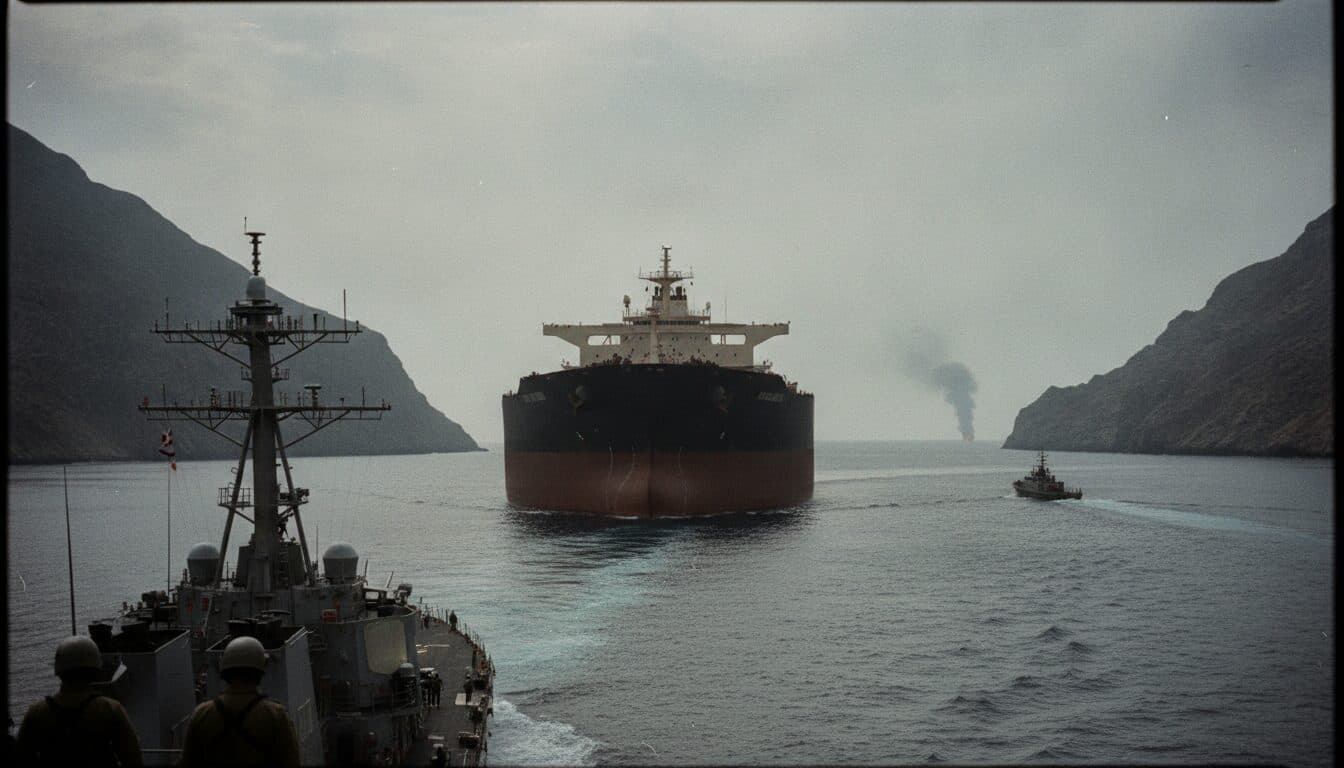
Global markets are reacting with cautious optimism as the United States and Iran reportedly near a tentative agreement to extend their current ceasefire by 60 days and, critically, facilitate the reopening of the Strait of Hormuz. This potential breakthrough, if finalized, promises to significantly de-escalate Middle East tensions and directly impact global energy markets and supply chains, offering a much-needed reprieve from inflationary pressures.
The proposed deal, currently awaiting final approval from U.S. President Donald Trump, centers on a 60-day extension of the fragile ceasefire established in early April, following a three-month conflict. Beyond the cessation of hostilities, a cornerstone of the agreement is the Strait of Hormuz reopening for unrestricted shipping traffic, free of tolls. Iran would also be tasked with removing all mines from the vital waterway within 30 days. The Strait, a choke point through which approximately one-fifth of the world’s oil and natural gas supplies transit, has seen its closure significantly disrupt global energy flows and fuel inflation concerns.
The 60-day extension would also initiate new, sensitive talks concerning Iran’s nuclear program. A critical point of negotiation will be the fate of Iran’s highly enriched uranium stockpile, which currently stands at 440.9 kilograms (972 pounds) at 60% purity – a short technical step from weapons-grade levels. President Trump has articulated a firm stance, stating that Iran “must agree that they will never have a Nuclear Weapon or Bomb” and that its enriched uranium would be “unearthed by the United States” and “destroyed” in coordination with Iran and the International Atomic Energy Agency (IAEA).
Under the tentative terms, the U.S. would gradually lift its naval blockade on Iranian ports, in place since April 13 and redirecting 115 commercial vessels, and relax some sanctions, thereby allowing Iran to sell more of its oil. Iran, for its part, is reportedly seeking the release of approximately $24 billion in frozen assets held abroad, with around $12 billion slated to be made available upon the announcement of the memorandum.
While U.S. officials, including Vice President JD Vance, have confirmed a tentative agreement, the final decision rests with President Trump, who is currently holding a Situation Room meeting to make a “final determination.” However, Iranian state media has offered a more cautious narrative, citing sources close to their negotiating team who deny the finalization or confirmation of any memorandum text. Chief Iranian negotiator Mohammad Bagher Qalibaf reportedly conveyed on X that Iran gains “concessions not through talks, but through missiles,” adding that “No step will be taken before the other side acts.” This divergence underscores the delicate nature of the negotiations and the potential for last-minute hurdles.
Strait of Hormuz Reopening Fuels Market Surge
News of the potential deal has already sent ripples across global markets. Oil prices experienced a significant downturn on Friday, May 29, 2026, with Brent crude falling to around $92 per barrel and U.S. West Texas Intermediate (WTI) crude dipping below $88. Both benchmarks recorded weekly losses exceeding nine percent, reflecting investor optimism regarding a de-escalation of the Middle East conflict and the anticipated easing of oil supply concerns from the Strait of Hormuz. Asian and U.S. stock markets reacted positively, with Japan’s Nikkei advancing 2.65%, Hong Kong’s Hang Seng up 0.9%, South Korea’s Kospi gaining 3.6%, and the S&P 500 opening 0.4% higher.
“The reopening of the Strait of Hormuz is not merely a regional matter; it’s a global economic stabilizer. Its closure has been a direct artery to inflation, and its reopening could ease pressures across myriad industries dependent on reliable energy and supply chains.”
This potential agreement arrives after a three-month conflict that commenced on February 28 and has proven unpopular in the U.S. Iran’s closure of the Strait of Hormuz during this period led to skyrocketing oil prices and heightened global inflation concerns. The U.S. naval blockade on Iranian ports, in effect since April 13, further exacerbated these economic strains. The proposed deal also includes a demand from Iran for a truce between Israel and Iran-backed Hezbollah militants in Lebanon, indicating a broader push for regional stability.
Looking ahead, the next 60 days will be critical. Should the ceasefire extension and Strait of Hormuz reopening proceed as envisioned, the focus will swiftly shift to the nuclear talks. The complex issue of Iran’s enriched uranium stockpile and President Trump’s firm demands present formidable challenges. The ability of both sides to navigate these intricate discussions will determine whether this tentative agreement can pave the way for a more enduring diplomatic solution or merely serve as a temporary pause in a long-standing geopolitical standoff.
For investors and policymakers alike, the immediate takeaway is clear: the potential for de-escalation in the Middle East and the restoration of a vital global shipping lane offer significant economic relief. However, the path to a comprehensive resolution remains fraught with complexities, requiring astute negotiation and careful monitoring of all parties’ commitments.