The UK government condemns protest violence, a critical development that has seized global attention following the fatal stabbing of 18-year-old Henry Nowak in Southampton. This escalating situation, marked by clashes between demonstrators and police, raises profound questions about social cohesion, public safety, and the integrity of the justice system in the United Kingdom.
The catalyst for the current unrest stems from the December stabbing of Henry Nowak, a white man, by Vickrum Digwa, a Sikh man, who was convicted of murder on Monday and sentenced to a minimum of 21 years. Renewed outrage erupted after police released video footage showing officers initially dismissing Nowak’s claims of being stabbed, misled by Digwa’s false accusation of a racist assault. Prime Minister Keir Starmer expressed his dismay, calling for an investigation into how “accusations of racism informed police thinking.” The Independent Office for Police Conduct is actively investigating the officers’ conduct.
UK Government Condemns Protest Violence
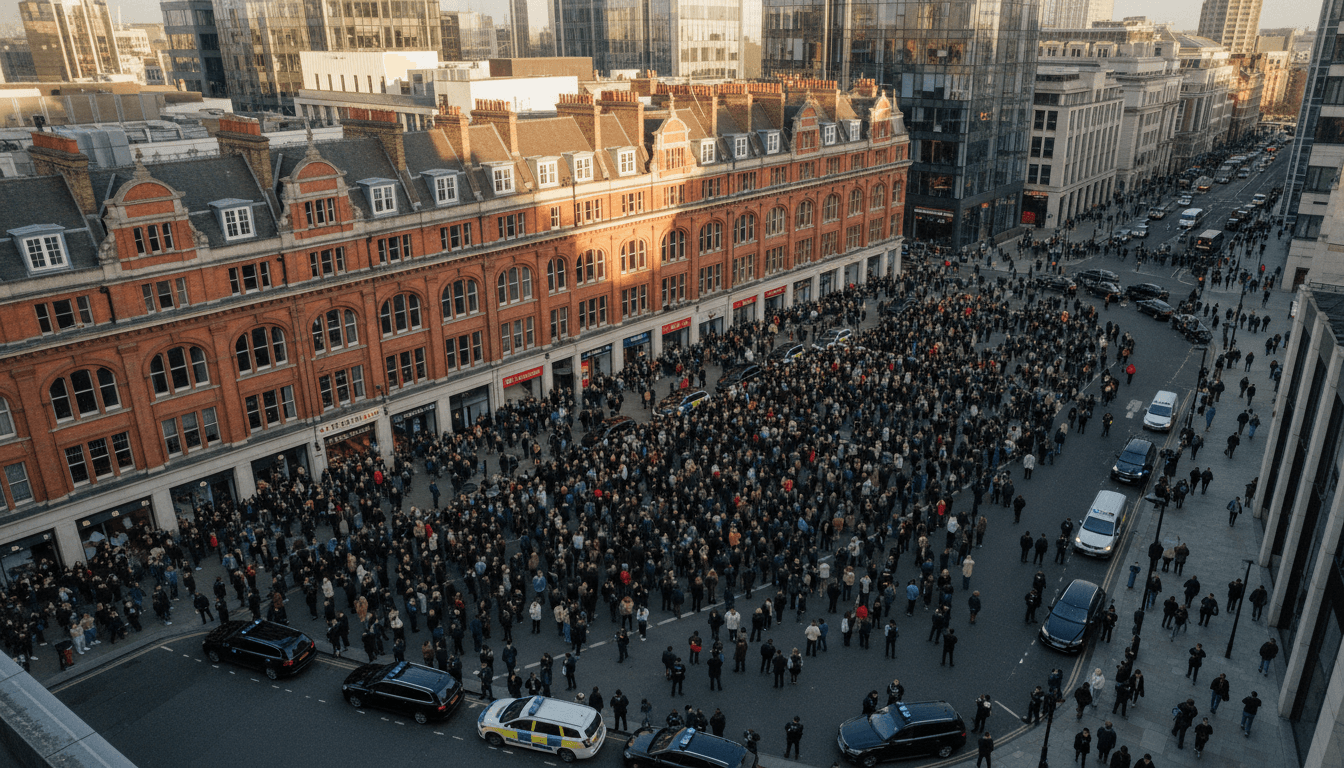
On Tuesday, hundreds gathered in Southampton to protest Nowak’s death, with the demonstration quickly turning violent. Protesters pelted police with chairs, cans, rocks, and flares, resulting in 11 officers and a police dog sustaining injuries. Two individuals were arrested. Home Secretary Shabana Mahmood unequivocally labeled the violence as “completely unacceptable,” accusing activists of “hijacking this tragedy to stir up violence and disorder.” She warned that those responsible would “face the full force of the law,” a sentiment echoed by Prime Minister Starmer, who called the street violence “disgraceful and completely unacceptable.”
The incident has become a flashpoint for broader societal grievances and has been exploited by far-right activists and politicians. Figures such as Nigel Farage, leader of the anti-immigration Reform UK party, have called for a response of “pure cold rage” and asserted that “white lives matter just as much as Black lives.” X owner Elon Musk and British far-right activist Tommy Robinson have also voiced outrage. This situation eerily mirrors previous incidents, including a 2024 stabbing rampage where misinformation, propagated by far-right groups, incited widespread rioting. The exploitation of such tragedies by extremist elements underscores a worrying trend of political polarization and the weaponization of social media to amplify division.
Criminology experts highlight the role of social media in fueling violent riots, but emphasize that underlying issues are often “latent.” Stephanie Alice Baker from City University of London suggests that growing unrest is linked to “emerging feelings of nationalism, a sense that people are being left behind, a sense that people’s freedoms are being denied,” coinciding with rising immigration and a cost of living crisis. These grievances are then “projected onto another,” creating a volatile environment. This assessment aligns with a broader global trend: data from the Institute for Economics & Peace shows a 102% increase in riots, general strikes, and anti-government demonstrations worldwide in the eight years leading up to 2018. Experts warn that increased polarization of political discourse makes conflict and protest more likely, potentially mutating into more violent forms. For more trending stories, visit our news section.
“Growing unrest is linked to emerging feelings of nationalism, a sense that people are being left behind, a sense that people’s freedoms are being denied.”
The economic ramifications of civil unrest are a significant concern for businesses. Past incidents, such as the August 2024 riots following another stabbing, led to a 4.8% decline in footfall on UK high streets, with Northern England and Yorkshire experiencing a sharper 12.9% drop. Shops and businesses have been forced to board up or close early due to fears of violence. The British Retail Consortium reported that the cost of retail theft doubled to £1.8 billion in the 12 months to August 2023. While the full financial cost of the current unrest is yet to be determined, insurance claims from previous riots have reached hundreds of millions of pounds. Businesses, particularly in the retail sector, are increasingly recognizing civil unrest as a significant risk, leading to a growing demand for specialist political violence insurance coverage. The UK government condemns protest violence, and the economic fallout could be substantial.
As the UK grapples with the fallout from these events, the focus shifts to how authorities will manage ongoing tensions and prevent further escalation. The investigation into the Southampton police officers’ conduct will be crucial in restoring public trust, while the government faces the challenge of addressing the underlying societal grievances that extremist groups exploit. The coming days will reveal whether the condemnations and warnings from the UK government can de-escalate the situation or if the specter of continued social unrest and its economic impact will loom larger over the nation.