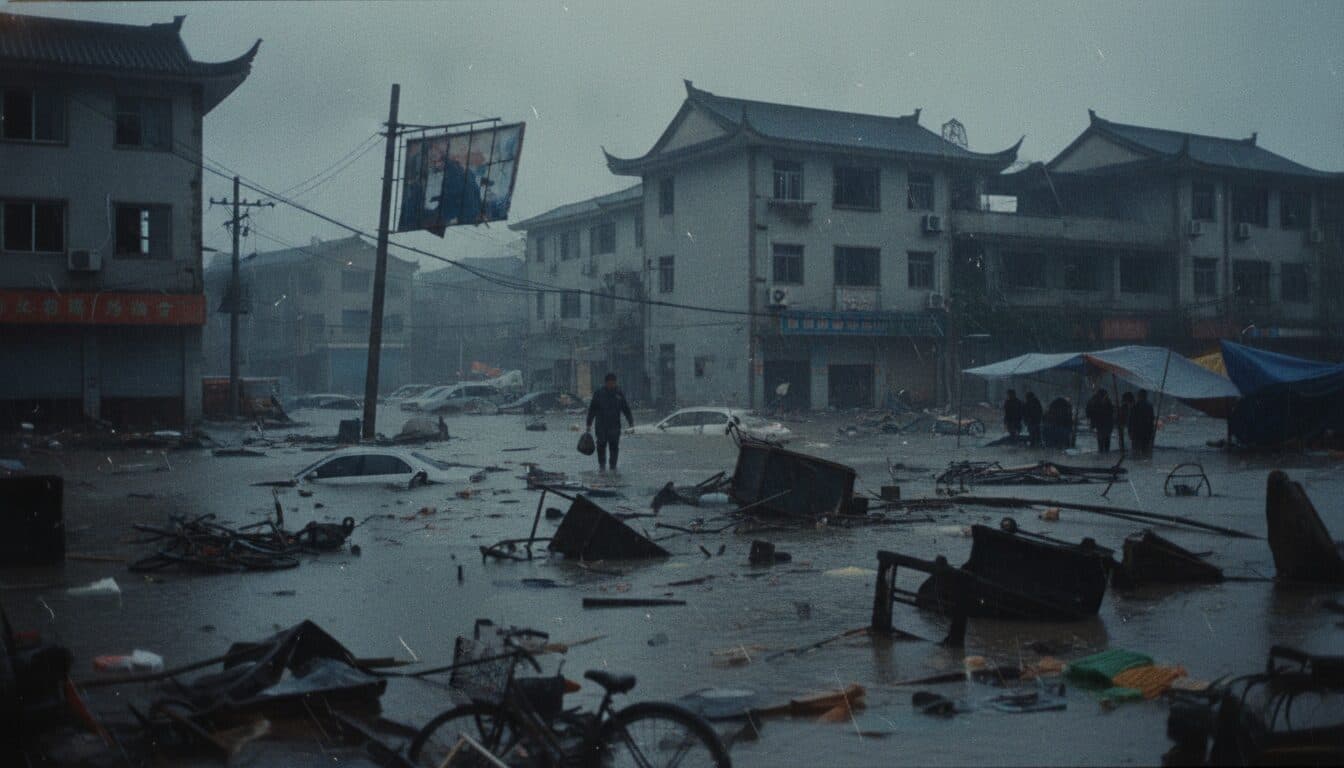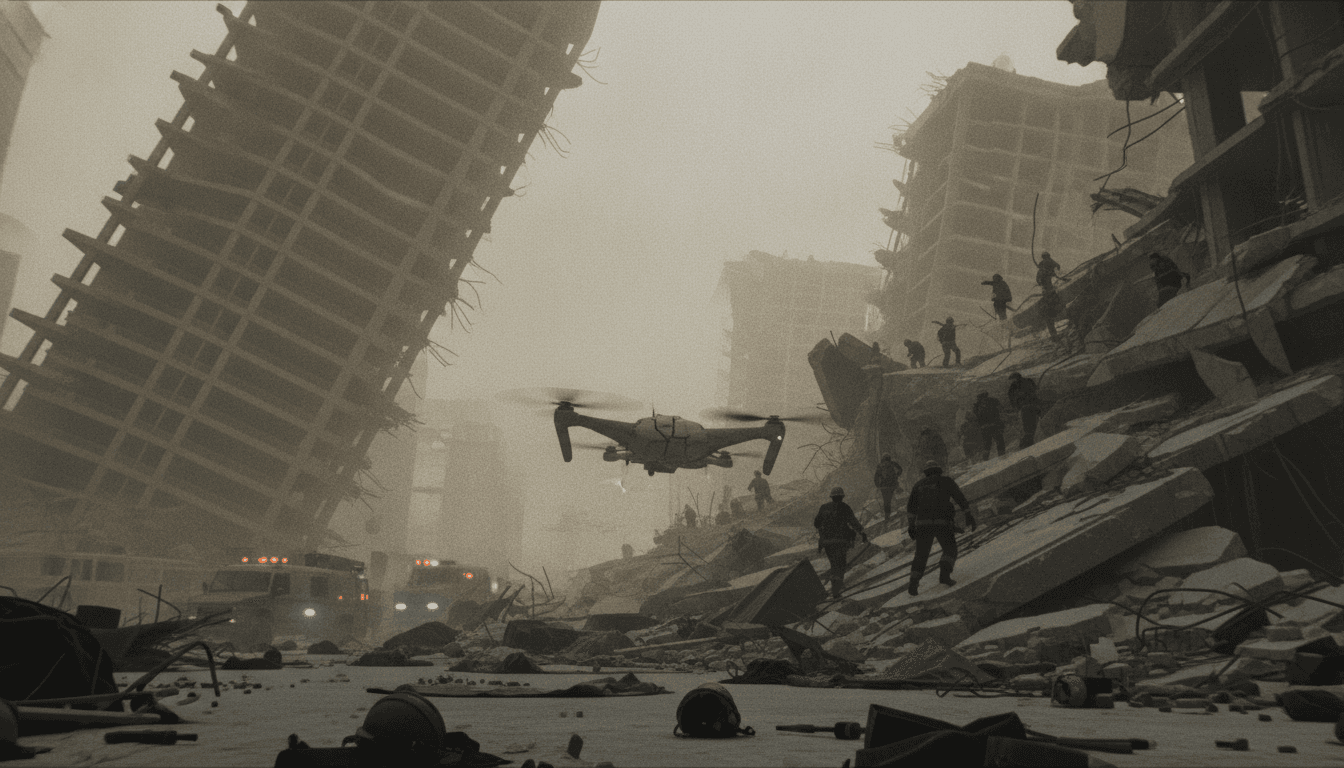
A powerful 7.8 magnitude earthquake struck off the southern Philippines on Monday, June 8, 2026, at 7:37 a.m. local time, unleashing widespread devastation, claiming at least 35 lives, injuring over 200, and triggering tsunami alerts across Asia. The seismic event, the strongest globally this year, has left a trail of destruction, particularly in the Soccsksargen region, prompting an immediate and extensive government response.
The earthquake’s epicenter was located approximately 26 km west-southwest of Kablalan, off the coast of Sarangani province, at a depth of 33 kilometers. This significant geological event, attributed to movement in the Cotabato Trench, sent tremors across Mindanao, with General Santos City, a metropolitan hub of 722,000 residents, bearing the brunt of the impact. The Philippine Institute of Volcanology and Seismology (PHIVOLCS) reported “very strong” intensity in the city, where buildings crumbled and essential services were severely disrupted.
Devastation and Initial Casualties from Philippines Earthquake
The immediate aftermath of the Philippines earthquake reveals a grim picture. At least 35 fatalities have been confirmed, with more than 200 individuals sustaining injuries. A tragic landslide in Glan, Sarangani province, accounted for 13 deaths as houses were buried at the foot of a mountain. Other casualties resulted from collapsing structures, falling debris, and a damaged mosque across southern provinces including Sarangani, South Cotabato, Davao Occidental, and Balut Island. General Santos City alone reported 11 deaths and 142 injuries from debris, with at least 12 residents still missing, raising fears that the death toll could climb further.
The scale of infrastructure damage is substantial. In General Santos City, a three-story building housing a Jollibee restaurant and a Love Radio station completely collapsed. Parts of SM City General Santos and a building at Notre Dame of Dadiangas University also suffered major structural damage. St. Elizabeth Hospital in General Santos City was severely compromised, necessitating the immediate evacuation of patients and medical personnel. The international airport in General Santos was temporarily shut down, leading to the cancellation of 17 domestic flights, disrupting travel and hampering initial relief efforts.
Beyond the immediate quake, the associated tsunami threat added another layer of urgency. Tsunami waves of approximately 1 meter (3 feet) washed ashore on nearby coasts, with smaller waves also detected in Indonesia, Palau, and southern Japan. Six shanties on stilts in a coastal village in Zamboanga del Sur were damaged by the combined force of the quake and the subsequent taller waves, underscoring the dual threat faced by coastal communities.
Government Mobilizes Extensive Response
President Ferdinand Marcos Jr. has moved swiftly, assuring the public of an active and coordinated national government response. He ordered the immediate mobilization of key agencies, including the Office of Civil Defense (OCD) and the National Disaster Risk Reduction and Management Council (NDRRMC), to oversee response and monitoring operations. The Department of Social Welfare and Development (DSWD) was directed to pre-position relief supplies and ensure the operational readiness of evacuation centers. The Department of Public Works and Highways (DPWH) is on standby for critical damage assessment and clearing of essential routes.
“The safety of our children comes first. We urge residents in tsunami-warned provinces to move to higher ground immediately,” President Marcos Jr. stated, emphasizing the urgency of evacuation and the suspension of classes at all levels in affected areas across Mindanao.
The government’s proactive stance aims to mitigate further loss of life and expedite recovery efforts in the wake of this devastating event. However, the sheer scale of the destruction and the widespread nature of the impact present significant logistical and humanitarian challenges.
Aftershocks and Lingering Warnings
The initial 7.8 magnitude earthquake was followed by more than an hour of aftershocks, with the largest measuring 6.5 on the Richter scale, exacerbating fears and further compromising already damaged structures. PHIVOLCS has issued stern warnings, advising residents to seek expert advice before re-entering damaged buildings due to the persistent risk of further seismic activity. Tsunami warnings were initially issued across a broad swathe of the Pacific, including the southern Philippines, Indonesia, Malaysia, Palau, Japan, Taiwan, and Papua New Guinea. While many of these warnings were later cancelled, a tsunami advisory remained in place for Japan’s southern coast and outlying islands, highlighting the continued vigilance required in the region.
The economic ramifications for the affected regions, particularly General Santos City, are expected to be significant. The closure of the international airport, damage to commercial establishments like SM City General Santos, and the disruption of daily life will undoubtedly impact local businesses and supply chains. The agricultural sector, a cornerstone of Mindanao’s economy, may also face challenges due to infrastructure damage and displacement of labor. Investors with interests in the region will be closely monitoring the government’s recovery plans and the pace of reconstruction.
The Path Forward: Resilience and Reconstruction
The Philippines, situated within the Pacific Ring of Fire, is no stranger to seismic activity. However, the sheer force of this 7.8 magnitude earthquake and the resulting casualties and damage underscore the perennial vulnerability of the archipelago to natural disasters. The immediate focus remains on search and rescue operations, providing humanitarian aid, and assessing the full extent of the damage. In the medium to long term, the emphasis will shift to reconstruction, rebuilding infrastructure, and enhancing disaster preparedness and resilience measures across the affected provinces.
For readers and investors, this event serves as a stark reminder of the inherent risks associated with operating in disaster-prone regions. While the human cost is immeasurable, the economic impact will necessitate careful evaluation of investment strategies and risk management frameworks in the Philippines. The government’s ability to effectively coordinate relief, manage reconstruction, and restore normalcy will be critical in shaping the economic outlook for Mindanao in the months and years to come.