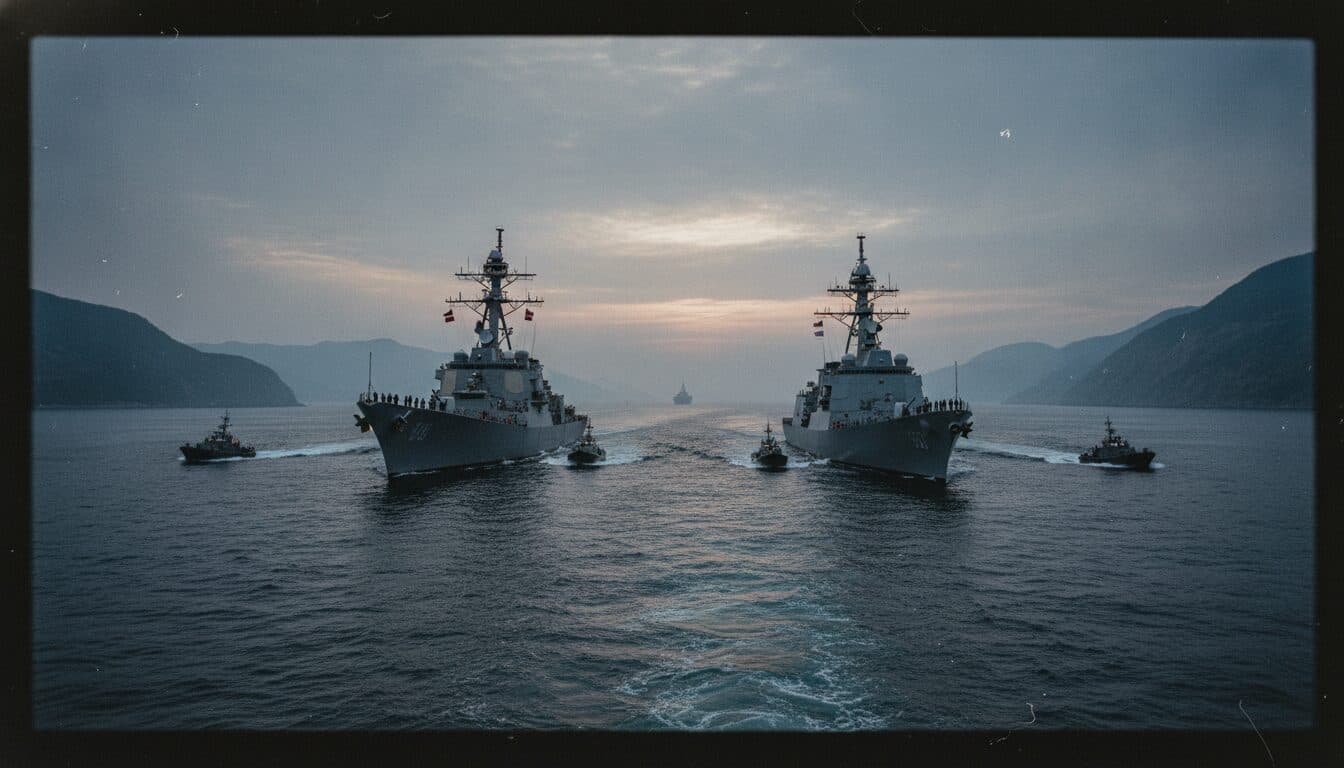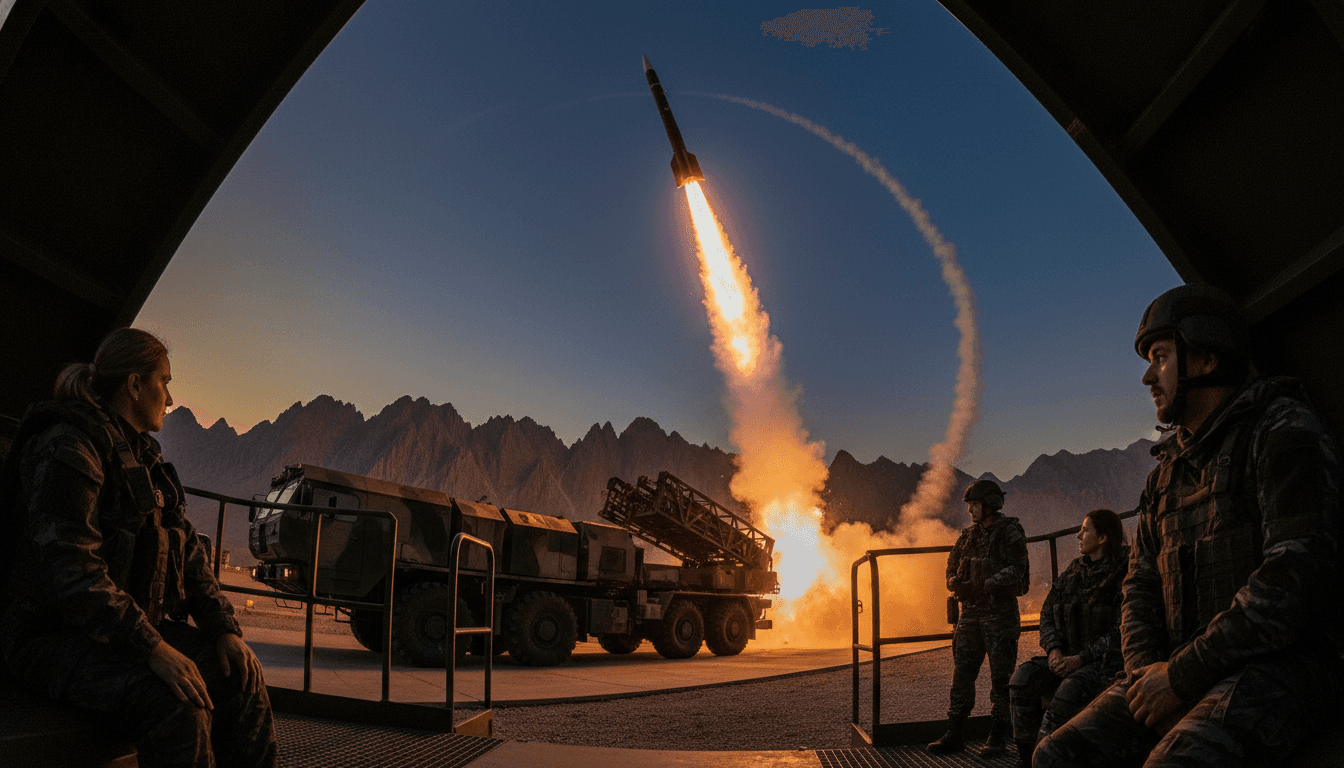
The world watches with bated breath as North Korea AI-guided missile tests signal a profound shift in modern warfare capabilities. On Tuesday, May 26, 2026, under the direct supervision of leader Kim Jong Un, the reclusive state conducted a series of advanced weapon demonstrations, prominently featuring tactical ballistic missiles, long-range artillery rockets, and, most notably, cruise missiles boasting an ‘AI terminal guidance function.’ This unprecedented public acknowledgment of artificial intelligence integration into its weaponry marks a significant, and potentially destabilizing, leap for Pyongyang’s military ambitions.
The Korean Central News Agency (KCNA) reported on these exercises the following day, Wednesday, May 27, 2026, detailing an arsenal that included a new lightweight multipurpose missile launcher and tactical cruise missile systems designed for high precision. These AI-guided cruise missiles are reportedly capable of striking targets up to 100 kilometers (62 miles) away with remarkable accuracy. Pyongyang has declared its intent to deploy these advanced weapons, alongside newly developed long-range 155mm self-propelled howitzers, in frontline areas near the South Korean border by the end of 2026, potentially bringing parts of the Seoul metropolitan area within their firing range.
North Korea AI-Guided Missile Tests: A New Era of Precision
These recent tests are an integral part of North Korea’s ambitious five-year national defense development plan, aimed at comprehensively modernizing its artillery and missile forces. Kim Jong Un emphasized that the exercises successfully demonstrated the modernization of North Korea’s weapon systems to ‘suit the proper conditions of modern warfare so as to enhance their application to combat.’ This statement underscores a strategic pivot towards enhancing conventional firepower with cutting-edge technology, moving beyond its well-established nuclear deterrence.
Expert analysts are closely scrutinizing the implications. Lim Eul-chul, a professor at Kyungnam University’s Institute for Far Eastern Studies, highlighted that the explicit mention of an ‘AI terminal guidance function’ suggests a concerted effort to maximize both strike accuracy and evasive maneuverability. This evolution complicates existing missile defense paradigms, as the simultaneous launch of various missile types, a tactic displayed in these tests, aims to overwhelm and evade interception systems.
“The integration of AI into North Korea’s missile technology for target recognition and guidance using real-time data marks a critical juncture in their military development, signaling an intent to strengthen precision-strike capabilities below the nuclear threshold.”
Hong Min of the Korea Institute for National Unification noted that these launches unequivocally signal Pyongyang’s intent to bolster its precision-strike capabilities. This focus on precise, long-range, and automated conventional firepower represents a significant enhancement to North Korea’s asymmetric strategy, traditionally reliant on nuclear warheads and long-range ballistic missiles to offset conventional weaknesses.
Global Implications and Regional Tensions
The timing of these North Korea AI-guided missile tests is particularly salient, occurring amidst heightened regional tensions. South Korea recently announced a long-term plan to build nuclear-powered submarines, a move that Pyongyang views as a direct threat. North Korea has increasingly framed South Korea as a ‘separate hostile state’ and its ‘main enemy,’ abandoning the long-standing policy of eventual unification. This shift in rhetoric, combined with advanced weapon deployments, escalates the potential for miscalculation and conflict on the peninsula.
The possibility of Russian technology transfer or joint development cooperation also looms large. Lim Eul-chul pointed to expanding military ties between Pyongyang and Moscow, noting that North Korea has supplied Russia with ballistic missiles and artillery rockets since late 2023. This exchange is believed to have provided Pyongyang with invaluable operational data for improving its missile arsenal, potentially including advancements in terrain contour matching and AI-guided targeting.
While North Korea claims sophisticated AI guidance, the exact level of its sophistication remains a subject of debate among experts. Yang Uk, a military expert at the Asan Institute for Policy Studies, suggests it primarily involves using AI for target recognition and missile guidance. Hong Min believes it likely entails an upgraded version of an existing digital guidance system combined with automatic target recognition technology, though independent verification of its true capabilities is challenging given the regime’s opacity.
The Broader AI Ambition and Future Outlook
North Korea’s interest in AI extends beyond military applications. The regime has outlined ambitious plans in its 9th Party Congress to integrate AI into both civilian and military sectors over the next five years, having previously claimed to use AI in drones. However, significant challenges remain in developing truly sophisticated AI, including acquiring crucial GPU chips, establishing robust data centers, securing consistent electricity, and obtaining high-quality data for training AI models, especially given its limited intelligence, surveillance, and reconnaissance (ISR) capabilities.
Furthermore, North Korea’s state-sponsored Kimsuky Advanced Persistent Threat (APT) group has reportedly been leveraging AI in cyber operations, using it to create deepfake military credentials for espionage. This demonstrates how AI can democratize sophisticated deception capabilities, making them accessible even to smaller state actors. The fusion of advanced conventional weapons with AI, coupled with cyber warfare capabilities, presents a complex and evolving threat landscape.
Key Takeaways
These North Korea AI-guided missile tests underscore a critical shift in Pyongyang’s military doctrine, moving towards greater precision and automation in its conventional arsenal. The explicit mention of AI integration, whether fully sophisticated or an advanced digital guidance system, signifies a deliberate effort to enhance its strike capabilities and complicate regional defense strategies. As regional tensions continue to simmer and geopolitical alliances evolve, the world will be watching closely for further advancements in North Korea’s AI-enabled military technology and the potential for increased instability on the Korean Peninsula. For more trending stories, stay tuned to The Financial Standard.