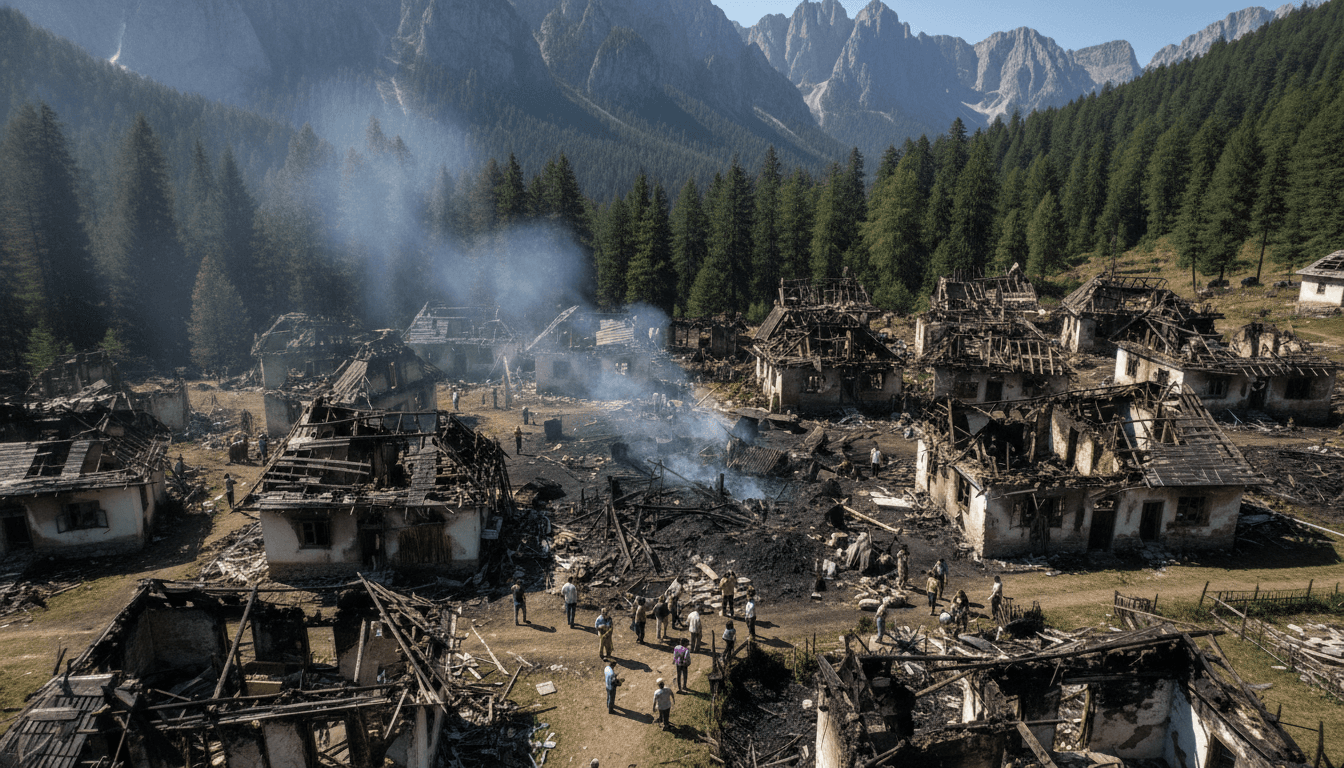
A Myanmar deadly village blast, occurring on Sunday, May 31, 2026, has killed dozens and injured scores more in Kaung Tat village, located in Myanmar’s northern Shan State near the Chinese border. This devastating incident, initially believed by residents to be an airstrike due to its sheer intensity, has been attributed by the Ta’ang National Liberation Army (TNLA) to an accidental detonation of explosives stored for mining operations. The TNLA, the ethnic armed group controlling the area, has reported at least 39 fatalities and 75 injuries, though other local media and witness accounts suggest a higher death toll of at least 55, including six children.
The explosion, which rocked Kaung Tat around noon local time (05:30 GMT), has left a trail of destruction, obliterating some homes near the blast center and damaging over half of the village’s houses. In total, approximately 200 homes in Kaung Tat and another 100 in the nearby Pan Lone village sustained damage. This tragedy unfolds against the backdrop of a civil war that has escalated dramatically since the military coup in February 2021, displacing over 3 million people and making Myanmar one of the most violent conflicts globally.
Myanmar Deadly Village Blast: A Sign of Deeper Turmoil
While the TNLA maintains the explosion was accidental, the incident highlights the precariousness of life in Myanmar’s conflict zones, where the lines between civilian life and military operations are increasingly blurred. The country’s rich mineral resources, including rare earths, are a critical source of revenue for both the military junta, known as the Tatmadaw, and various rebel armies. Even with the TNLA currently observing a ceasefire with the Myanmar military, the underlying tensions and dangers of war persist.
The broader conflict in Myanmar has led to an estimated death toll of at least 50,000 since the 2021 coup, with over 8,000 civilians among the casualties. From January 2021 through May 10, 2024, the war claimed 52,720 lives, making it the deadliest armed conflict globally during that period. Disturbingly, civilian fatalities are rising at an accelerated rate, with 9,147 civilian deaths directly attributed to the conflict from 2021-2024, accounting for about 17% of total deaths.
Humanitarian Crisis and Global Apathy
The military junta has increasingly employed brutal tactics, including indiscriminate airstrikes and artillery shelling of civilian areas. An egregious example is the April 2023 airstrike on Pa Zi Gyi village, which killed over 160 people, including children, and was condemned by Human Rights Watch as an apparent war crime. The UN Human Rights Office reported an unprecedented surge in violence against civilians by the military in 2024, resulting in the heaviest civilian death toll since the coup. This ongoing violence has created a profound humanitarian catastrophe, with over 18.6 million people—roughly a third of the population—in need of humanitarian aid as of early 2024. Approximately 2.3 million people have been displaced by the conflict, according to the United Nations.
“The Myanmar conflict, despite its devastating human cost, remains tragically under-reported on the global stage, overshadowed by other international crises.”
Despite the immense suffering and scale of the crisis, international attention has remained relatively muted compared to conflicts in Ukraine and Gaza. This lack of sustained global focus exacerbates the challenges faced by humanitarian organizations and may embolden the warring factions to continue their destructive campaigns with less accountability. The economic implications are also significant, with instability deterring foreign investment and disrupting critical supply chains, particularly for valuable mineral resources.
The Path Forward and What to Watch
Looking ahead, the accidental Myanmar deadly village blast underscores the urgent need for a peaceful resolution to the civil war. The potential for such catastrophic ‘accidents’ in areas controlled by ethnic armed groups, even those in a ceasefire, highlights the inherent dangers of storing explosives in civilian proximity and the pervasive risk of conflict. Observers will be watching for any shift in the TNLA’s stance or an increase in military activity in the region following this incident, especially concerning the valuable mining operations that fuel both sides of the conflict.
The international community’s response, or lack thereof, will also be crucial. Increased diplomatic pressure, targeted sanctions, and humanitarian aid are vital to mitigating the crisis. Without a concerted effort to address the root causes of the conflict and protect civilians, incidents like the Kaung Tat blast will likely continue, further destabilizing the region and deepening the humanitarian tragedy. The long-term economic and social recovery of Myanmar hinges on a sustainable peace, a prospect that remains distant in the shadow of such profound violence.