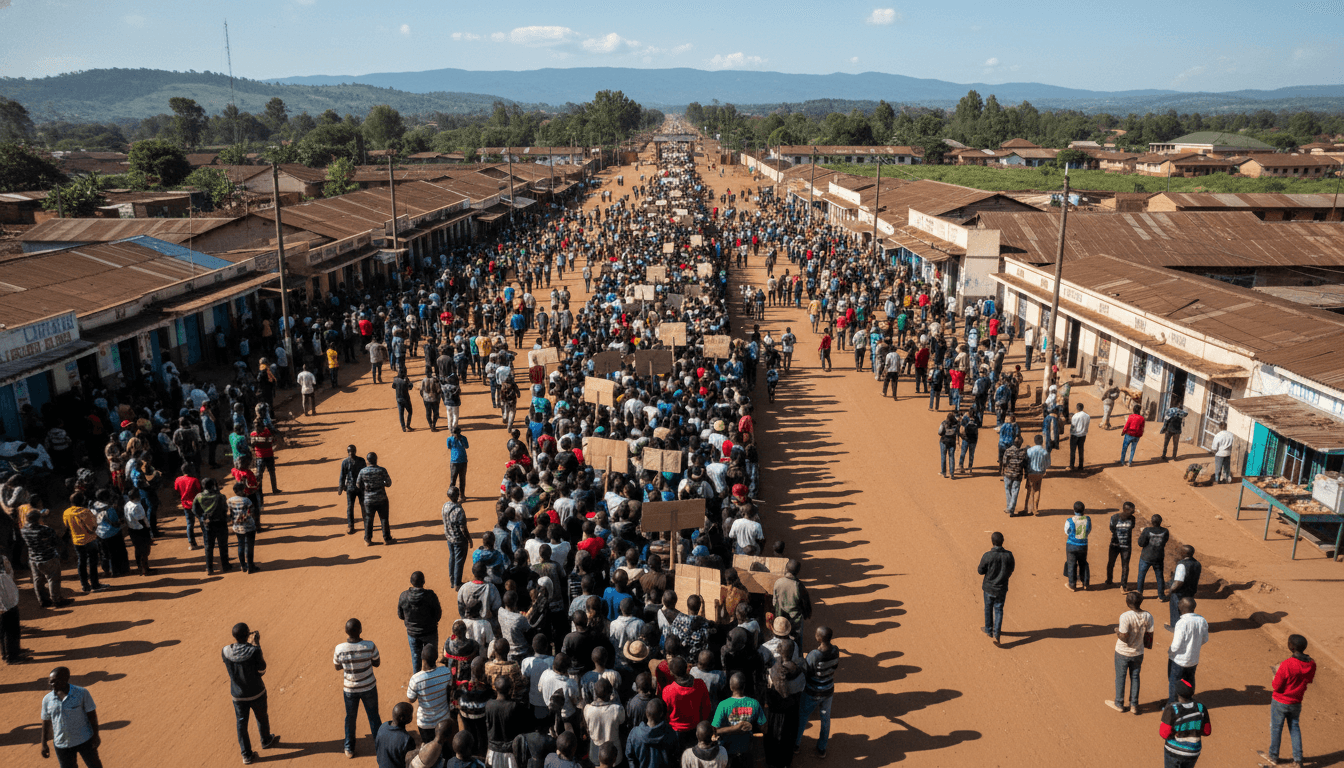
Kenya Ebola quarantine protests escalated dramatically on Monday, June 1, 2026, as two people were shot and killed during demonstrations against a proposed US-backed Ebola quarantine facility in Nanyuki. This tragic development thrusts the public health controversy onto the global stage, highlighting the volatile intersection of international health partnerships, national sovereignty, and local community fears.
The deaths occurred as hundreds of demonstrators gathered near the Laikipia Air Base, expressing grave concerns that the planned 50-bed facility, intended to house asymptomatic American citizens exposed to the Ebola virus, could endanger their community. Protest organizer Patrick Wahome stated that both individuals died from gunshot wounds after police opened fire, though a Kenyan police spokesperson indicated he was unaware of the fatalities. This incident marks a critical turning point in a dispute that has rapidly gained traction, drawing scrutiny from human rights advocates and international health organizations alike. For more trending stories, visit our news hub.
The Anatomy of a Controversy
The proposed facility at Laikipia Air Base was designed to serve as a quarantine unit for American citizens potentially exposed to Ebola in neighboring countries like the Democratic Republic of Congo and Uganda. The plan stipulated that if these individuals developed symptoms or tested positive, they would receive treatment at the facility until they could be transported to specialized centers in Europe. Kenya’s government approved the US request just last week, with President William Ruto defending the initiative as part of a broader national preparedness strategy and a long-standing health partnership with Washington. Ruto also noted that the project was approved after a direct request from US President Donald Trump, and is similar to other facilities already established in Kenya, serving both Kenyans and foreign partners if needed.
However, this governmental endorsement has been met with fierce public opposition and legal challenges. Residents and local leaders in Nanyuki voiced significant fears that the facility could expose them to Ebola, questioning why Kenya should host a quarantine center for US citizens. A common sentiment echoed by many is that if the disease is too dangerous for America, it is too dangerous for Kenya. The Law Society of Kenya and the Katiba Institute, a constitutional watchdog, filed a lawsuit, citing Kenya’s fragile health system as a reason why foreign Ebola patients should not be quarantined in the country.
The legal battle has already seen significant developments. Kenya’s High Court temporarily suspended the establishment of the facility and the admission of any foreign patients on Friday, May 29, 2026, pending further hearings. This order was extended for another three weeks on June 2, 2026. Despite the court injunction, reports indicate that US military aircraft have continued to fly in staff and equipment, further fueling public mistrust and concerns about adherence to national legal processes.
Global Health Emergency and Local Resentment
This controversy unfolds against the backdrop of an ongoing outbreak of the rare Bundibugyo strain of the Ebola virus in the Democratic Republic of Congo and Uganda. The World Health Organization (WHO) has declared this outbreak a public health emergency of international concern. As of June 2, 2026, the Democratic Republic of Congo has reported 321 confirmed cases and 48 deaths, while Uganda has recorded 15 cases and one death. Kenya, notably, has not recorded any Ebola cases, making the decision to host a quarantine facility for foreign nationals particularly contentious.
“The quarantine center is American-focused with no plans for infected Kenyans. Kenya should not become a containment colony for a deadly virus.”
Public health officials in Kenya have been vocal in their criticism. Davji Atellah, secretary general of the local doctors’ union, stated that the quarantine center is “American-focused” with no plans for infected Kenyans. The union argued forcefully that Kenya should not become a “containment colony” for a deadly virus. Critics also highlight broader concerns about public trust, transparency in decision-making, and national sovereignty, questioning the implications of such agreements on Kenya’s autonomy in public health matters. The US government intends to commit $13.5 million towards Kenya’s Ebola preparedness efforts, a sum that some argue does not fully address the perceived risks or the strain on local resources.
What’s Next for Kenya Ebola Quarantine Protests
The immediate future of the proposed facility remains uncertain, entangled in both legal challenges and escalating public unrest. The High Court’s extended injunction means that, for now, no foreign patients can be admitted. However, the reported continued arrival of US military personnel and equipment suggests a complex diplomatic and operational challenge. The Kenyan government faces immense pressure to balance its international partnerships with the demands and fears of its own citizens. The tragic deaths during the Kenya Ebola quarantine protests will undoubtedly intensify scrutiny and potentially galvanize further opposition, both locally and internationally.
The global community will be watching closely to see how this situation evolves. The incident underscores the critical need for transparent communication, robust public engagement, and clear legal frameworks in international health collaborations, especially when dealing with highly infectious diseases. The coming weeks will be crucial in determining whether dialogue can prevail over escalating tensions, and how Kenya will navigate this complex public health and diplomatic dilemma.