The fragile two-month ceasefire between Israel and Iran shattered over the last 48 hours as both nations engaged in direct missile strikes, igniting profound concern across global capitals and sending tremors through financial markets. This escalation in Middle East tensions, the first direct exchange since a U.S.-brokered truce in April, threatens to unravel broader peace negotiations and has prompted an urgent call for cessation of hostilities from U.S. President Donald Trump.
Direct Confrontation Escalates Middle East Tensions
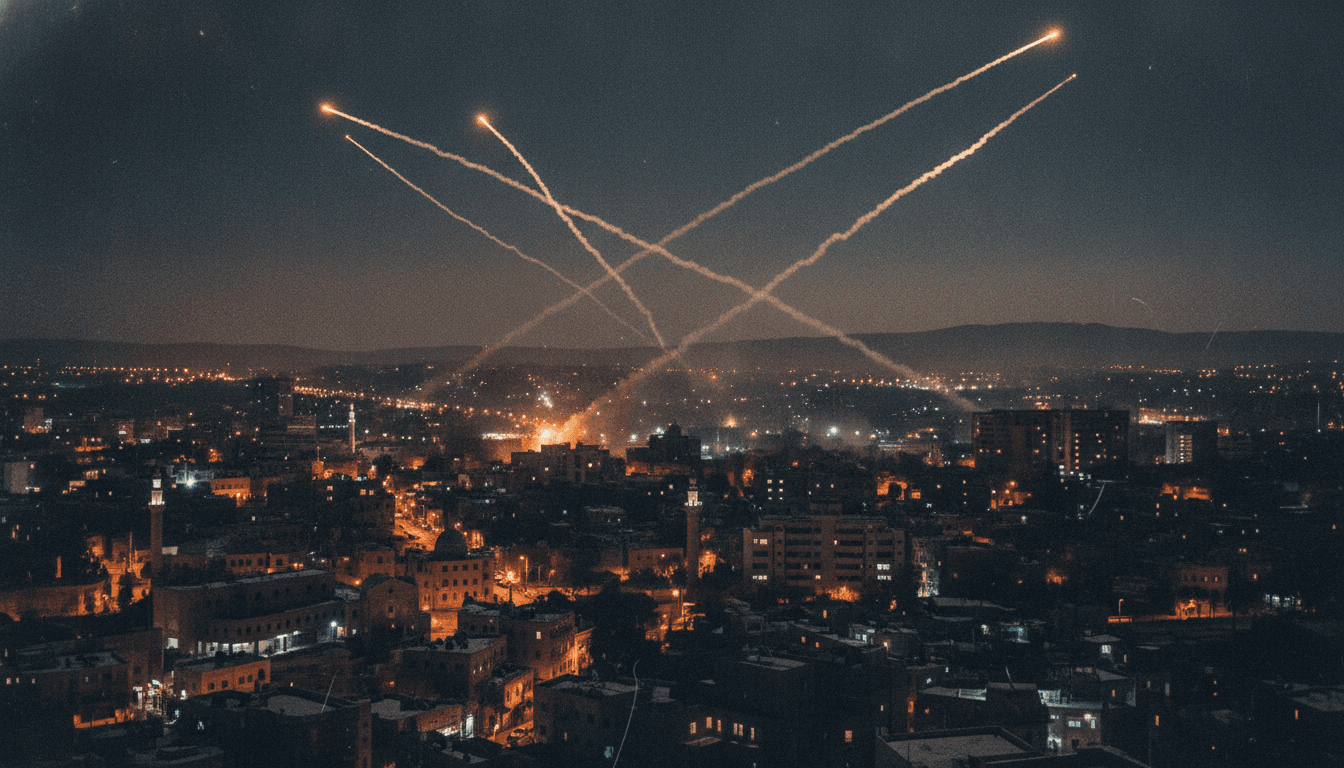
The sequence of events unfolded rapidly, beginning on Sunday, June 7, 2026. Following Israeli Defense Forces (IDF) strikes against Hezbollah targets in Lebanon, Iran launched missiles into Israel. The Iranian Revolutionary Guard Corps confirmed that their missiles targeted three Israeli military air bases: two in central Israel and one in the north. Concurrently, Iran-backed Houthi rebels in Yemen also fired two projectiles towards Israel, though one reportedly fell short of its target.
The retaliation from Israel was swift and substantial. Late Sunday night into early Monday morning, June 8, dozens of Israeli Air Force fighter jets, acting on intelligence from the IDF Intelligence Directorate, conducted a large-scale strike on strategic defense systems belonging to the Iranian regime. The IDF confirmed hitting Iranian ballistic missile production facilities in western and central Iran, as well as military infrastructure and missile-production facilities in Tehran. Reports from Iranian citizens corroborated explosions in Tehran, Isfahan, and Tabriz, leading to widespread airport shutdowns. Israel also targeted several facilities at a major petrochemical complex in Mahshahr, southwestern Iran, necessitating worker evacuations.
On Monday, June 8, the global response began to crystallize. President Donald Trump, using his Truth Social platform, demanded that Israel and Iran “immediately stop ‘shooting’.” He later asserted that both sides were “looking to do an immediate CEASEFIRE!” and that “final negotiations on ‘Peace’ are proceeding.” The Israeli military claimed to have successfully intercepted all incoming Iranian fire, reporting no damage or injuries, though falling debris did spark brush fires. As a precautionary measure, Israel ordered schools closed on Monday. Iran’s armed forces subsequently announced an end to their military operations against Israel, but issued a stark warning of “much more severe and crushing measures” should aggressions persist, particularly in southern Lebanon. The U.S. Embassy in Jerusalem responded by directing all U.S. government employees and their families to shelter in place and announced the closure of consular sections in Jerusalem and Tel Aviv for Tuesday, June 9.
Market Volatility and Geopolitical Fallout
The immediate financial impact of this escalation in Middle East tensions was predictable: a spike in oil prices and increased market volatility. Energy markets reacted sharply to the direct confrontation between two major oil-producing regions, with benchmark crude futures climbing as investors priced in heightened supply risks. Global equity markets, already navigating a complex economic landscape, showed signs of apprehension, with defense stocks potentially seeing short-term gains while broader indices faced downward pressure. The long-term financial implications hinge on the duration and intensity of this renewed conflict, particularly concerning shipping lanes through the Strait of Hormuz and potential disruptions to global trade.
“This direct exchange of fire represents a critical inflection point, moving beyond proxy warfare to a direct state-on-state confrontation that carries significant, immediate financial and geopolitical risks,” said a senior analyst with a leading geopolitical risk firm.
A Return to Direct Hostilities
This exchange of strikes marks the first direct missile attacks between Israel and Iran since a U.S.-negotiated ceasefire went into effect just two months prior, in April 2026. The broader conflict between Iran and Israel has deep roots, characterized by proxy hostilities since 1985 and direct clashes since 2024. The April ceasefire in the “Iran war” notably did not extend to Lebanon, where Israel has been engaged in ongoing conflict with Iranian-backed Hezbollah militants. Israel views its actions in Lebanon as defensive responses to Hezbollah’s drone and rocket fire, while Iran interprets Israel’s ground invasion and airstrikes in Lebanon as a violation of the ceasefire.
President Trump had previously cautioned Israeli Prime Minister Benjamin Netanyahu against retaliating to Iran’s missile barrages, stating, “We don’t need another one” and warning that further action could jeopardize ongoing negotiations. Trump had also informed Axios on Sunday that he was “very close to a final deal with Iran” and expressed his desire for it not to “blow up because of what is happening now.” He reiterated that a “Blockade will remain in place, and in full force and effect, until a ‘Final Deal’ is reached,” underscoring the delicate balance of the ongoing diplomatic efforts.
The Path Forward: De-escalation or Further Conflict?
The immediate future hinges on whether the calls for a ceasefire will be heeded and sustained. President Trump’s active involvement, coupled with Iran’s declaration of an end to military operations (albeit with a warning), offers a narrow window for de-escalation. However, the underlying tensions and the unresolved conflict in Lebanon with Hezbollah remain potent flashpoints. International diplomacy will be working overtime to prevent further escalation in Middle East tensions and to salvage the broader peace negotiations that Trump alluded to. The financial community will be closely monitoring any developments, particularly regarding oil supplies and global trade routes, as the region teeters on the brink of wider conflict.
Key Takeaway for Investors
The direct exchange of strikes between Israel and Iran represents a significant shift from proxy warfare to direct confrontation, injecting a new level of uncertainty into an already volatile region. For investors, this translates to increased geopolitical risk premiums across various asset classes, particularly in energy markets. While calls for a ceasefire offer a glimmer of hope, the underlying structural issues and the ongoing conflict in Lebanon suggest that regional stability will remain precarious. Vigilance regarding global supply chains, energy prices, and the diplomatic efforts to contain this escalation in Middle East tensions is paramount for navigating the coming weeks and months.