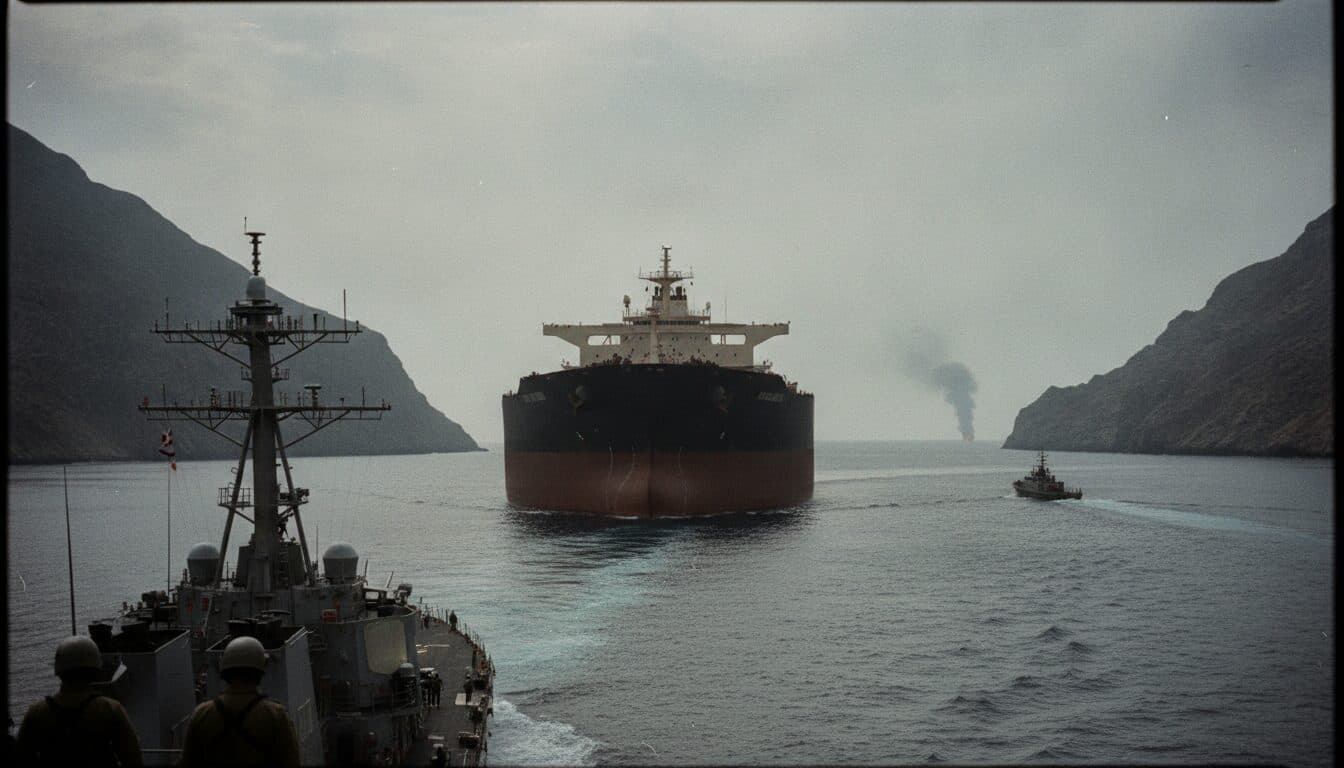
Global financial markets are bracing for renewed volatility as Iran announced on Monday, June 1, 2026, it is suspending all indirect ceasefire talks with the United States. This significant escalation in US-Iran tensions comes amidst intensified Israeli military operations in Lebanon and Gaza, which Tehran views as direct violations of existing truce agreements. The immediate fallout has been a sharp surge in oil prices, with WTI crude opening around $92 per barrel, signaling deep concerns over potential supply disruptions from the critical Strait of Hormuz.
The decision to halt negotiations was reported by the semi-official Tasnim news agency, an outlet closely associated with Iran’s Islamic Revolutionary Guard Corps (IRGC). Iran’s negotiating team explicitly stated they would cease “talks and exchanges of texts through mediators” until their demands regarding the cessation of Israeli actions in Gaza and Lebanon are fully met. Iran’s Foreign Ministry spokesperson Baghaei underscored this stance, stating, “Ceasefire in Lebanon is integral part of any agreement to end war with US.”
This latest breakdown in diplomatic efforts follows a weekend of direct military confrontation. Over May 30-31, 2026, the United States Central Command (CENTCOM) confirmed it conducted “self-defense strikes” on Iranian radar and drone control sites in Goruk and on Qeshm Island. CENTCOM stated these strikes were a direct response to “aggressive” actions from Tehran, including the alleged shootdown of a US MQ-1 drone operating over international waters. US fighter aircraft reportedly eliminated Iranian air defense systems, a drone control station, and two one-way attack drones, with no US military personnel harmed. Iran, in turn, condemned the US strikes as a violation of ceasefire efforts and a sign of bad faith, with its Revolutionary Guard claiming to have shot down at least one drone. Further complicating matters, Kuwait reported incoming missile and drone strikes targeting US forces within its borders, ostensibly in retaliation for the US actions.
“Hopes of further progress in US-Iran talks have been dashed… This has duly resulted in a spike for oil prices, since the combination of this and the weekend’s exchange of fire dramatically raises the chances of a fresh round of conflict,” commented Chris Beauchamp, chief market analyst at IG.
The primary catalyst for Iran’s suspension of talks is the “continuation of the Zionist regime’s crimes in Lebanon” and “escalating attacks on Lebanon” by Israel. Reports indicate Israel has expanded its operations north of the Litani River, conducting airstrikes north of the Zahrani River, and asserting its intent to continue operations against Lebanon. Lebanon’s army has reported “acts of aggression” by Israel, citing violations of the ceasefire, including shelling in southern Lebanese villages and the strategic capture of Beaufort Castle. In Gaza, Israeli forces reportedly targeted a senior Hamas official, leading to casualties in residential areas, according to Palestinian officials.
The financial ramifications of these escalating US-Iran tensions are immediate and profound. WTI crude oil surged to approximately $93 per barrel, with some reports indicating a climb of 6.5% to 7% on Monday. Brent crude, the international benchmark, saw a 6.7% increase, trading at $97.28 per barrel. This significant price jump is driven by acute market anxiety over potential disruptions to global oil supplies, particularly concerning the Strait of Hormuz. This vital passage for global oil shipments, alongside the Bab el-Mandeb Strait, has been threatened with complete blockage by Iran and its allies as a pressure tactic.
The fragile ceasefire between the US and Iran, initially struck in April 2026, has been described as “on life-support for weeks” due to persistent violations from both sides. Similarly, the US-brokered truce between Israel and Lebanon has faced continuous challenges, with mutual accusations of breaches. The current developments suggest these fragile agreements have now completely unraveled, paving the way for a more direct and dangerous confrontation.
US-Iran Tensions Escalate, Fueling Oil Price Fears
Looking ahead, the breakdown of these talks signals a perilous phase for Middle East stability. The direct military exchanges between the US and Iran, coupled with Israel’s expanded operations, significantly heighten the risk of a wider regional conflict. Investors and policymakers will be closely watching for any further military actions, particularly around key shipping lanes. The explicit demands from Iran for an “immediate cessation” of Israeli military operations and a complete withdrawal from Lebanese territory leave little room for immediate diplomatic breakthroughs, suggesting that the current high-stakes environment could persist for some time. The global economy, already grappling with inflationary pressures, now faces the added burden of potentially sustained high energy costs. Related trending articles highlight the broader impact of geopolitical instability on supply chains and commodity markets.
The key takeaway for investors and global stakeholders is that the era of fragile de-escalation appears to be over. The convergence of direct US-Iran military engagement, the collapse of ceasefire talks, and intensified regional conflicts creates a volatile cocktail. The immediate financial impact on oil prices underscores the critical importance of the Middle East to global energy security, while the breakdown of diplomatic channels raises the specter of a more profound and destabilizing regional conflagration.