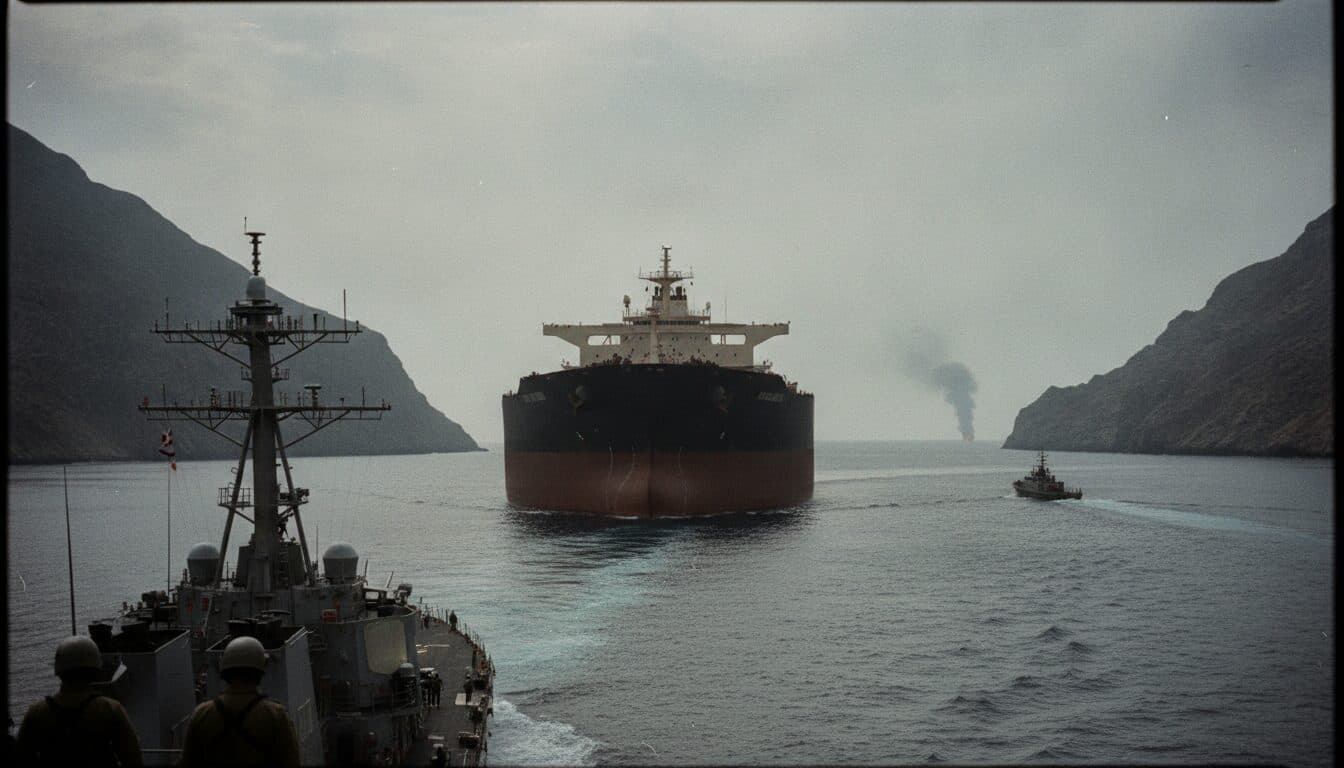
The U.S. House of Representatives has passed a significant measure to curb President Trump’s authority to conduct military action against Iran, reflecting growing congressional impatience with the ongoing conflict. This development comes amidst escalating tensions in the Middle East, marked by an Iranian drone strike on Kuwait’s main airport and a subsequent rise in oil prices, creating a complex geopolitical and economic landscape for investors and policymakers alike.
On Wednesday, June 3, 2026, the House voted 215 to 208 in favor of a war powers resolution that would require President Trump to seek congressional approval for further military action against Iran or withdraw U.S. forces. This marks the first time such a measure has passed either the House or the Senate since the conflict began over three months ago. Four Republicans—Reps. Thomas Massie of Kentucky, Brian Fitzpatrick of Pennsylvania, Warren Davidson of Ohio, and Tom Barrett of Michigan—joined Democrats in supporting the resolution. Additionally, Democratic Rep. Jared Golden of Maine, who had previously voted against similar measures, also supported this resolution.
House Democratic leaders, including Hakeem Jeffries of New York, Katherine Clark of Massachusetts, and Pete Aguilar of California, issued a joint statement urging Senate Republicans to “do the right thing” and pass the measure. The resolution now moves to the Senate, where a similar measure advanced last month on a procedural vote, indicating bipartisan concern over the prolonged conflict. The 1973 War Powers Resolution, which Democrats used to force the vote, mandates that presidents remove U.S. forces from unauthorized conflicts within 60 days. The Trump administration, however, has argued that hostilities have been “terminated” since a ceasefire took effect on April 8, 2026, despite continued military actions. The move to curb Trump’s Iran war powers underscores a growing assertiveness from Congress.
Escalating Tensions and Market Reactions
The House vote occurred as tensions in the Middle East intensified. On Wednesday, June 3, 2026, an Iranian drone strike targeted Kuwait International Airport, resulting in one fatality and multiple injuries. The attack struck a passenger terminal, causing significant damage and leading to the temporary suspension of commercial flights. Kuwait’s Foreign Ministry condemned the “brutal and ongoing Iranian attacks” on civilian infrastructure, stating that the security of Kuwait is a “red line.” Social media posts showed hundreds mourning a 33-year-old former national footballer and Border Force major who was among those killed. The U.S. military responded to these attacks by launching strikes on an Iranian military ground control station on Qeshm Island in the Strait of Hormuz.
This incident is the latest in a series of exchanges between the U.S. and Iran, further testing a fragile ceasefire that has been in place since April 8, 2026. The conflict in the Middle East began on February 28, 2026, with joint U.S. and Israeli strikes on Iran, which included the assassination of Supreme Leader Ali Khamenei. Iran retaliated by tightening its control over the Strait of Hormuz, a crucial passage for 20% of the world’s energy supplies.
Amidst the escalating tensions and stalled peace negotiations, oil prices have seen a significant increase. West Texas Intermediate (WTI) crude rose 2.4% to settle near $96 a barrel on Wednesday, extending its weekly gain to approximately 9.6%. Brent crude futures also gained 1.09% to reach $97.05 a barrel. This surge is attributed to the uncertainty surrounding U.S.-Iran negotiations and concerns about the disruption of oil flows through the Strait of Hormuz. Before the conflict began, oil prices were around $70 per barrel, rising to over $125 per barrel at their peak, and have since fallen below $100 with diplomatic efforts. U.S. government data indicates that nationwide petroleum stockpiles have fallen for eight consecutive weeks, the longest streak since early 2022, further contributing to market concerns.
“The sustained volatility in crude oil markets directly reflects the profound instability emanating from the Strait of Hormuz. Every escalation, every drone strike, sends ripples through global supply chains, impacting everything from transport costs to manufacturing inputs.”
The House’s decision to curb Trump’s Iran war powers introduces a new layer of complexity to the already volatile situation. While proponents argue it reasserts constitutional authority and potentially limits further military entanglement, critics suggest it could tie the President’s hands in a rapidly evolving crisis. The bipartisan support for the resolution in the House, and the earlier procedural vote in the Senate, signals a significant shift in congressional sentiment, moving away from unchecked executive action in foreign military engagements.
Looking ahead, the resolution’s fate in the Senate will be critical. Should it pass, it would present a direct challenge to the Trump administration’s foreign policy approach and could force a re-evaluation of military strategy in the region. The ongoing diplomatic efforts to de-escalate tensions and secure a lasting peace remain fragile, with each new military incident threatening to unravel any progress. For global markets, the primary concern remains the security of the Strait of Hormuz and the potential for sustained disruptions to oil supplies, which could push energy prices even higher and fuel inflationary pressures worldwide. Investors will be closely watching for any further developments in Congress’s efforts to curb Trump’s Iran war powers and the administration’s response.
The current confluence of legislative action and military escalation underscores the interconnectedness of geopolitics and global economics. The efforts to curb Trump’s Iran war powers are not merely an internal U.S. political debate; they have tangible consequences for international stability and the financial health of nations dependent on stable energy markets.