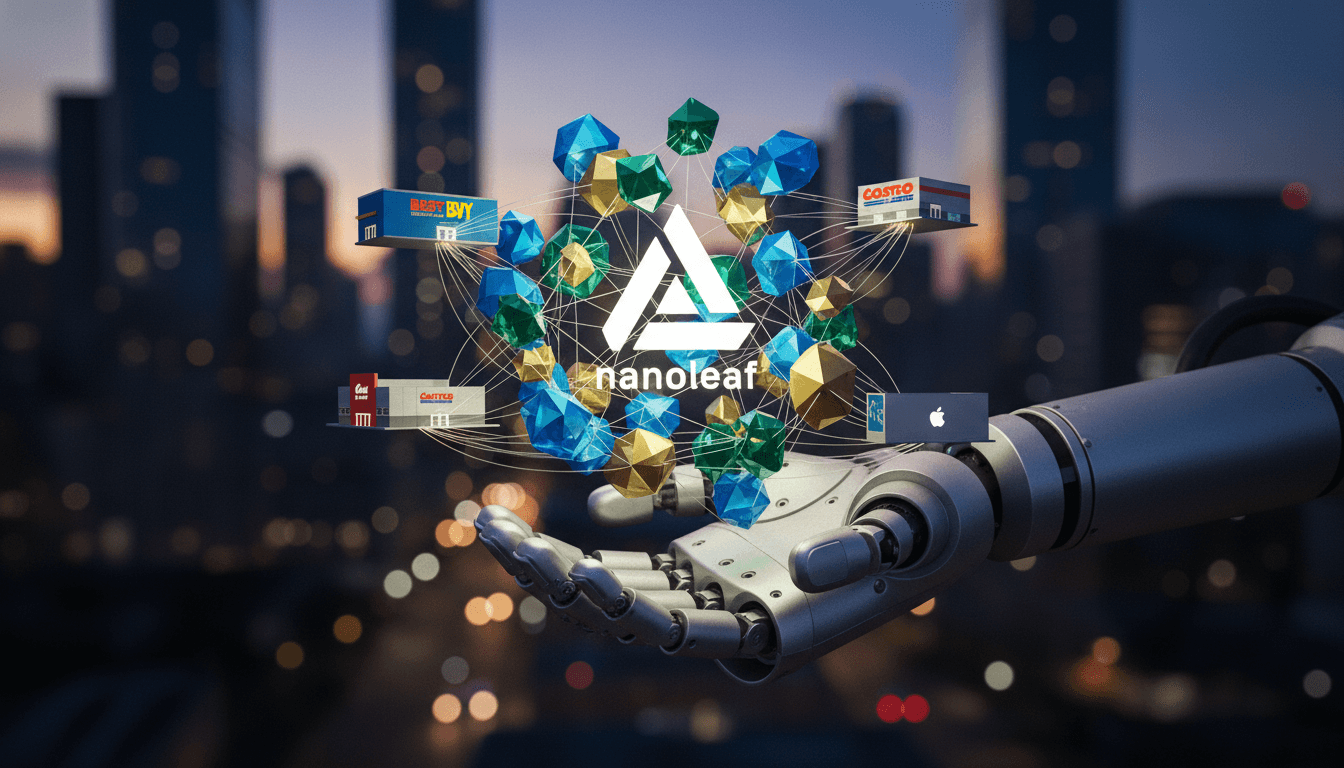
OneRobotics’ acquisition of Nanoleaf in a $40 million deal marks a significant strategic maneuver in the smart home and robotics sectors, highlighting the growing convergence of these technologies. Announced on May 15 and detailed on June 5, 2026, this transaction sees Shenzhen-based AI robotics firm OneRobotics taking full control of Nanoleaf Limited, a Cayman Islands-incorporated smart lighting company known for its innovative modular light panels. The deal, unfolding across four closings over 24 months, is a clear signal of OneRobotics’ ambitious expansion into North American retail channels.
The Acquisition Strategy
The core of this acquisition is not a technology play, but rather a strategic channel acquisition. OneRobotics, which debuted on the Hong Kong Stock Exchange in December 2025 as the world’s first publicly traded company focused on AI embodied home robots, has been remarkably candid about its motivations. The investment announcement filed with the Hong Kong exchange explicitly states that Nanoleaf’s established retail partnerships – notably with Best Buy, Costco, and Apple retail stores across North America, along with Home Depot – are the primary drivers. For a company with an existing footprint in Japan and Europe, these relationships offer a significantly faster route to North American distribution than building from scratch.
This strategic framing, centered on “channel complementarity” and “localized operational synergy,” is a familiar pattern in the global business landscape, where Chinese manufacturers leverage Western brand acquisitions to gain robust distribution vehicles. OneRobotics intends to capitalize on Nanoleaf’s existing retail network to introduce its own suite of products, including sports robotics, companion robotics, and home service robotics, into these high-value retail environments. The company’s product philosophy, built around its proprietary AI brain called OneModel and a “One Brain, Multiple Embodiments” architecture, is aimed squarely at household robots designed for cooking, exercise, and companionship.
“The acquisition of Nanoleaf is a masterclass in strategic market entry, prioritizing established retail channels over immediate technological integration. It’s about leveraging existing access to accelerate growth in a critical market.”
Nanoleaf co-founders Gimmy Shen Chu and Christian Yan are contractually obligated to remain as chief executive and chief operating officer, respectively, for at least three years post-first closing, ensuring continuity and leveraging their deep understanding of the North American retail landscape. This retention of key leadership is crucial for a smooth transition and effective utilization of Nanoleaf’s existing relationships.
Nanoleaf’s Financials and Market Position
In 2025, Nanoleaf posted revenue of approximately $30.9 million, a modest increase from $29.7 million in the preceding year. Despite its innovative product line and strong retail presence, the company has faced profitability challenges, recording a net loss of roughly $1.7 million in 2025, following a deeper loss of $6.4 million in 2024. OneRobotics applied a price-to-sales valuation methodology, arriving at an implied transaction multiple of approximately 1.3x revenue, after a 28 percent discount for lack of marketability. This valuation reflects the strategic importance of Nanoleaf’s distribution network rather than its standalone profitability.
The $40 million deal arrives at a pivotal moment for Nanoleaf. The company recently settled two separate patent disputes in the fall of 2025, including a seven-month suit initiated by Signify under its EnabLED enforcement campaign. These resolutions, achieved quietly and without disclosed terms, underscore the complexities of navigating intellectual property in the smart lighting sector. The integration into OneRobotics could either simplify or complicate Nanoleaf’s future IP posture, depending on the new parent company’s approach.
Market Impact and Future Outlook
This acquisition sends a clear signal to the smart home and robotics industries: access to established distribution channels remains a premium asset. For competitors in both sectors, OneRobotics’ move highlights the growing necessity of a robust retail presence, particularly in the lucrative North American market. The strategic marriage of Nanoleaf’s lighting brand with OneRobotics’ AI-powered robotics vision presents intriguing possibilities for cross-promotion and integrated smart home ecosystems.
The question of how modular LED panels fit into OneRobotics’ broader vision of household robots that cook, exercise, and provide companionship remains largely unanswered in the immediate announcements. However, the potential for Nanoleaf’s smart lighting technology to integrate with AI-embodied robots, perhaps as visual indicators or interactive elements within a connected home environment, could unlock new product categories and user experiences. This $40 million deal is not just an acquisition; it’s a blueprint for a new kind of market entry and expansion in the rapidly evolving landscape of smart consumer technology. Investors will be keenly watching how OneRobotics leverages this strategic asset to drive its robotics products through Nanoleaf’s established channels, aiming for a significant surge in its North American market penetration.
For more success stories in the tech and retail sectors, visit our archives.