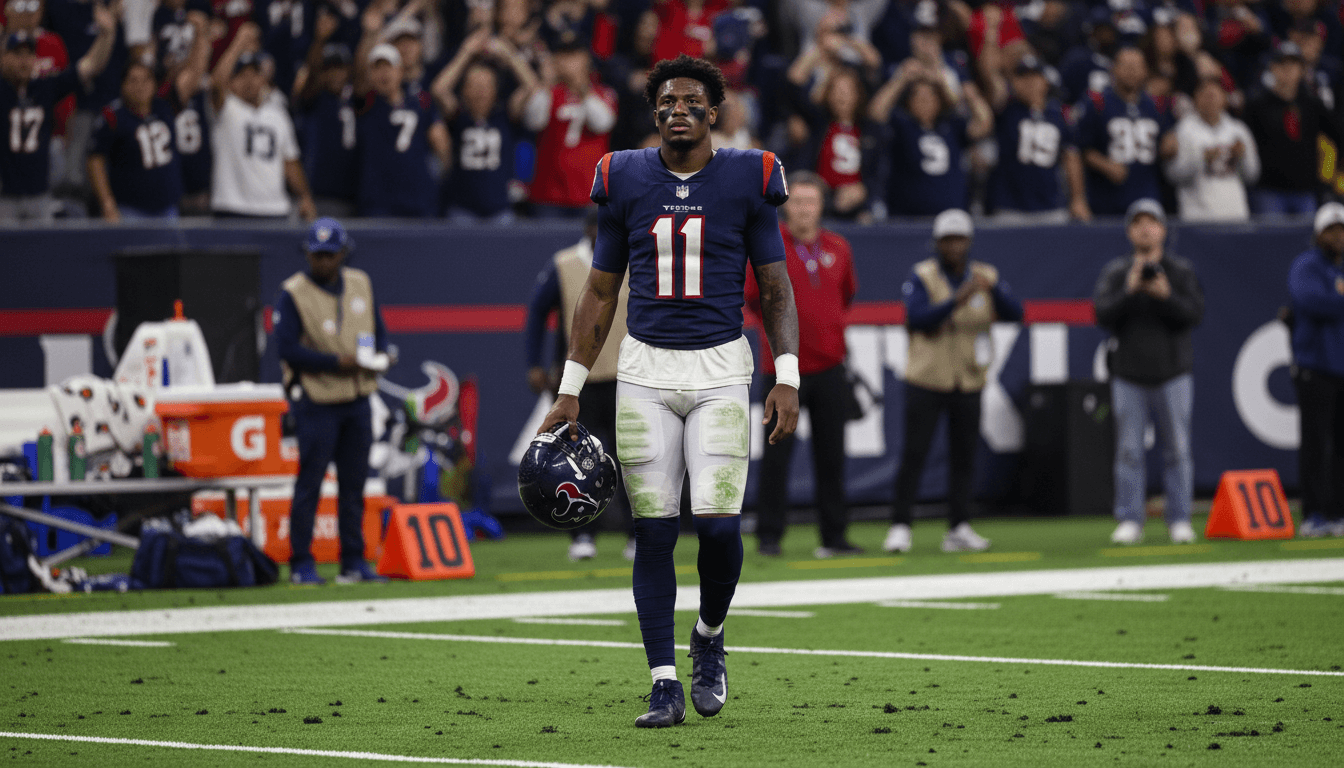
The Will Anderson Jr. extension, a stunning 3-year, $150 million deal agreed upon between the Houston Texans and their star defensive player, marks a pivotal moment in NFL player valuations and team salary cap management. Announced on Friday, April 17, 2026, this record-setting contract not only cements Anderson’s status as one of the league’s most valuable assets but also sends ripples through the entire sports business ecosystem, particularly in how premium defensive talent is compensated.
The Blockbuster Deal: Who, What, and Why Now?
The Houston Texans have committed a massive sum to Will Anderson Jr., signing him to a 3-year, $150 million extension. This agreement, as reported by The New York Times, positions Anderson as the highest-paid defensive player in NFL history on an annual average basis. For the Texans, this move is a clear statement of intent: securing foundational talent is paramount for long-term competitive success. Anderson’s impact on the field, particularly his ability to disrupt opposing offenses and generate pressure, has been undeniable, making him a cornerstone of their defense.
From a financial perspective, the deal is a calculated risk and reward. While the total value is staggering, the relatively shorter three-year term offers some flexibility for the Texans compared to a longer commitment. This structure allows the team to reassess the cap landscape and Anderson’s performance trajectory in the near future, while still locking in a crucial player through his prime. For Anderson, it’s a testament to his on-field performance translating directly into unprecedented financial security and market recognition.
Market Impact: Reshaping Defensive Valuations
The implications of this Will Anderson Jr. extension extend far beyond Houston. This deal immediately recalibrates the market for elite defensive players across the NFL. Every general manager and agent negotiating contracts for top-tier pass rushers or defensive linemen will now point to Anderson’s $50 million per year average as the new benchmark. This could trigger a wave of renegotiations or higher demands for upcoming free agents and players nearing extensions, potentially inflating defensive player salaries across the board.
Furthermore, this deal highlights the increasing premium placed on players who can consistently impact the quarterback. In a league increasingly dominated by high-powered offenses, the ability to generate pressure and create turnovers is invaluable. The financial commitment to Anderson underscores this strategic priority, and we can expect other teams with similar defensive cornerstones to face pressure to match or exceed this new financial standard to retain their talent. This could have significant ramifications for team salary cap strategies, forcing front offices to make tougher decisions elsewhere on their rosters. Read more about NFL salary cap strategies here.
“This Will Anderson Jr. extension isn’t just about one player; it’s a seismic shift in how defensive excellence is valued in the modern NFL. Teams will now have to factor in this new benchmark when building their rosters.”
Context and Background: An Evolving Landscape
The NFL salary cap has steadily risen over the years, allowing for increasingly lucrative contracts. However, the Will Anderson Jr. extension represents a significant leap, even within this upward trend. Historically, quarterback contracts have dominated the top of the salary charts, with defensive players trailing somewhat. While elite defensive players have always commanded high salaries, the $50 million annual average for Anderson puts him in a rare echelon, rivaling some of the league’s top signal-callers on a per-year basis. This reflects a growing understanding of the defensive impact required to win championships.
Previous record-setting defensive deals, while substantial, did not quite reach this level of annual compensation. This deal sets a new precedent, illustrating the escalating competition for game-changing defensive talent. It also speaks to the Texans’ belief in Anderson’s sustained performance and leadership potential, viewing him as a cornerstone not just for the present, but for the foreseeable future of the franchise.
What’s Next: Future Implications and Market Predictions
The immediate aftermath of the Will Anderson Jr. extension will likely see agents for other top defensive players begin to leverage this deal in their own negotiations. Players like Micah Parsons, Nick Bosa, or Myles Garrett, who are already among the league’s highest-paid, may find themselves with renewed arguments for contract adjustments or extensions that push even higher. This could lead to a ‘domino effect’ where the top of the defensive market continues to reset at an accelerated pace.
For the Texans, the challenge now shifts to managing their cap around this massive investment. While Anderson is secured, the team will need to be strategic in how they allocate remaining funds to build a competitive roster around him. This could involve drafting cost-controlled talent, making tough decisions on other veteran players, or exploring creative contract structures to defer cap hits. The spotlight will also be on Anderson to justify this unprecedented financial commitment with continued elite performance.
Key Takeaway: The New Gold Standard for Defensive Talent
The Will Anderson Jr. extension is more than just a massive paycheck; it’s a declaration of a new financial standard for elite defensive talent in the NFL. It underscores the premium placed on players who can consistently disrupt the opposing offense and single-handedly change the momentum of a game. This landmark deal will undoubtedly reshape contract negotiations across the league, forcing teams to re-evaluate their financial strategies and signaling a new era of compensation for defensive playmakers. For the sports industry, it reaffirms the ever-escalating value of top-tier athletic performance and the immense financial power of professional sports leagues.