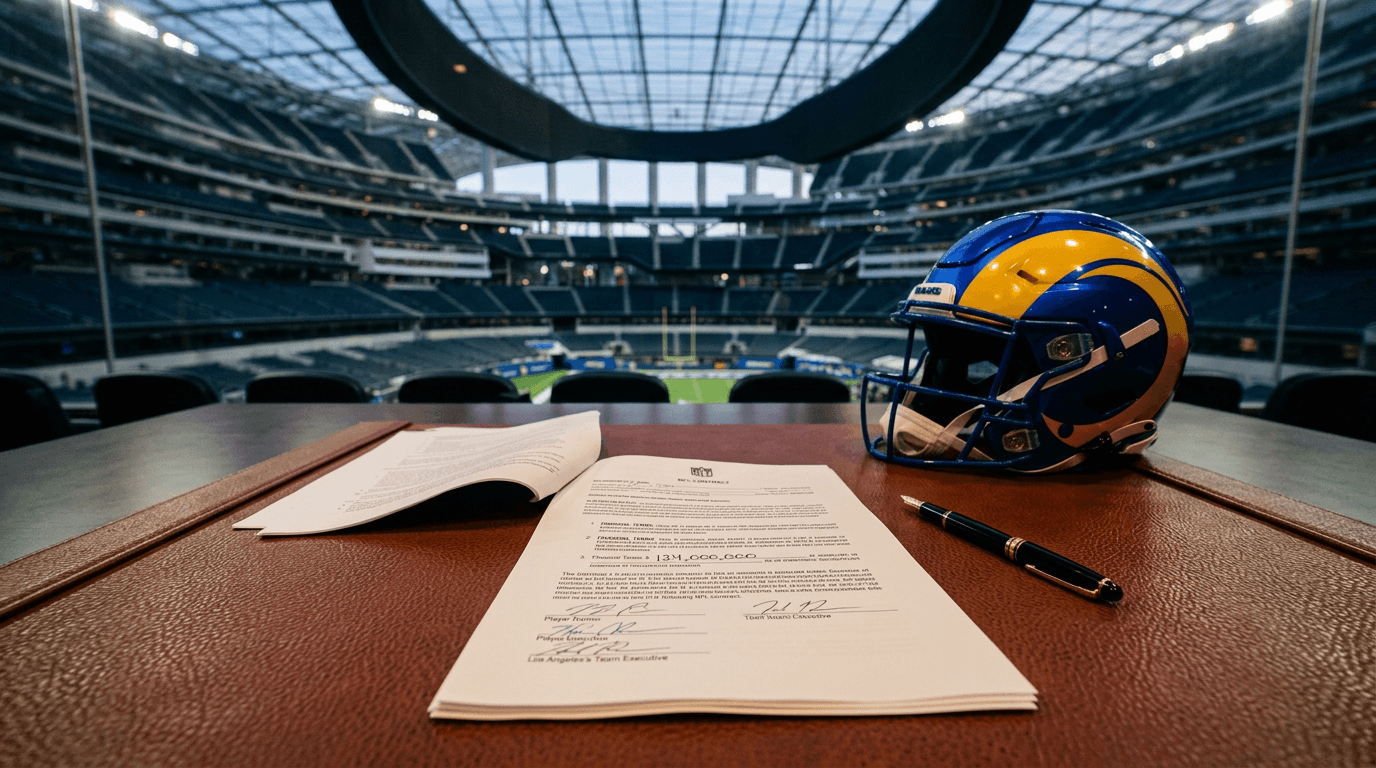
Trent McDuffie extension news has sent shockwaves through the NFL financial landscape as the Los Angeles Rams have committed a record-breaking $124 million over four years to secure the elite cornerback. This landmark agreement, finalized on Monday, March 9, 2026, represents a seismic shift in how NFL franchises value premium defensive assets in an era of rapidly escalating salary caps. By securing McDuffie through the prime of his career, the Rams are not just making a talent play; they are setting a new financial benchmark for the entire league.
The deal, which averages $31 million per season, positions McDuffie at the pinnacle of the defensive back market. For the Los Angeles Rams, this move continues a long-standing organizational philosophy of aggressive spending on blue-chip talent. While many teams prefer to build through the draft and maintain a conservative cap structure, the Rams have once again demonstrated their willingness to pay a premium for proven, game-changing production. The $124 million total value reflects the rising cost of elite pass defense in a league that has become increasingly dominated by high-volume aerial attacks.
“This deal isn’t just about rewarding a lockdown corner; it’s a recalibration of the entire defensive financial hierarchy in the NFL.”
The Financial Architecture of the Rams’ Defense
To understand the magnitude of this contract, one must look at the specific business dimensions involved. The four-year duration allows the Rams to capture McDuffie’s age-25 to age-29 seasons, theoretically the peak physical window for a cornerback. From a cap management perspective, the structure likely includes significant signing bonuses and back-loaded base salaries to maintain flexibility in the immediate future. This approach allows the front office to continue pursuing related sport articles and championship-caliber depth while navigating the constraints of the league’s hard cap.
The business of the NFL has seen a massive influx of revenue from new domestic and international broadcast deals, which has pushed the salary cap to unprecedented heights in 2026. The Trent McDuffie extension is a direct byproduct of this liquidity. As the league’s revenue grows, the floor for “star-level” contracts rises proportionally. What was considered a staggering amount just two seasons ago has now become the entry price for a cornerstone defender.
Market Impact of the Trent McDuffie Extension
The broader implications for the sports business landscape are profound. When a player of McDuffie’s caliber resets the market, it creates a ripple effect that touches every other franchise. Agents across the league will now use this $124 million figure as the starting point for negotiations involving top-tier defensive backs. We are seeing a trend where the gap between the “elite” and the “average” player salary is widening, creating a bifurcated market where stars command a disproportionate share of the cap.
Furthermore, this deal impacts team valuations and investment strategies. High-profile signings like the Trent McDuffie extension increase a franchise’s brand equity, making them more attractive to corporate sponsors and luxury suite holders in the competitive Los Angeles market. The Rams are selling more than just wins; they are selling the presence of superstars, which is a critical component of their business model at SoFi Stadium.
Historical Context of Cornerback Contracts
Historically, the cornerback position was often undervalued compared to pass rushers or offensive tackles. However, the evolution of NFL rules—which heavily favor the passing game—has elevated the “lockdown corner” to a position of extreme scarcity and value. Looking back at previous record-setting deals, the jump to a $31 million annual average salary represents a significant percentage increase over the prior high-water marks. This trend mirrors the inflation seen in the quarterback market, suggesting that the industry now views the counter-pass game as equally vital to financial and competitive success.
In the context of industry trends, the Trent McDuffie extension also highlights the importance of early extensions. By moving aggressively now, the Rams may actually be saving money in the long run. If the cap continues its current trajectory, a $31 million AAV might look like a bargain by the third year of the deal. This “pre-emptive strike” strategy is becoming a hallmark of sophisticated NFL front offices who prioritize long-term cost certainty over short-term cap savings.
Future Outlook for NFL Salary Cap Management
Looking ahead, the industry will be watching how other teams respond to this deal. Several high-profile cornerbacks are approaching the end of their rookie contracts or current extensions, and they will undoubtedly point to the Trent McDuffie extension as the new gold standard. We can expect a flurry of defensive signings over the next two off-seasons as teams scramble to lock in their stars before the price of entry climbs even higher.
Additionally, the Rams’ ability to balance this massive contract with their other financial obligations will serve as a case study for related sport articles focused on modern roster construction. If Los Angeles can remain a contender while carrying such a heavy defensive cap hit, it will validate the “star-heavy” approach. If they struggle with depth, it may lead to a market correction where teams move back toward a more balanced distribution of funds.
The sports industry is currently in an era of unprecedented financial growth, and the Trent McDuffie extension is the latest evidence of that reality. As franchises become more profitable and the league’s global reach expands, the players who define the game on the field will continue to see their earning potential reach new heights. For fans and analysts alike, this deal is a reminder that in the modern NFL, the battle for talent is just as much about the spreadsheet as it is about the scoreboard. The Rams have made their move; now the rest of the league must decide if they can afford to keep up.