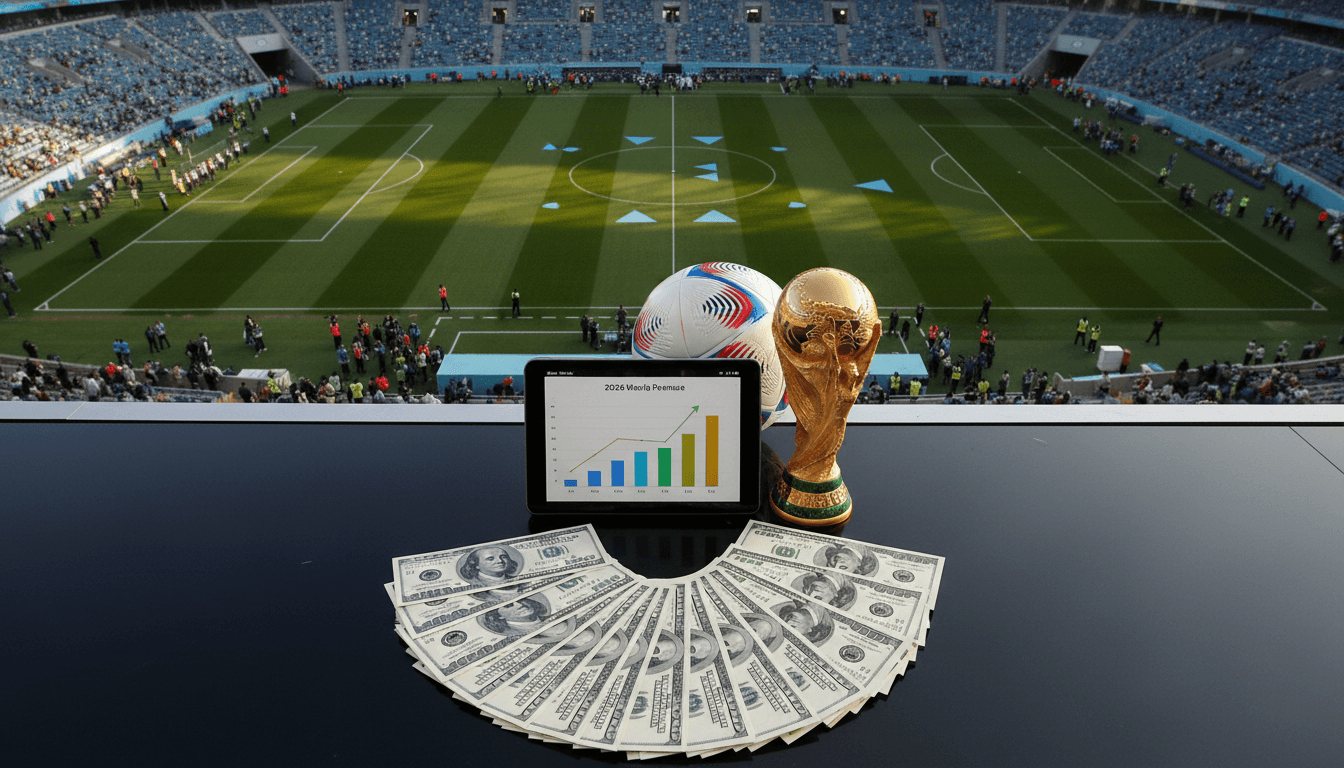
Record World Cup revenue is projected to exceed an astounding $80 billion for the 2026 tournament, signaling a new era of financial prowess for global football’s showpiece event. This blockbuster forecast, revealed in a study reported by AL24 News on Sunday, April 19, 2026, underscores the immense commercial magnetism of the expanded competition and its unprecedented scale across North America.
The Business Impact of Record World Cup Revenue
The study’s projection of over $80 billion in revenue for the 2026 World Cup is a seismic shift in the financial landscape of international sports. This figure dwarfs previous tournaments, reflecting an exponential growth trajectory driven by several key factors. The expansion to 48 teams, coupled with the joint hosting across the United States, Canada, and Mexico, significantly broadens the market reach and sponsorship opportunities. Broadcasters, eager to capture the attention of a vast, multi-continental audience, are expected to commit record sums for media rights. Furthermore, the sheer number of host cities – 16 in total – translates into a vastly increased ticketing and hospitality revenue stream, alongside substantial merchandising and licensing deals.
For FIFA, the global governing body of football, this projection means an unprecedented war chest, enabling further investment in football development worldwide and potentially increasing prize money for participating nations. The financial implications extend beyond FIFA, impacting host cities and nations through tourism, infrastructure development, and local economic activity. The scale of this financial influx positions the 2026 World Cup not just as a sporting event, but as a significant global economic driver.
Market Impact and Valuation Shifts
This projected record World Cup revenue will undoubtedly send ripples through the entire sports business landscape. Media companies are already bracing for intense bidding wars for future broadcast rights, with the 2026 figures setting a new benchmark for valuation. Sponsorship deals for major sporting events will likely see an upward revision, as brands recognize the unparalleled global exposure offered by the World Cup. Companies involved in sports infrastructure, technology, and hospitality are also poised for substantial gains, with the event acting as a catalyst for innovation and investment.
The success of the 2026 tournament could also influence the valuation of national football federations and even top-tier clubs. Increased revenue for FIFA could lead to larger disbursements to member associations, trickling down to grassroots development and professional leagues. This financial uplift could, in turn, enhance the marketability of domestic leagues and players, potentially impacting transfer fees and player endorsement deals. The Financial Standard has extensively covered the escalating valuations in top-tier football, and this World Cup projection only solidifies that trend.
“The $80 billion forecast isn’t just a number; it’s a recalibration of what’s possible in sports economics. It sets a new ceiling for global event monetization and will force every stakeholder, from broadcasters to host cities, to rethink their strategies.”
Historical Context and Industry Trends
To fully appreciate the magnitude of the 2026 projection, it’s essential to look at previous World Cup cycles. While specific past revenue figures for the entire tournament are not provided, the consistent growth of the World Cup’s commercial appeal has been a well-documented trend. Each successive tournament has generally surpassed its predecessor in terms of viewership and commercial partnerships. The expansion from 32 to 48 teams for 2026 represents the most significant format change in decades, designed precisely to unlock new markets and generate greater revenue streams.
Industry trends indicate a continuous rise in live sports media rights, despite fragmentation in content consumption. Premium live sports remain one of the most powerful draws for advertisers and subscribers. The 2026 World Cup, with its expanded format and North American footprint, is uniquely positioned to capitalize on this trend, leveraging diverse time zones for optimal broadcast windows and tapping into affluent consumer bases across three nations. The move towards a unified North American bid itself was a strategic play to maximize commercial potential and logistical efficiency, demonstrating foresight in revenue generation.
What’s Next for Global Football Economics
The immediate implication of this astounding projection is that FIFA and its commercial partners will be working diligently to secure and optimize every revenue stream. We can anticipate aggressive marketing campaigns, innovative digital engagement strategies, and perhaps even new commercial categories being introduced. For host cities, the focus will shift towards ensuring infrastructure readiness and maximizing local economic benefits. The success of 2026 will also set a formidable precedent for future World Cup bids, with prospective hosts needing to demonstrate even greater commercial viability and operational capacity.
From a broader industry perspective, this figure will likely spur further investment in sports technology, data analytics, and fan engagement platforms, as stakeholders seek to further monetize the massive audience. The competition for major global events will intensify, as countries and regions vie for the prestige and economic windfall that a World Cup now guarantees. Our analyses often highlight the intricate dance between sporting spectacle and economic opportunity, and the 2026 World Cup is poised to be the most elaborate performance yet.
Key Takeaway for the Sports Industry
The projected record World Cup revenue of over $80 billion for the 2026 tournament is far more than just a financial forecast; it’s a testament to the enduring and escalating power of global football as a commercial entity. It underscores the sport’s unparalleled ability to unite audiences, attract massive corporate investment, and generate significant economic impact on a global scale. For the sports industry, it signals a new benchmark for event monetization and a clear indicator that premium live sports content, particularly the World Cup, remains one of the most valuable assets in the entertainment landscape, setting a formidable precedent for future major sporting events.