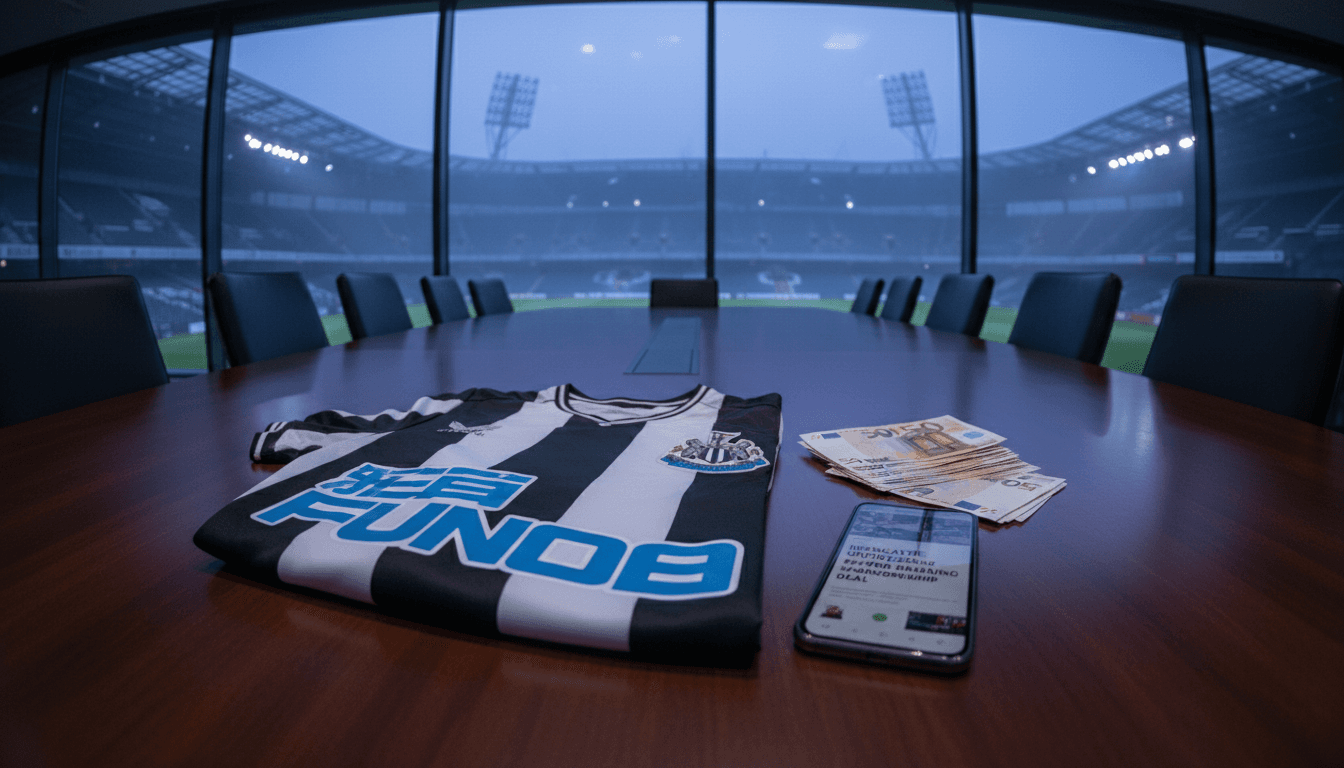
A landmark Newcastle sponsorship deal, valued at $24 million, was announced on Sunday, April 5, 2026, marking a significant financial boost for the Premier League club. This substantial agreement underscores the growing commercial appeal of Newcastle United, reflecting its enhanced profile and ambitious trajectory under its current ownership. For a club with aspirations of consistent European football and challenging the Premier League’s established elite, securing such a lucrative partnership is a critical step in building sustainable financial strength.
The Business Impact of the Newcastle Sponsorship Deal
The $24 million Newcastle sponsorship deal represents a substantial injection of capital, directly impacting the club’s financial flexibility. While the specifics of the sponsor and the duration of the deal were not detailed in the announcement, the sheer monetary value signals a premium partnership. This funding can be allocated across various critical areas, from player acquisitions and wage structures to infrastructure improvements and youth academy investments. In the highly competitive financial landscape of modern football, where transfer fees and player salaries continue to escalate, securing a robust revenue stream beyond matchday and broadcast income is paramount.
For Newcastle, this deal is more than just cash flow; it’s a vote of confidence from the corporate world. It validates the club’s strategy and the perceived value of its brand, both domestically and internationally. As Premier League clubs increasingly globalize their fan bases and commercial operations, the ability to attract significant sponsorship from diverse industries becomes a key performance indicator of a club’s overall market standing. This particular Newcastle sponsorship deal positions the club more firmly among the league’s commercial heavyweights.
Market Impact and Industry Trends
This $24 million agreement is likely to reverberate across the sport business landscape. It sets a new benchmark for clubs outside the traditional ‘big six’ in the Premier League, demonstrating that a club with strong ownership and a clear vision can command significant commercial value. Such deals contribute to the overall inflation of sponsorship valuations within football, influencing future negotiations for other clubs and potentially raising the bar for what brands are willing to pay for association with top-tier sports properties. The Premier League, already a global commercial powerhouse, will see this as further evidence of its unparalleled marketability.
The deal also highlights a broader trend of increased investment in football, particularly from entities seeking global brand exposure. As broadcast rights continue to soar, the audience reach of Premier League clubs makes them attractive platforms for international companies. This financial commitment from a new partner to Newcastle United could inspire other clubs to aggressively pursue new commercial opportunities, leading to a more dynamic and competitive sponsorship market. For a deeper dive into market trends, related sport articles on our platform often explore these dynamics.
“The ability to attract a $24 million sponsorship deal underscores the evolving commercial power of Premier League clubs beyond the traditional elite. It’s a clear signal of market confidence in Newcastle’s brand and future trajectory.”
Context and Background
Newcastle United’s financial transformation began with its acquisition by the Saudi Public Investment Fund (PIF) in October 2021. Since then, the club has embarked on an ambitious project to challenge for top honors, investing heavily in playing staff and infrastructure. Prior to the PIF takeover, Newcastle’s commercial revenues were often cited as an area for significant improvement, lagging behind many of its Premier League counterparts. The previous ownership was often criticized for under-optimizing the club’s commercial potential.
The arrival of a new, well-funded ownership group has fundamentally altered this landscape. Early commercial deals under the new regime focused on establishing foundational partnerships, but this $24 million Newcastle sponsorship deal signals a new phase of securing premium, high-value agreements. It builds upon the club’s improved on-field performance and increased visibility, especially after qualifying for European competitions. This deal is part of a strategic long-term plan to elevate Newcastle’s financial standing to match its on-pitch aspirations.
What’s Next for Newcastle United’s Commercial Strategy
Looking ahead, this $24 million sponsorship deal is likely just one piece of a broader commercial strategy for Newcastle United. The club will undoubtedly be seeking to secure additional high-value partnerships across various sectors, including kit manufacturing, training ground naming rights, and digital partnerships. The goal will be to diversify revenue streams and reduce reliance on any single commercial partner, creating a more resilient financial model. Further announcements of new commercial ventures could be anticipated as the club continues to expand its global brand presence.
The success of this deal will also be closely watched by financial analysts and rival clubs. If Newcastle can consistently secure such lucrative agreements, it will further solidify its position as a rising force in both the sporting and commercial arenas. The club’s continued performance on the pitch will be crucial in sustaining this commercial momentum, as success breeds greater brand appeal and, consequently, higher sponsorship values. Expect the club’s commercial department to be working tirelessly to leverage this new agreement into further growth. For more insights into club financials, explore our extensive sports finance section.
Key Takeaway for the Sports Industry
The $24 million Newcastle sponsorship deal is a powerful indicator of the Premier League’s enduring and growing commercial strength, even for clubs outside the traditional hierarchy. It underscores the importance of strategic ownership, on-field success, and a clear brand vision in attracting significant corporate investment. For the wider sports industry, this deal reinforces the idea that investment in sporting assets, particularly those with global reach, continues to yield substantial commercial returns, setting a challenging but achievable standard for clubs aiming to elevate their financial and competitive standing.