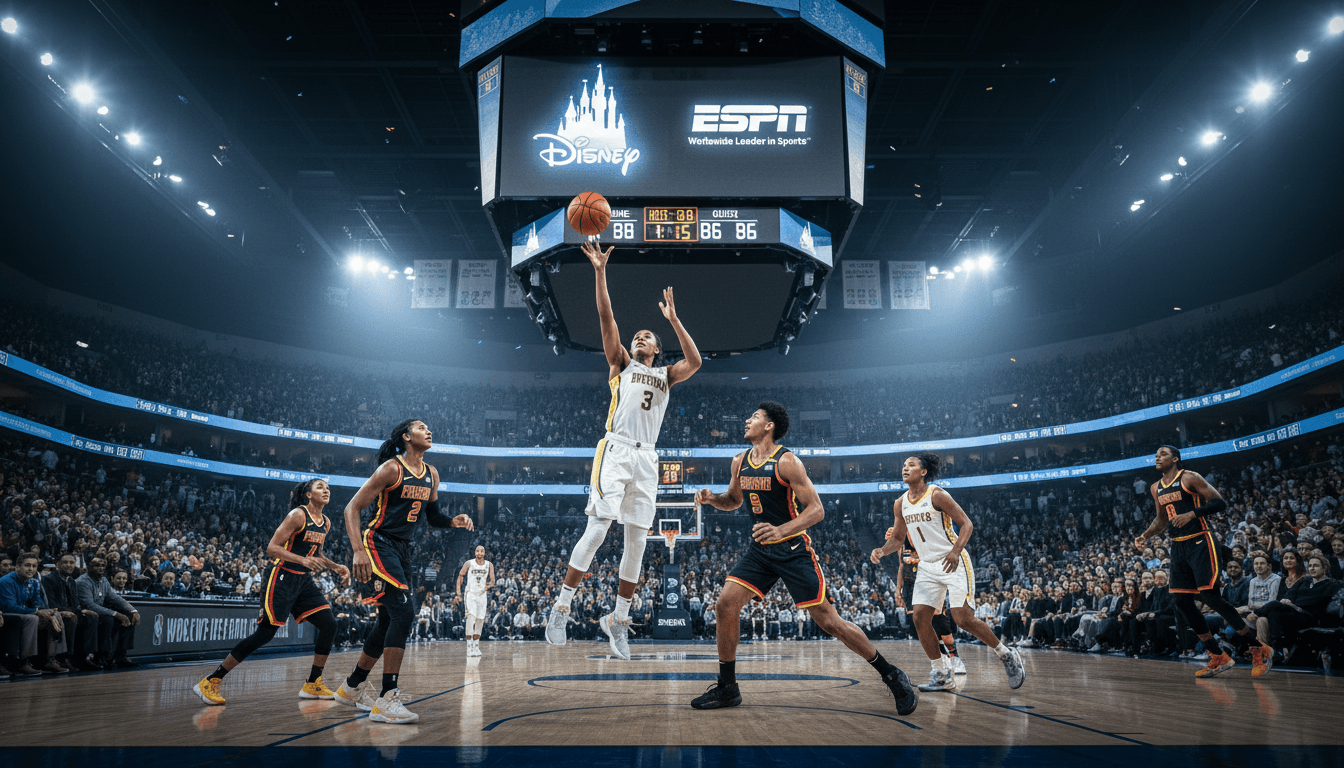
Massive Disney Sports Opportunity is emerging as the entertainment giant, NYSE:DIS, sets its sights on an expansive $600 billion market, according to a recent analysis from Seeking Alpha dated Sunday, March 22, 2026. This strategic pivot or, perhaps more accurately, an amplification of existing strengths, signals a significant financial play by Disney to further entrench its dominance in the global sports media and content landscape.
The Business Impact
The core of this narrative revolves around Disney’s long-standing, yet continually evolving, engagement with sports. While the entertainment behemoth is synonymous with animated classics and theme parks, its sports division, primarily through ESPN, has been a critical revenue driver and a cornerstone of its direct-to-consumer strategy. The $600 billion market opportunity represents not just the aggregate value of global sports rights but also the ancillary revenues derived from betting, merchandise, and fan engagement platforms – areas where Disney, with its unparalleled reach and technological infrastructure, is uniquely positioned to capitalize. This isn’t merely about renewing existing broadcast deals; it’s about a holistic integration of sports into the broader Disney ecosystem.
For decades, ESPN has been the undisputed leader in sports broadcasting, commanding premium subscriber fees and advertising rates. However, the media landscape has shifted dramatically, with cord-cutting and the rise of streaming services demanding new business models. Disney’s response has been to aggressively pursue direct-to-consumer offerings, with ESPN+ being a crucial component. The pursuit of this massive Disney sports opportunity underscores a commitment to not only maintain but expand its share of the sports economy. This move will undoubtedly influence how other major media conglomerates value and bid for sports properties, potentially driving up the cost of premium content.
Market Impact: Reshaping the Sports Business Landscape
Disney’s intensified focus on the $600 billion sports market has profound implications across the industry. Valuations for major sports leagues and teams could see further upward pressure as more capital flows into content acquisition and distribution. Competitors like Amazon, Apple, and traditional broadcasters will be forced to re-evaluate their own sports strategies, potentially leading to more aggressive bidding wars for exclusive rights. This could also accelerate the trend of leagues and teams developing their own direct-to-consumer platforms, though few possess the scale and marketing prowess of Disney.
“Disney’s move signals a broader industry shift towards integrated sports ecosystems, where content, commerce, and community converge under a single, powerful brand.”
The financial dimensions extend beyond broadcast rights. Disney’s entry or expansion into sports betting partnerships, leveraging its vast user base and data analytics, could disrupt the existing landscape, creating new revenue streams and potentially influencing fan engagement models. Similarly, the integration of sports content with Disney’s merchandise and theme park experiences offers synergistic opportunities that few rivals can replicate. This holistic approach to the massive Disney sports opportunity could set new benchmarks for sports media companies.
Context & Background: A Legacy of Sports Dominance
Disney’s sports dynasty is not a new phenomenon. Its acquisition of Capital Cities/ABC in 1996 brought ESPN under its umbrella, cementing its position as a sports media powerhouse. Over the years, ESPN has been at the forefront of sports innovation, from launching ESPN.com in 1995 to its pioneering role in high-definition broadcasting. More recently, the launch of ESPN+ in 2018 marked a significant step into the direct-to-consumer streaming space, offering exclusive content and an alternative to traditional cable subscriptions. This move was a direct response to evolving consumer habits and a proactive strategy to secure future growth.
Previous deals, such as the extensive agreements with the NFL, NBA, MLB, and various collegiate conferences, have underpinned ESPN’s value proposition. The industry trend has been towards fragmentation of rights and increasing competition from tech giants, but Disney’s long-term strategy appears to be one of consolidation and leveraging its brand equity to create a comprehensive sports offering. The $600 billion market valuation reflects the global appetite for live sports, which remains one of the most resilient forms of entertainment in an increasingly on-demand world.
What’s Next: Future Plays and Market Predictions
Looking ahead, the implications of Disney’s amplified focus on this massive Disney sports opportunity are manifold. We can anticipate continued aggressive bidding for premium sports content, particularly in emerging markets. Disney may also explore further strategic partnerships or acquisitions that complement its sports portfolio, potentially in areas like sports technology, fantasy sports, or interactive fan experiences. The company’s upcoming decisions regarding the future of linear ESPN channels versus a fully direct-to-consumer model will be closely watched, as will its strategies for integrating sports betting more deeply into its platforms, navigating regulatory landscapes.
Market predictions suggest that companies with diversified revenue streams and robust direct-to-consumer offerings will be best positioned to thrive in the evolving sports economy. Disney, with its vast content library, technological capabilities, and global brand recognition, is well-equipped to lead this charge. The success of its strategy will depend on its ability to innovate in fan engagement and monetize its extensive sports rights effectively across multiple platforms.
Key Takeaway: Why This Matters for the Sports Industry and Fans
Disney’s strategic pursuit of the $600 billion sports market is more than just a financial maneuver; it’s a blueprint for the future of sports media. It signifies a future where content, technology, and fan engagement are seamlessly integrated, offering unparalleled access and personalized experiences. For the sports industry, it means heightened competition, potentially higher valuations for properties, and an accelerated pace of innovation. For fans, it promises a richer, more immersive way to connect with their favorite sports, teams, and athletes, ultimately redefining how sports are consumed and monetized globally.