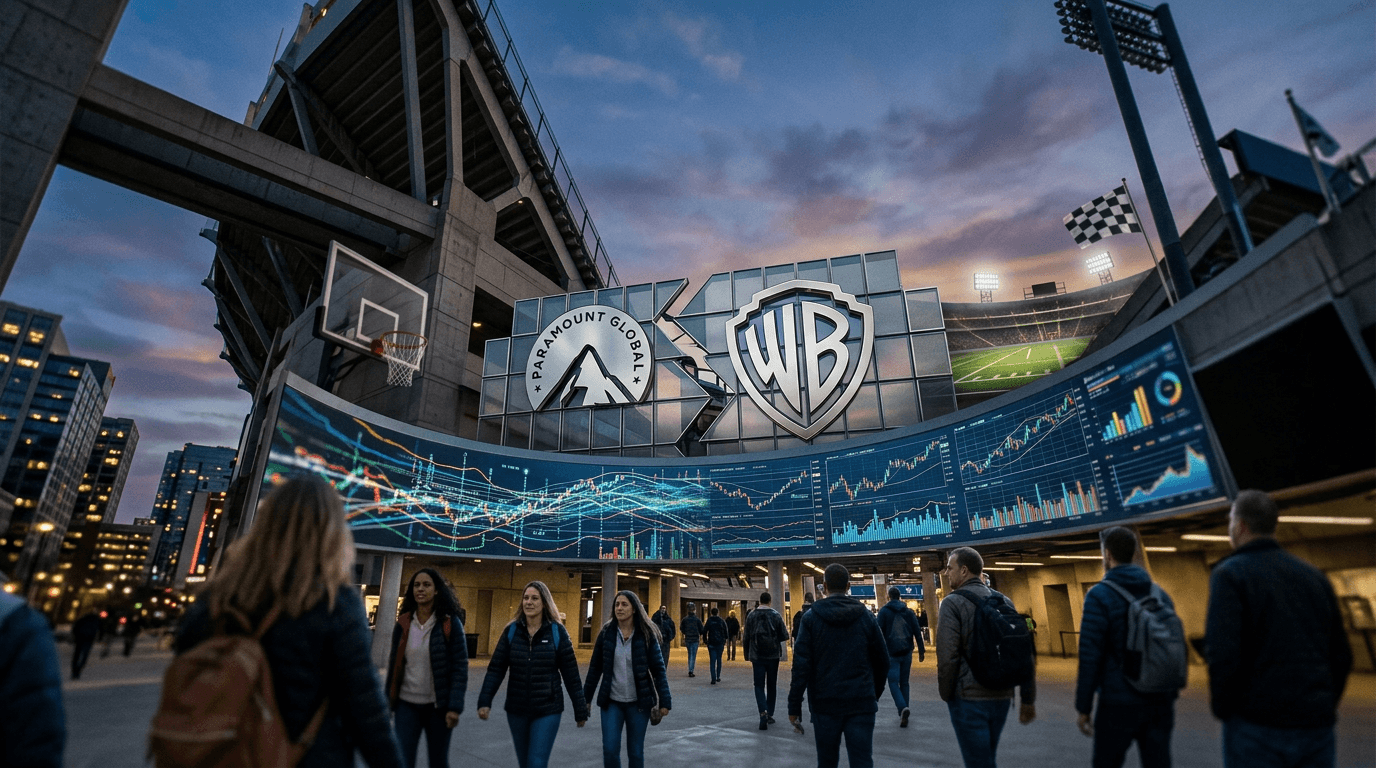
A landmark media merger, the acquisition of Warner Bros. Discovery by Paramount Global for an astonishing $170 billion, has sent seismic waves through the global entertainment and sports landscape. Announced on Tuesday, March 10, 2026, this colossal deal reshapes the competitive dynamics for content rights, distribution, and advertising revenue, particularly within the lucrative sports broadcasting sector. The combined entity will command an unparalleled portfolio of intellectual property, production capabilities, and distribution channels, creating a new titan capable of dictating terms in the fiercely contested battle for consumer attention and premium live sports content.
The Business Impact
The financial dimensions of this transaction are staggering, marking one of the largest media deals in recent memory. Paramount Global’s acquisition of Warner Bros. Discovery is not merely an aggregation of assets; it’s a strategic consolidation designed to achieve scale, reduce redundancy, and amplify leverage in negotiations with sports leagues and advertisers. The combined entity will boast an extensive array of sports properties currently held by both companies, from Paramount’s CBS Sports and its NFL, NCAA March Madness, and UEFA Champions League rights, to Warner Bros. Discovery’s TNT and TBS, which carry NBA, MLB, and NHL games, alongside their international Eurosport brand. This convergence creates a dominant force in live sports broadcasting, both domestically and internationally. The immediate impact on the sports business landscape will be felt in several key areas. Firstly, the bidding wars for upcoming media rights cycles – particularly for major U.S. leagues – are likely to intensify. The newly merged company will possess deeper pockets and a broader platform to outbid competitors, potentially driving up rights fees even further. Secondly, smaller media companies or pure-play streaming services might find it increasingly difficult to compete for top-tier sports content. The sheer scale and integrated ecosystem of the merged entity could make it the default partner for leagues seeking maximum reach and revenue.
“This merger isn’t just about combining two media giants; it’s about creating an undeniable gravitational force in the sports media universe, setting new benchmarks for valuations and competitive strategy.”
The implications extend beyond rights fees. Advertising dollars, a crucial revenue stream for sports broadcasters, will likely gravitate towards this new behemoth, offering advertisers a one-stop shop for reaching vast and diverse audiences across linear TV, streaming, and digital platforms. This could consolidate ad spending and put pressure on smaller players. Furthermore, the ability to bundle premium sports content with a vast library of entertainment programming offers an enticing proposition for consumers, potentially driving subscriptions to their direct-to-consumer offerings.
A Landmark Media Merger
This landmark media merger follows a trend of consolidation within the entertainment industry, driven by the escalating costs of content production, the shift to streaming, and the global competition for subscriber growth. In recent years, we’ve witnessed significant M&A activity, such as Disney’s acquisition of 21st Century Fox’s entertainment assets, further highlighting the industry’s drive for scale. The competitive landscape for sports rights has become particularly cutthroat, with tech giants like Amazon and Apple entering the fray, alongside traditional broadcasters. This deal can be seen as a defensive and offensive maneuver, securing a stronger position against both established rivals and new entrants. The rationale behind such a massive acquisition often revolves around achieving synergies – cost savings through operational efficiencies, enhanced bargaining power with distributors and content creators, and the ability to cross-promote content more effectively across platforms. For sports, this means a more unified approach to content strategy, potentially leading to innovative programming, enhanced fan experiences, and new monetization opportunities.
What’s Next for Sports Rights?
Looking ahead, the sports industry will be keenly watching the integration process. How will the combined sports broadcasting teams operate? What will be the strategic priorities for acquiring new rights? Will there be a rationalization of existing sports properties, or an aggressive push to expand their portfolio? Upcoming decisions regarding renewals for major league packages, such as the NBA’s expiring deal, will be a critical test of this new entity’s financial muscle and strategic intent. Market predictions suggest that the value of sports rights, already at unprecedented levels, may continue its upward trajectory as this new competitor seeks to solidify its dominance. Leagues, on the other hand, will likely welcome the increased competition, using it to drive up their own valuations. Fans, too, will be impacted, potentially seeing more bundling options for their favorite sports content, or conversely, facing fewer choices if consolidation leads to less diverse offerings. The ongoing battle for streaming supremacy will also be heavily influenced, with live sports remaining a critical differentiator for attracting and retaining subscribers. The ability to offer a comprehensive sports package alongside a deep entertainment library could prove to be a winning formula.
Key Takeaway for the Sports Industry
The Paramount Global acquisition of Warner Bros. Discovery for $170 billion represents a monumental shift in the media landscape, with profound and lasting implications for the sports industry. This landmark media merger creates a content and distribution juggernaut, poised to reshape how sports rights are valued, negotiated, and consumed globally. The ripple effects will be felt across leagues, advertisers, and ultimately, the fans, as a new era of consolidated power dictates the future of sports broadcasting.