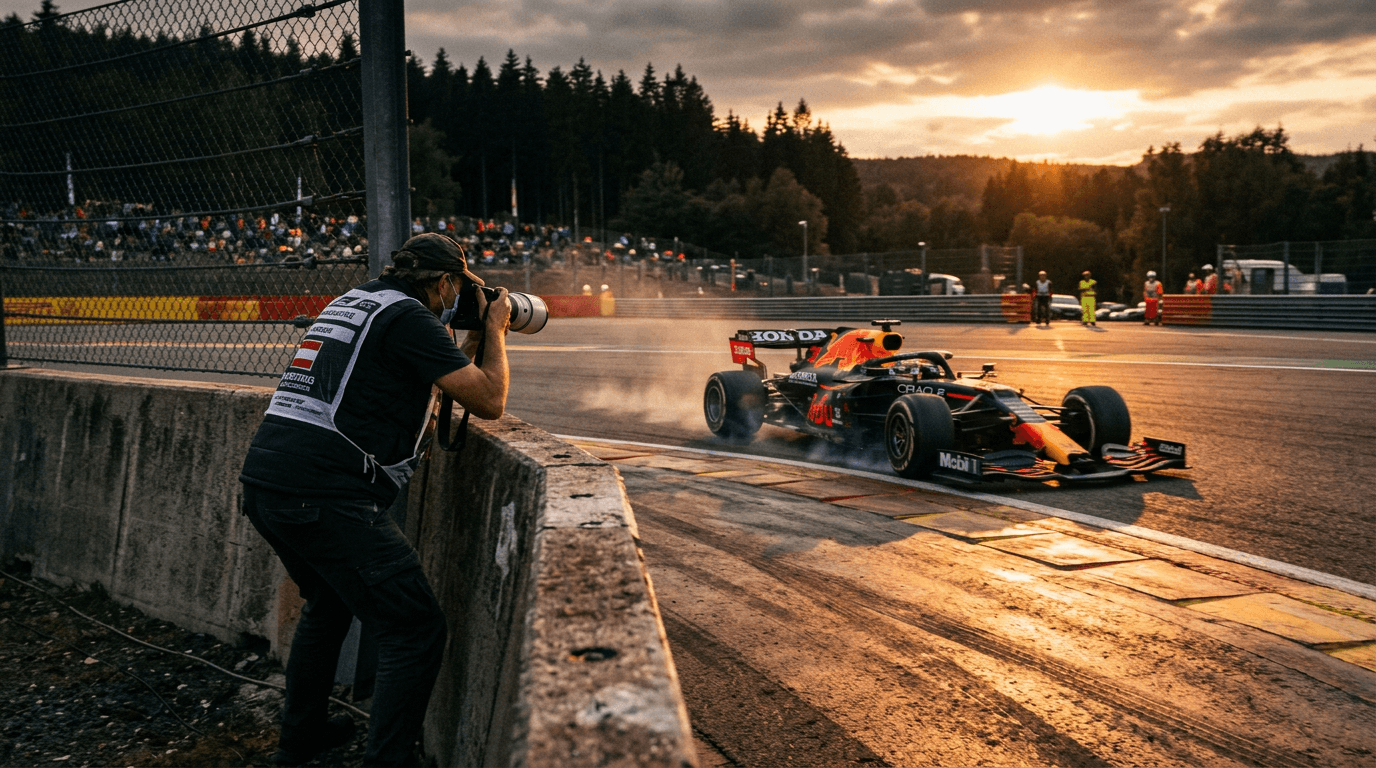
Formula 1 market value has experienced a sharp contraction, losing approximately $2 billion in a single trading cycle as the escalating conflict in Iran sends shockwaves through global financial markets. This sudden retreat by investors highlights the inherent vulnerability of premium sporting properties to geopolitical instability, particularly those with significant commercial and operational footprints in the Middle East. As of Sunday, March 8, 2026, the financial community has signaled a clear warning to Liberty Media, the sport’s owner, as the reality of regional warfare forces a drastic re-evaluation of the sport’s commercial landscape.
The $2 billion evaporation in market capitalization represents one of the most significant single-day hits to the sport’s valuation since the global pandemic. For Liberty Media, which has spent the better part of a decade transforming the series into a high-growth entertainment juggernaut, the current crisis in Iran presents a multifaceted threat. It is not merely a matter of stock price fluctuations; it is a question of the fundamental logistical and financial pillars that support the modern racing calendar. With several of the season’s most lucrative races situated in the Persian Gulf, the proximity to active conflict zones has introduced a risk premium that many institutional investors are currently unwilling to bear.
The business dimensions of this downturn are complex. Formula 1 operates on a model of long-term hosting agreements, many of which are backed by sovereign wealth funds in the Middle East. These regions provide a significant portion of the sport’s annual revenue through hosting fees, which can exceed $50 million per race. If the conflict in Iran escalates further, the viability of these events comes into question, threatening a massive revenue stream that is difficult to replace on short notice. Furthermore, the global logistics chain required to move the F1 circus between continents is highly sensitive to airspace closures and rising insurance premiums, both of which are direct consequences of the current regional tension.
“The intersection of global energy markets and high-performance sports has never been more visible than in this moment of crisis, where geopolitical risk now dictates the financial health of the paddock.”
Market analysts at The Financial Standard note that this volatility is a stark reminder of the ‘geopolitical discount’ that can apply to global sports leagues. While the sport has enjoyed record-breaking viewership and sponsorship growth, its heavy reliance on a specific geographic region for its highest-paying contracts has created a concentrated risk profile. This is often discussed in related sport articles focusing on the globalization of leagues, where the search for new capital often leads to regions with complex political climates.
Analyzing the Formula 1 Market Value Correction
The immediate impact on the Formula 1 market value can be traced to institutional sell-offs. Large-scale funds, which typically view Liberty Media’s tracking stock (FWONK) as a stable growth asset, have moved toward more defensive positions. The primary concern is the potential for a ‘black swan’ event—the cancellation of multiple high-profile Grands Prix—which would trigger force majeure clauses in broadcasting and sponsorship contracts. These contracts are the lifeblood of the teams and the commercial rights holder alike, and any disruption could lead to a cascading financial effect across the entire ecosystem.
Historically, Formula 1 has navigated political turbulence before, ranging from the Bahrain protests in 2011 to the cancellation of the Russian Grand Prix in 2022. However, the scale of the current Iran war is of a different magnitude. The involvement of a major regional power creates a level of uncertainty that surpasses previous localized incidents. For the ten teams on the grid, who rely on a share of the sport’s profits to fund their multi-million dollar development budgets, the $2 billion loss in parent company value is a harbinger of potential budget tightening and reduced prize pools in the coming fiscal years.
The sponsorship landscape is also under duress. Major technical partners and global brands often include ‘reputation’ or ‘safety’ clauses in their agreements. If the sport is perceived to be operating in an unsafe environment, or if the association with the region becomes a PR liability due to the conflict, these sponsors may seek to pause or renegotiate their commitments. This would further erode the Formula 1 market value, as sponsorship accounts for nearly 40% of the sport’s total revenue. The current market correction reflects the fear that these blue-chip partners might pull back until the regional situation stabilizes.
Looking ahead, the road to recovery for the Formula 1 market value will depend heavily on Liberty Media’s ability to demonstrate a robust contingency plan. This could involve the rapid activation of reserve circuits in Europe or North America to replace Middle Eastern dates, though such a move would be financially dilutive given the lower hosting fees these venues typically pay. Investors are also looking for clarity on how the sport will manage its relationship with state-owned sponsors from the region who may be directly or indirectly impacted by the war effort.
In the long term, this crisis may force a strategic pivot in how sports properties value their global expansion. The trend of ‘sportswashing’ or seeking the highest bidder regardless of location is now being met with the hard reality of market volatility. If the Formula 1 market value is to return to its pre-conflict highs, the leadership will need to prove that the sport can thrive even when one of its primary economic engines is stalled by regional warfare. This will likely involve a more diversified calendar and a renewed focus on the booming North American market, which offers a more stable, if less lucrative, alternative to the volatile Gulf region.
The takeaway for the broader sports industry is clear: no league, no matter how popular or financially robust, is immune to the tremors of global conflict. The $2 billion loss suffered by Liberty Media serves as a cautionary tale for other organizations, such as FIFA or the ATP, which have also increased their reliance on Middle Eastern capital. As the war in Iran continues to influence global trade and sentiment, the sports business must learn to price in the cost of instability. The era of viewing sport as an isolated bubble, separate from the realities of international relations, has officially come to an end, replaced by a new era of heightened scrutiny and financial caution.