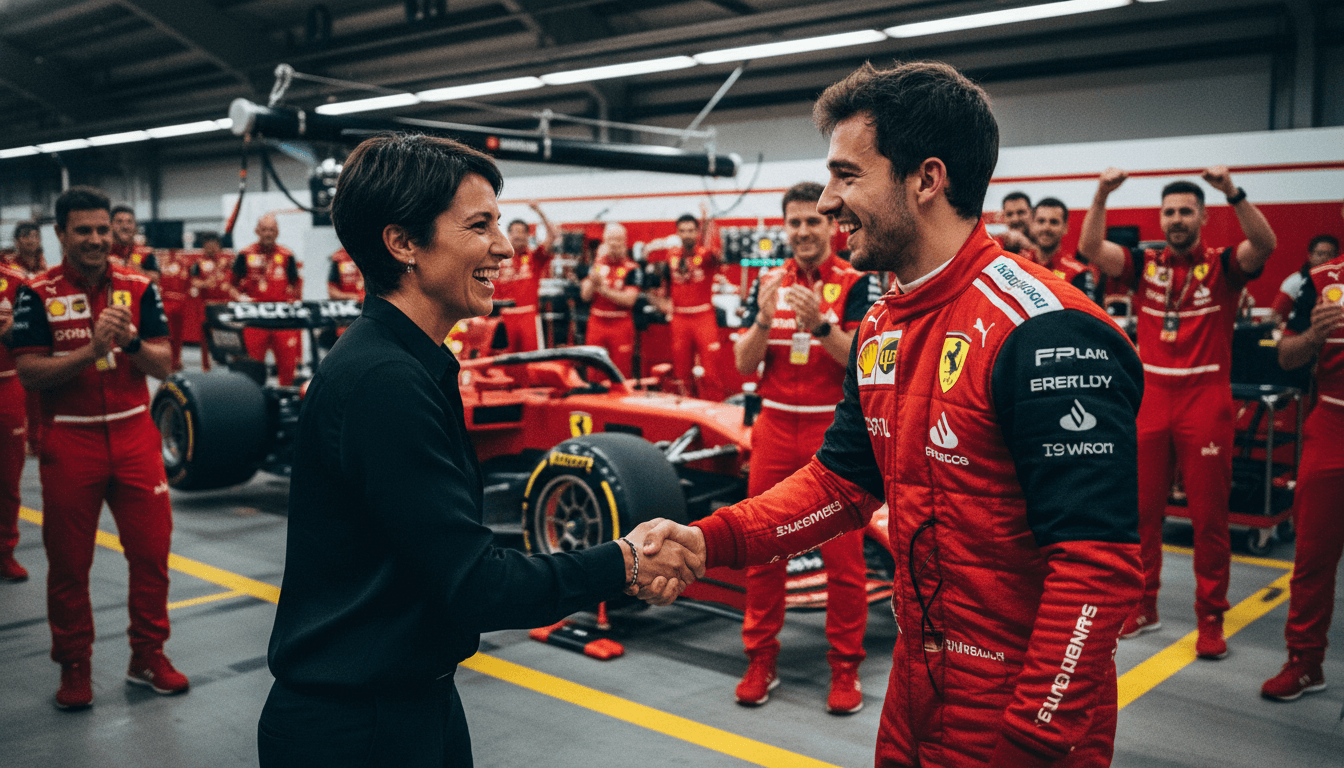
Charles Leclerc contract extension with Scuderia Ferrari, announced ahead of the Monaco Grand Prix, is a strategic move solidifying the brand’s impressive valuation, estimated by Interbrand at over $15 billion by the end of 2025. This multi-year agreement, though shrouded in undisclosed financial specifics, is widely believed to position Leclerc’s annual earnings as high as 50 million euros. Such a figure, combined with Lewis Hamilton’s estimated 60 million euro annual salary after his arrival last season, would make Ferrari the first Formula 1 team to surpass 100 million euros in combined driver salaries, signaling a significant escalation in top-tier talent acquisition costs within the sport.
Leclerc, at 28, has become synonymous with Ferrari since joining their Driver Academy in 2016, making his F1 debut with Sauber in 2018 before his promotion to Scuderia Ferrari in 2019. This new deal, extending a relationship that has now spanned a decade, underscores his commitment to achieving a World Championship for Maranello. His notable victories, including the emotional home win in Monaco in 2024 and triumphs at Monza in 2019 and 2024, have cemented his status as a fan favorite and a key competitive asset. Currently, Leclerc is second only to the legendary Michael Schumacher in terms of appearances and pole positions for Ferrari, a testament to his enduring impact.
The Business Impact of Driver Valuations
The financial implications of securing a talent like Leclerc are immense for a brand like Ferrari. While the exact duration of the new agreement remains officially undisclosed, with some reports suggesting it’s a renegotiation of financial terms within his existing contract set to run until the end of the 2029 Formula 1 season, the revised terms reportedly offer greater financial benefits to Leclerc. This investment reflects the direct correlation between on-track success, driver marketability, and overall brand equity. Ferrari’s Formula 1 team has consistently been ranked as the most valuable in the sport, with Forbes estimating its worth at $6.5 billion in November 2025, and Sportico placing it at $6.4 billion around the same time. These valuations highlight Ferrari’s unique standing and formidable brand power within Formula 1, especially as the average F1 team valuation has risen significantly in recent years. The stability provided by securing Leclerc’s long-term commitment, alongside teammate Lewis Hamilton, is a strategic maneuver designed to further enhance Ferrari’s brand appeal and propel its pursuit of future championships.
This move sets a new benchmark for driver compensation, raising questions about the sustainability and future trajectory of team salary caps within Formula 1. The combined driver salaries at Ferrari now represent a substantial portion of any team’s operational budget, reflecting the premium placed on proven talent and star power in a sport increasingly driven by global viewership and commercial partnerships. Related sport articles often discuss the financial balancing act teams face between technological development, infrastructure, and driver wages.
“The investment in Leclerc and Hamilton signals a clear intent from Ferrari: to dominate both on the track and in the global brand marketplace. It’s a calculated gamble that their combined star power will deliver championships and further elevate their already colossal valuation.”
Context and Industry Trends
The trend of escalating driver salaries is not new, but Ferrari’s current outlay for Charles Leclerc contract and Hamilton’s deal represents a significant acceleration. This reflects the broader commercialization of Formula 1 under Liberty Media, which has seen team valuations soar and the sport attract a new generation of fans and sponsors. Teams are increasingly viewing their top drivers not just as athletes but as crucial brand ambassadors and marketing assets whose star power translates directly into commercial revenue. The competitive landscape for securing elite talent is intensifying, pushing up salaries and benefits, especially for drivers who consistently deliver podium finishes and generate significant media attention.
What’s Next for Ferrari and F1?
The immediate future for Ferrari will focus on translating this significant financial investment into tangible championship success. With Leclerc and Hamilton, the team possesses arguably the strongest driver line-up on the grid, creating immense pressure to deliver. From a broader industry perspective, this deal could trigger a ripple effect, prompting other top teams to reassess their driver compensation structures to retain or attract comparable talent. The financial arms race for drivers may intensify, potentially impacting smaller teams’ ability to compete for established stars. Upcoming decisions regarding the sport’s financial regulations and potential salary caps for drivers will be closely watched, as they could shape the economic future of Formula 1.
The strategic decision to invest heavily in top-tier talent like Leclerc and Hamilton underscores Ferrari’s ambition to not only reclaim championship glory but also to cement its position as the most valuable and iconic brand in motorsports. The Charles Leclerc contract extension is more than just a driver deal; it’s a declaration of intent, signaling Ferrari’s unwavering commitment to excellence and its confidence in its star drivers to drive both performance and continued brand growth.