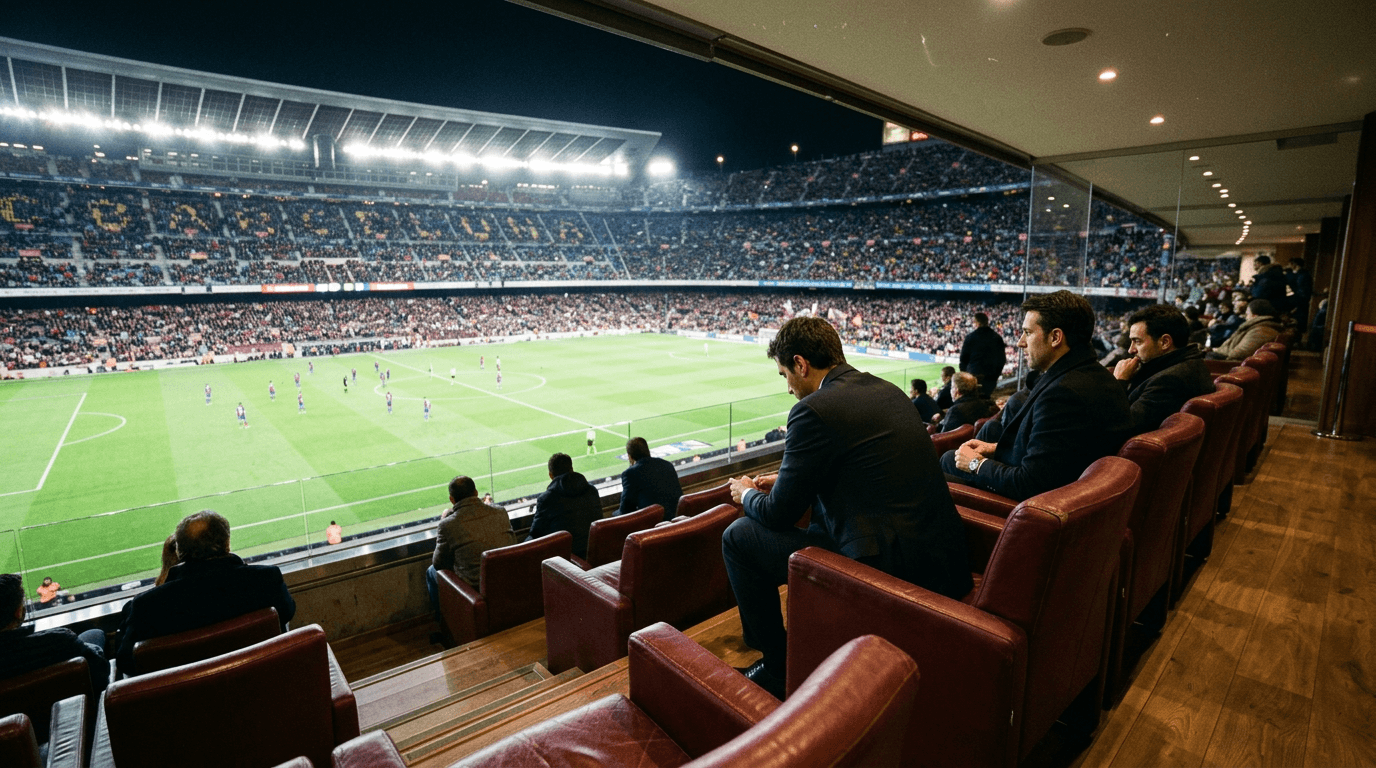
The Barcelona salary cap has received a significant boost following LaLiga’s approval of a sophisticated commercial agreement involving the exploitation of luxury hospitality at the newly renovated Spotify Camp Nou. On Tuesday, the league confirmed that the club’s Squad Cost Limit (LCPD) has risen from €351.284 million to €432.807 million, a substantial €81 million leap that signals a turning point in the Catalan giants’ long-standing battle with financial constraints. This update, released following the conclusion of the winter transfer window, reflects a growing confidence in the club’s ability to monetize its physical assets even as it navigates complex debt structures.
The primary catalyst for this fiscal expansion is a landmark deal involving 475 VIP seats at the stadium. Valued at €100 million for 30-year exploitation rights, the transaction represents a masterclass in modern sports financial engineering. The capital injection is split between two major Middle Eastern entities: Fortia Advisor Limited, based in Qatar, which contributed €30 million, and the UAE-based New Era Visionary Group, which provided €70 million. While the agreement provides immediate relief to the club’s balance sheet, it also underscores the increasing reliance on Gulf-based investment within European football finance.
Quantifying the Barcelona Salary Cap Growth
To understand the magnitude of this shift, one must look at the trajectory of the Barcelona salary cap over the past twelve months. Exactly one year ago, the club operated under a limit of €463.6 million. However, by the end of the 2024-25 summer transfer window, that figure had dipped to €426.4 million, eventually bottoming out at the €351.284 million announced last September. The current recovery to €432.807 million brings the club within striking distance of its previous year’s capacity, though it remains significantly behind its perennial rivals.
Real Madrid continues to dominate the financial landscape with a staggering limit of €761.226 million, a figure that has remained unchanged since September. Meanwhile, Barcelona has successfully widened the gap between itself and Atlético de Madrid, whose own limit saw a modest rise from €326.989 million to €336.268 million. This €81 million jump for Barça is not merely a numbers game; it is a vital lifeline for a club that has spent years operating under the restrictive shadows of LaLiga’s economic controls.
“The validation of the VIP seat agreement by auditing firm Crowe was the final hurdle required to unlock this liquidity, allowing the club to reflect its true commercial potential in the eyes of league regulators.”
The Business Impact of Strategic Partnerships
Beyond the immediate hospitality deal, the upward revision of the Barcelona salary cap is underpinned by broader commercial successes. The extension of the club’s partnership with Spotify has played a pivotal role. The music streaming giant has committed to the jersey sponsorship through 2030, with the stadium naming rights secured until 2034. These long-term commitments provide a predictable revenue stream that is essential for satisfying the rigorous auditing processes mandated by LaLiga.
The role of Crowe, the auditing firm responsible for Barcelona’s 2024-25 financial accounts, cannot be overstated. The VIP seat deal was not included in the summer transfer window calculations because it had not yet been fully validated. With that hurdle cleared, the league has now integrated the €100 million valuation into the club’s spending power. This highlights the rigorous scrutiny clubs face when attempting to leverage future assets for present-day spending power in related sport articles concerning financial fair play.
Navigating the 1:1 Rule and Future Liquidity
Despite the positive momentum, it is important to note that the club is not yet out of the woods. Barcelona is still not operating under the coveted 1:1 rule, which would allow them to reinvest every euro earned or saved back into the squad. Currently, they remain subject to more restrictive spending ratios, though the gap is narrowing. The Barcelona salary cap increase is a necessary prerequisite for reaching that 1:1 status, but further fiscal discipline and revenue generation are required.
A critical component of this ongoing recovery is the final payment of approximately €27 million from the New Era Visionary Group. This sum remains pending, with a deadline set for June 2026. If the club can secure this payment on time and continue to meet its projected revenue targets from the full return to Spotify Camp Nou, the path to financial normalization becomes much clearer. The stadium, once a source of logistical and financial drain during its renovation phase, is rapidly transforming back into the club’s most potent economic engine.
The strategic decision to sell 30-year rights for just 475 seats—a fraction of the stadium’s total capacity—suggests that the club is being more surgical in its asset liquidation than in previous years. Rather than selling off massive percentages of future media rights, they are targeting high-margin, low-volume luxury assets that do not significantly dilute the club’s long-term core earnings.
Industry Implications and the Path Forward
As we look toward the 2026-27 season, the trajectory of the Barcelona salary cap will serve as a bellwether for the health of Spanish football’s financial regulations. The ability of a club to engineer an €81 million increase mid-season through commercial partnerships, rather than player sales, demonstrates a shift in strategy. It moves away from the desperate “levers” of the past toward more sustainable, asset-backed financing.
In conclusion, the approval of the VIP seat deal represents more than just a temporary reprieve; it is a validation of Barcelona’s renewed commercial strategy. While the club still trails Real Madrid by over €300 million in spending power, the closing of the gap and the stabilization of the LCPD suggest that the era of extreme austerity may be drawing to a close. For the sports industry, this deal highlights the enduring value of premium hospitality assets and the willingness of Middle Eastern capital to engage in long-term, specialized infrastructure plays within European football. The focus now shifts to the summer of 2026, where the finalization of pending payments will determine if the club can finally return to the 1:1 rule and compete on equal financial footing at the highest levels of the game.