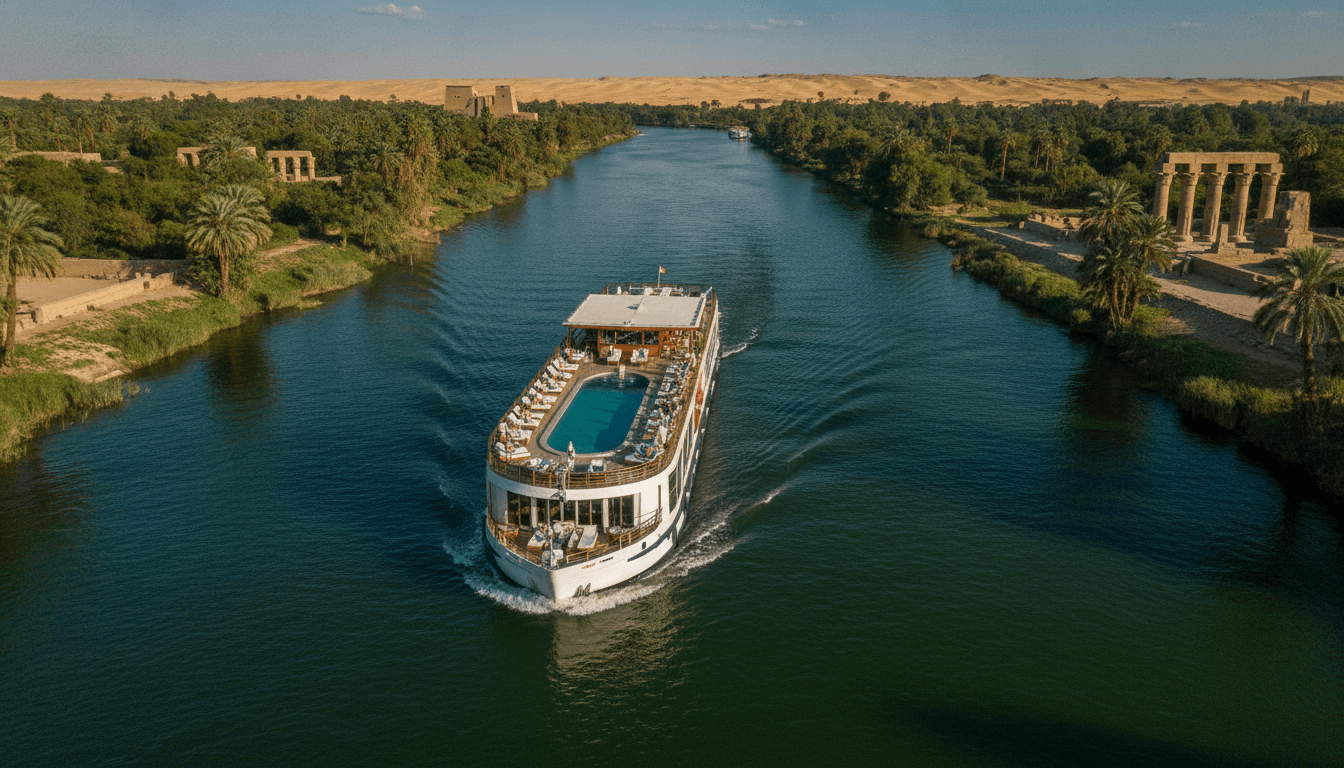
Luxury cruises lead Egypt tourism, propelling the nation’s travel sector into what is being hailed as a ‘New Golden Age of the Nile’ as of June 12, 2026. This resurgence is primarily driven by high-end river voyages, attracting a discerning clientele eager to explore ancient wonders in unparalleled comfort and style. The shift marks a significant pivot in Egypt’s tourism strategy, moving towards premium experiences that promise higher revenue yields and a more sustainable model for the industry.
The Story: Nile’s Opulent Ascent
The narrative of Egypt’s tourism comeback is intrinsically linked to the Nile River. Operators of luxury cruises have reported a substantial uptick in bookings and interest, positioning these opulent journeys as the vanguard of the sector’s recovery and growth. These cruises, characterized by their bespoke service, gourmet dining, and exclusive access to historical sites, are attracting a global affluent demographic. This focus on high-value tourism is not merely about increasing visitor numbers but about enhancing the overall economic impact per tourist, fostering a more robust and resilient tourism economy for Egypt. The emphasis on luxury experiences also extends to meticulously curated itineraries that offer deep cultural immersion, often bypassing mass tourism bottlenecks to provide a more intimate and authentic encounter with Egypt’s heritage.
Impact Analysis
The ascendance of luxury cruises leads Egypt tourism into a new era, profoundly affecting the broader travel and tourism landscape. This trend demonstrates a successful strategy for destinations looking to differentiate themselves in a competitive global market. By focusing on niche, high-value segments, Egypt is setting a precedent for how cultural heritage can be leveraged to attract premium travelers. The economic ripple effects are substantial, benefiting local artisans, high-end hospitality providers, and specialized tour guides. Furthermore, this shift encourages investment in superior infrastructure and service quality, raising the bar for the entire sector. Other destinations with rich historical assets may look to Egypt’s model for inspiration, considering how to craft similar exclusive experiences that command higher prices and deliver greater economic returns. This strategic move also helps mitigate the environmental and social pressures often associated with mass tourism, promoting a more sustainable form of travel. For further insights into evolving travel trends, explore our related travel & tourism articles.
“The success of luxury Nile cruises underscores a critical insight: modern travelers, particularly those in the high-net-worth segment, are increasingly prioritizing unique, immersive, and comfortable experiences over sheer volume or lowest price. This isn’t just about lavish amenities; it’s about curated access and unparalleled service that transforms a trip into a journey of discovery.”
Context & Background: A Journey from Resilience
Egypt’s tourism sector has historically navigated periods of volatility, demonstrating remarkable resilience. Following various geopolitical and economic challenges, the industry has consistently sought pathways to recovery and growth. The current focus on luxury river cruises is not an overnight phenomenon but rather the culmination of strategic planning and investment aimed at diversifying offerings and appealing to a more affluent market segment. Previous efforts often concentrated on volume tourism, which, while bringing in numbers, sometimes strained resources and infrastructure. The pivot towards luxury signifies a maturation of the market, recognizing the long-term benefits of quality over quantity. This approach aligns with broader global trends where experiential travel and sustainable tourism are gaining prominence, and travelers are willing to pay a premium for authenticated and exclusive encounters.
What’s Next: Sustaining the Current
Looking ahead, the momentum generated by luxury cruises leads Egypt tourism towards critical decisions regarding infrastructure development, service training, and marketing. To sustain this ‘New Golden Age,’ continued investment in port facilities, high-quality accommodation, and specialized guide services will be paramount. There is also an opportunity to expand the luxury offerings beyond the Nile, integrating desert safaris, Red Sea diving expeditions, and cultural city tours into comprehensive high-end packages. International partnerships with luxury travel agencies and tour operators will be crucial for maintaining global visibility and attracting new waves of affluent travelers. The success of this segment could also inspire further diversification within Egypt’s tourism portfolio, potentially leading to the development of other niche markets such as wellness tourism or MICE (Meetings, Incentives, Conferences, and Exhibitions) events catering to a high-end clientele. The challenge will be to manage this growth responsibly, ensuring that the authentic charm and historical integrity of Egypt are preserved.
Key Takeaway: The Premium Path Forward
The story of luxury cruises leading Egypt tourism highlights a potent strategy for destinations aiming for sustainable and high-value growth. By identifying and catering to a premium market segment, Egypt has not only revitalized its tourism industry but has also established a blueprint for leveraging cultural heritage in a sophisticated and economically beneficial manner. This strategic shift underscores the importance of quality, exclusivity, and exceptional service in today’s global travel landscape, proving that a targeted, high-end approach can yield significant dividends for a nation’s economy and its international standing as a premier travel destination.