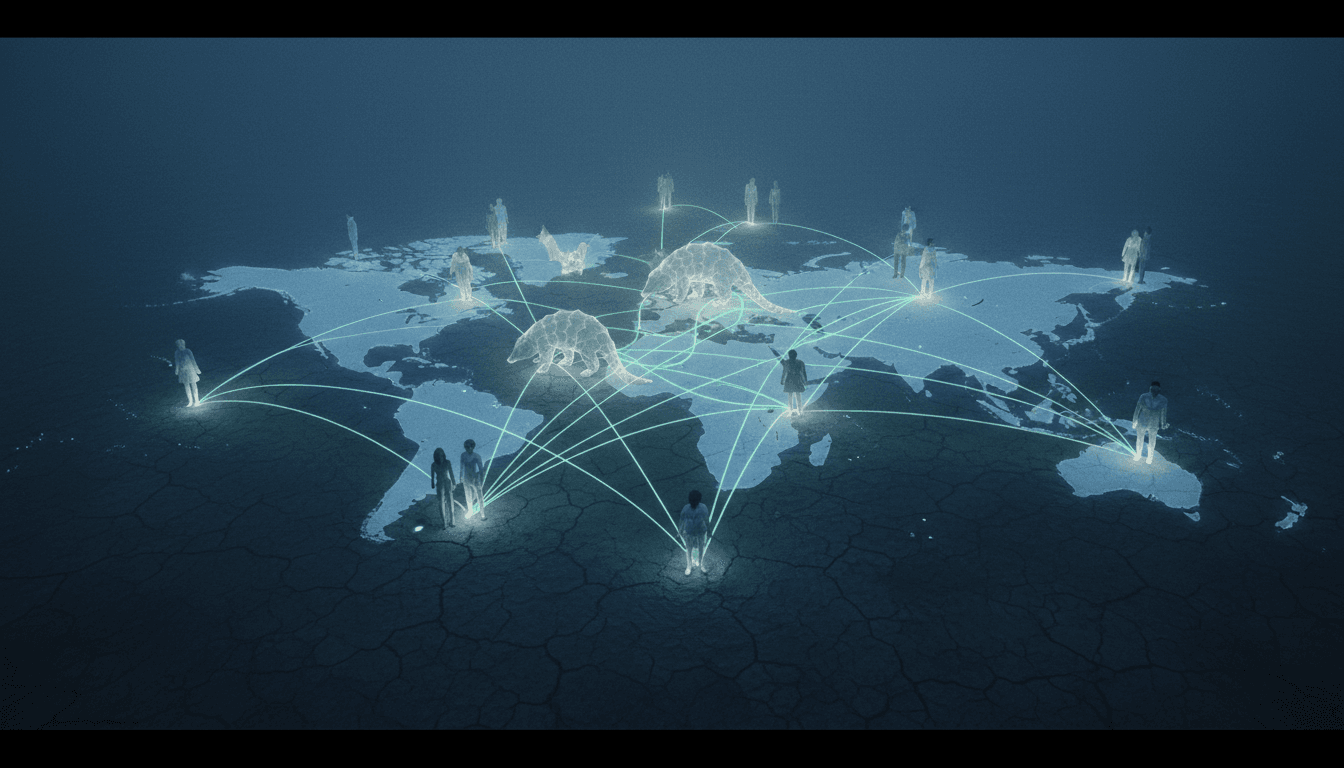
Wildlife trade disease spread to humans is being dramatically fueled, according to a groundbreaking study revealed by Gavi, the Vaccine Alliance on Friday, April 10, 2026. This stark finding underscores the critical link between human activities, environmental degradation, and global public health, painting a concerning picture for future disease emergence and control.
The study, detailed by Gavi, the Vaccine Alliance, highlights how the global trade in wild animals serves as a significant conduit for zoonotic pathogens to jump from animal hosts to human populations. While the specific species or geographic locations involved were not detailed in the initial report, the broad implication is that diverse ecosystems worldwide are being tapped for wildlife, creating numerous points of contact where viruses and bacteria can cross the species barrier. This human-animal interface, often intensified by unregulated or poorly regulated trade practices, is a recognized hotspot for novel disease emergence, making the study’s conclusions particularly urgent.
Impact Analysis
The implications of increased wildlife trade disease spread are profound, extending far beyond immediate public health concerns. Economically, repeated zoonotic outbreaks can cripple industries, disrupt supply chains, and necessitate massive public spending on emergency response and vaccination campaigns. Socially, the fear and uncertainty generated by new pandemics can erode trust, exacerbate inequalities, and lead to significant mental health challenges. For the broader health and wellness landscape, this study reinforces the urgent need for a ‘One Health’ approach – recognizing that human health is inextricably linked to animal health and environmental health. Policy makers, public health officials, and even individual consumers are now faced with a clearer mandate to address the root causes of disease spillover, rather than merely reacting to outbreaks.
Moreover, the study’s findings directly impact the pharmaceutical and vaccine development sectors. A continuous pipeline of emerging zoonotic diseases necessitates constant vigilance, rapid diagnostic innovation, and agile vaccine platforms. This places immense pressure on research and development, requiring significant investment and international collaboration. The financial standard for health and wellness industries will increasingly be measured not just by treating existing conditions, but by preventing future pandemics.
“The constant threat of zoonotic spillover demands a fundamental shift in how we approach global health security. Preventing the next pandemic starts with understanding and mitigating the risks at the human-animal interface, especially those exacerbated by the wildlife trade.”
Context & Background
This revelation about wildlife trade disease spread isn’t entirely new territory for public health experts. Historically, numerous pandemics, from the Spanish Flu to HIV, MERS, Ebola, and most recently COVID-19, have had zoonotic origins. The increasing human encroachment into wild habitats, coupled with the globalized trade of exotic animals for food, medicine, and pets, has long been identified as a major risk factor. Previous reports and scientific consensus have pointed to the ‘wet markets’ and informal wildlife trade networks as particularly high-risk environments due to the commingling of diverse species, often under unsanitary conditions, creating ideal conditions for pathogen mutation and transmission. This latest study from Gavi, the Vaccine Alliance, however, appears to consolidate and strengthen the evidence base for this critical link, providing a more definitive statement on the scale of the problem.
For more insights on the intersection of environmental factors and public health, readers can explore our related health & wellness articles on sustainable practices and disease prevention.
What’s Next for Global Health
The findings from Gavi, the Vaccine Alliance, will undoubtedly fuel intensified discussions at international health forums and among national governments. Expect renewed calls for stricter regulations on the international wildlife trade, potentially including bans on the trade of certain high-risk species or products. There will likely be a push for greater investment in surveillance systems at points of wildlife collection and trade, as well as enhanced public health infrastructure in regions where these activities are prevalent. Furthermore, the emphasis on ‘One Health’ initiatives – integrating human, animal, and environmental health policies – is expected to grow, with more coordinated efforts from organizations like the WHO, FAO, and OIE. The scientific community will also likely focus on identifying specific high-risk pathogens within traded wildlife populations and developing proactive countermeasures.
Key Takeaway
The central takeaway from this Gavi-backed study is unequivocally clear: the global wildlife trade is not just an environmental issue, but a critical and escalating threat to human health security. The continuous flow of wild animals, whether legally or illegally, creates fertile ground for pathogens to cross into human populations, with potentially devastating consequences. Addressing this challenge requires a concerted, multi-sectoral effort, encompassing robust policy changes, enhanced international cooperation, and a fundamental re-evaluation of human interactions with the natural world. Failing to act decisively on the issue of wildlife trade disease spread will leave humanity vulnerable to an unpredictable future of emerging pandemics.