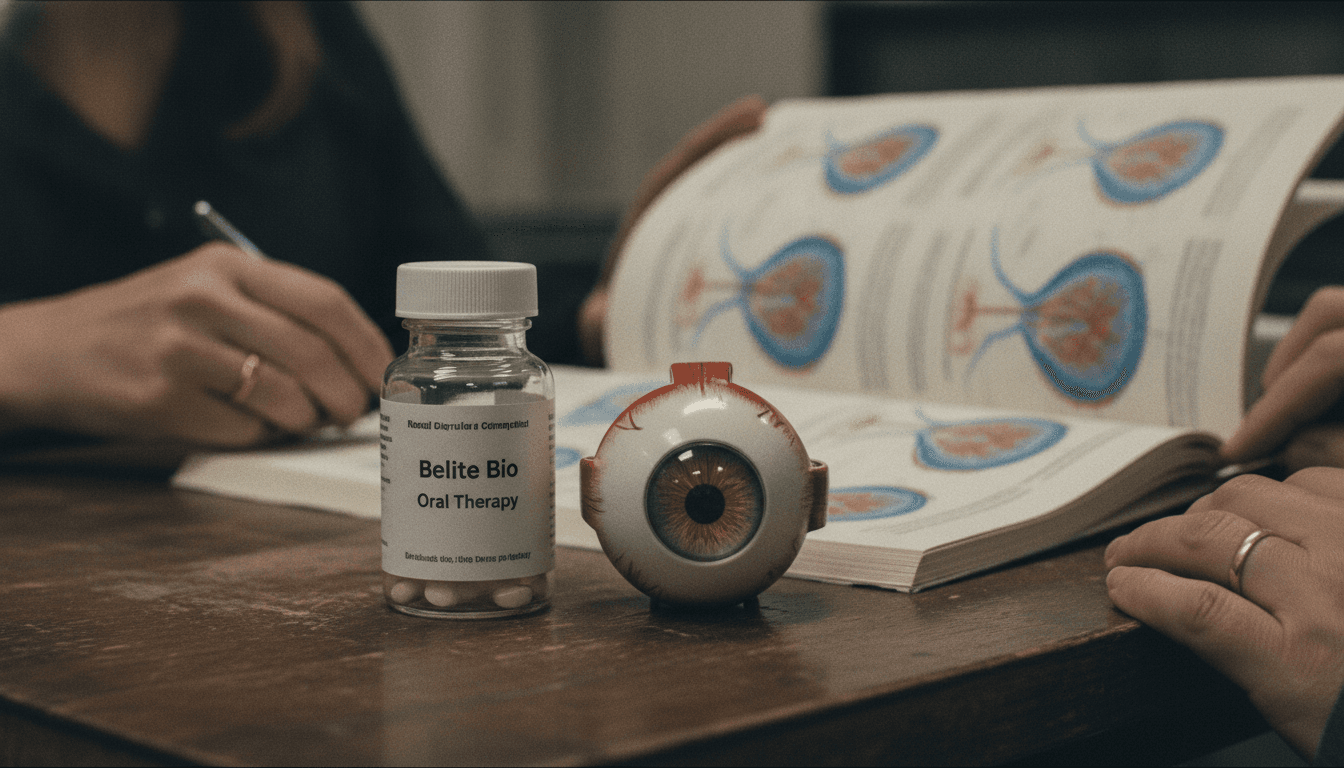
The FDA’s decision to review Belite Bio oral therapy for retinal disease marks a significant development for patients grappling with conditions that currently lack effective treatment options. Announced on Saturday, June 13, 2026, this move by the U.S. Food and Drug Administration signals a potential breakthrough in an area of ophthalmology that has long presented a challenge for medical science and patient care.
The Story: A New Hope for Untreatable Retinal Disease
Belite Bio, a biotechnology firm, has put forth an oral therapy targeting retinal diseases where no existing treatments are available. The specific retinal disease or diseases under review were not detailed in the announcement, but the emphasis on the lack of current treatment underscores the critical unmet medical need this therapy aims to address. The FDA’s decision to formally review Belite Bio’s candidate drug initiates a rigorous evaluation process, scrutinizing the therapy’s safety, efficacy, and overall benefit-risk profile. This review is a standard, yet pivotal, step in bringing any new pharmaceutical product to market, especially one addressing such a profound medical vacuum.
For conditions with no current therapeutic options, every step toward a potential treatment is met with cautious optimism. The oral administration route of Belite Bio’s therapy is also noteworthy, as it could offer a less invasive and more convenient alternative to injections or surgical interventions often associated with ocular treatments, potentially improving patient adherence and quality of life.
Impact Analysis
The potential approval of Belite Bio oral therapy for retinal disease could profoundly reshape the landscape for patients and healthcare providers. Currently, individuals diagnosed with these specific retinal conditions face a grim prognosis, often leading to progressive vision loss and, in many cases, blindness. A new oral therapy would not only offer a glimmer of hope but also establish a new standard of care.
From a broader health and wellness perspective, the success of such a therapy could stimulate further research and development in treating other ‘orphan’ or rare diseases that lack adequate interventions. It also highlights the increasing trend of pharmaceutical companies focusing on niche areas of medicine where significant unmet needs exist, driven by both humanitarian imperatives and the potential for market differentiation. This strategic focus can be observed across various therapeutic areas, from rare cancers to neurological disorders, demonstrating a shift towards precision medicine and targeted therapies. For more insights into such developments, explore our related health & wellness articles.
“The FDA’s decision to review Belite Bio’s oral therapy represents a critical juncture for patients with untreatable retinal diseases, potentially opening doors to a future where preserving sight is a tangible reality rather than just a hope.”
Context & Background: The Challenge of Retinal Degeneration
Retinal diseases encompass a wide range of conditions affecting the retina, the light-sensitive tissue at the back of the eye crucial for vision. These diseases, including various forms of macular degeneration, retinitis pigmentosa, and diabetic retinopathy, are leading causes of irreversible vision loss worldwide. While significant advancements have been made in treating some retinal conditions, such as certain forms of wet age-related macular degeneration, many others, particularly those with genetic or complex etiologies, remain without effective treatments.
The development of oral therapies for ocular conditions has historically been challenging due to the eye’s unique physiological barriers, which make it difficult for systemic drugs to reach therapeutic concentrations in the retina without causing widespread side effects. Belite Bio’s progress in this area suggests a potential overcoming of these hurdles, indicative of advanced pharmacological research and drug delivery mechanisms.
What’s Next: Awaiting the Verdict on Belite Bio Oral Therapy
The FDA review process is comprehensive and can take several months, if not longer, depending on the complexity of the data and any additional information requested by the agency. During this period, the FDA will meticulously examine clinical trial data, manufacturing processes, and all available scientific evidence to determine if the benefits of Belite Bio oral therapy outweigh its risks. Should the review be positive, the therapy would then be approved for marketing and prescription in the United States, marking a monumental achievement for Belite Bio and for patients.
Investors, healthcare providers, and patient advocacy groups will be closely watching the FDA’s deliberations. The outcome will not only affect Belite Bio’s market valuation but also set a precedent for future drug development in the ophthalmology sector. A positive decision could spur further investment and innovation in treatments for previously untreatable ocular conditions, potentially transforming the lives of millions globally.
Key Takeaway: Why This Matters
The FDA’s review of Belite Bio oral therapy for retinal disease underscores the continuous pursuit of medical innovation, particularly in areas of significant unmet need. For patients facing the devastating reality of progressive vision loss with no current remedies, this development offers a much-needed beacon of hope. It highlights the intricate journey from scientific discovery to clinical application and the critical role regulatory bodies play in ensuring that safe and effective treatments reach those who need them most. The potential introduction of an oral therapy for such conditions represents a paradigm shift, promising not just a treatment, but a renewed quality of life for countless individuals.