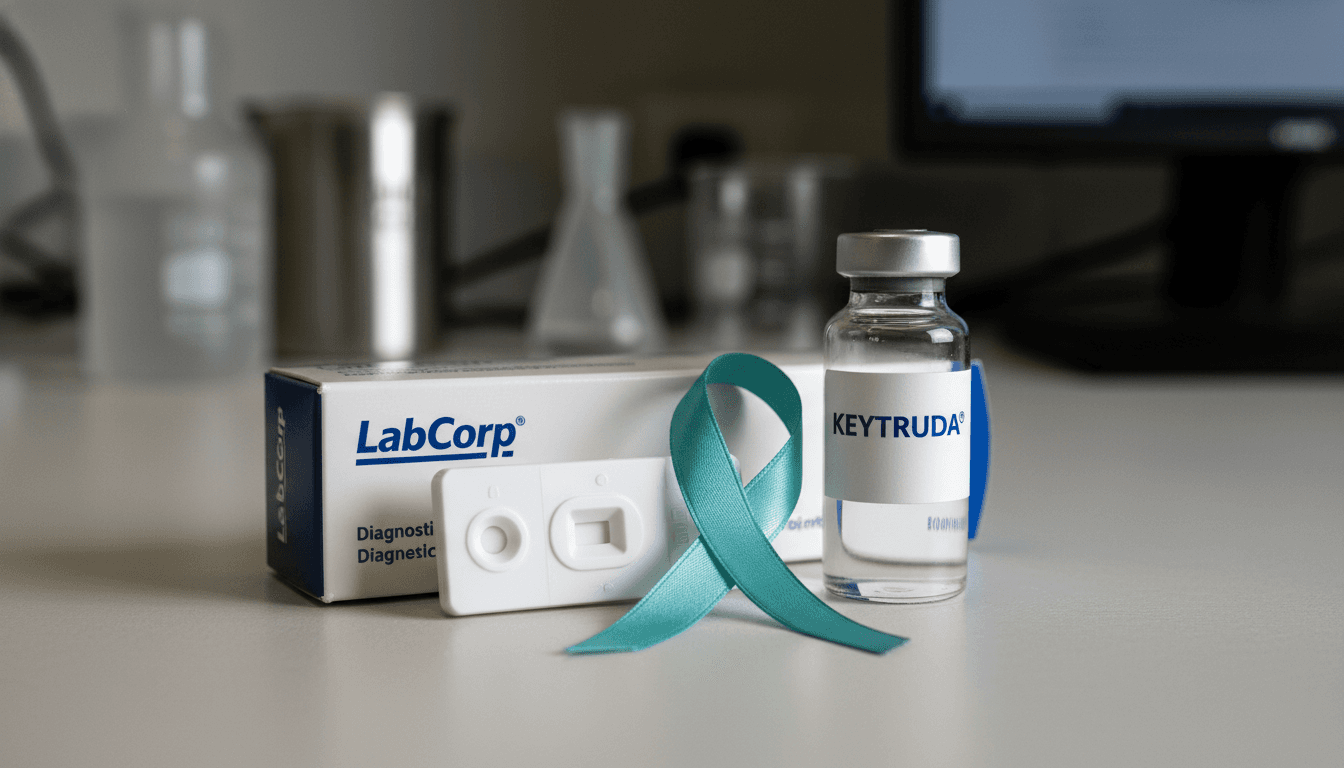
Labcorp’s recent launch of an FDA-approved companion diagnostic to identify patients with ovarian cancer eligible for KEYTRUDA® marks a significant advancement in personalized medicine. Announced on Wednesday, April 22, 2026, this new diagnostic tool promises to refine treatment strategies for a particularly challenging disease, offering new hope for patients and clinicians alike.
The Story: Labcorp’s New Diagnostic
The core of this development lies with Labcorp, a global leader in life sciences solutions. The company has successfully introduced an FDA-approved companion diagnostic designed specifically to identify ovarian cancer patients who could benefit from treatment with KEYTRUDA®. This is not merely a new test; it is a precision tool that directly links diagnostic results to a targeted therapeutic intervention, a hallmark of modern oncology. The approval signifies a rigorous evaluation process by the U.S. Food and Drug Administration, ensuring the diagnostic’s accuracy and reliability in guiding treatment decisions.
Ovarian cancer remains one of the most lethal gynecological cancers, often diagnosed at advanced stages due to vague symptoms. The ability to accurately identify a subset of these patients who are responsive to a specific, FDA-approved immunotherapy like KEYTRUDA® is a critical step forward. This companion diagnostic is expected to streamline the decision-making process for oncologists, allowing for more tailored and potentially more effective treatment plans, moving away from a one-size-fits-all approach to cancer care.
Impact Analysis: Precision in Ovarian Cancer Treatment
The introduction of this companion diagnostic will profoundly impact the broader health and wellness landscape, particularly in oncology. It underscores a growing trend towards precision medicine, where treatments are customized based on an individual’s genetic and molecular profile. For ovarian cancer patients, this means less trial-and-error in treatment selection and a higher likelihood of receiving therapy that is effective for their specific tumor characteristics. This could lead to improved patient outcomes, including enhanced survival rates and better quality of life.
“This new diagnostic represents a significant leap in our ability to personalize ovarian cancer treatment, ensuring patients receive therapies most likely to benefit them,” states an industry expert.
Furthermore, the diagnostic’s approval and launch by Labcorp highlight the increasing integration of advanced diagnostics into routine clinical practice. It demonstrates how diagnostic companies are becoming crucial partners in the pharmaceutical ecosystem, enabling the effective deployment of targeted therapies. This collaborative model is essential for advancing cancer care and making innovative treatments accessible to those who need them most. For more insights into advancements in oncology, explore our related health & wellness articles.
Context & Background: The Rise of Companion Diagnostics
The development of companion diagnostics is not a new phenomenon, but its application in ovarian cancer, specifically for immunotherapy eligibility, marks an important evolution. Historically, cancer treatments were largely chemotherapy-based, with broad applicability and varying success rates. The advent of targeted therapies and immunotherapies like KEYTRUDA® has necessitated the development of sophisticated diagnostics to identify patient populations most likely to respond. This trend gained significant momentum over the past decade, driven by advancements in genomic sequencing and molecular biology.
Previous efforts in ovarian cancer diagnostics focused primarily on early detection markers, which have had limited success in significantly improving survival rates. This new companion diagnostic shifts the focus from early detection to effective treatment selection post-diagnosis, a crucial pivot. The regulatory pathway for companion diagnostics is also well-established, with the FDA playing a pivotal role in ensuring their scientific validity and clinical utility. This structured approach ensures that only robust and reliable tools reach clinicians and patients.
What’s Next: Future Implications for Ovarian Cancer Care
Looking ahead, the launch of Labcorp’s ovarian cancer diagnostic is likely to catalyze further research and development in several areas. We can anticipate an increased focus on identifying additional biomarkers for other targeted therapies in ovarian cancer and other difficult-to-treat cancers. This will likely lead to a broader portfolio of companion diagnostics and a more complex, yet ultimately more effective, landscape of personalized cancer treatments. The success of this diagnostic may also encourage pharmaceutical companies to invest more in developing drugs with companion diagnostic requirements, fostering a new era of integrated drug-diagnostic development.
From a healthcare systems perspective, there will be ongoing discussions about reimbursement policies and equitable access to these advanced diagnostics and therapies. Ensuring that all eligible patients can access this new ovarian cancer diagnostic will be a key challenge and a focus for policymakers and healthcare providers. We may also see an increase in clinical trials designed to further refine patient selection for immunotherapies, building upon the foundation laid by this latest approval. For further analysis on healthcare policy, visit our health & wellness section.
Key Takeaway: Advancing Personalized Oncology
The significance of Labcorp’s FDA-approved companion diagnostic for identifying patients with ovarian cancer eligible for KEYTRUDA® cannot be overstated. It represents a tangible step forward in personalized oncology, offering a more precise and potentially more effective treatment path for ovarian cancer patients. This development not only improves the prospects for individuals battling this disease but also reinforces the critical role of advanced diagnostics in shaping the future of cancer care, moving us closer to a future where every patient receives the most appropriate and effective treatment for their unique condition.